

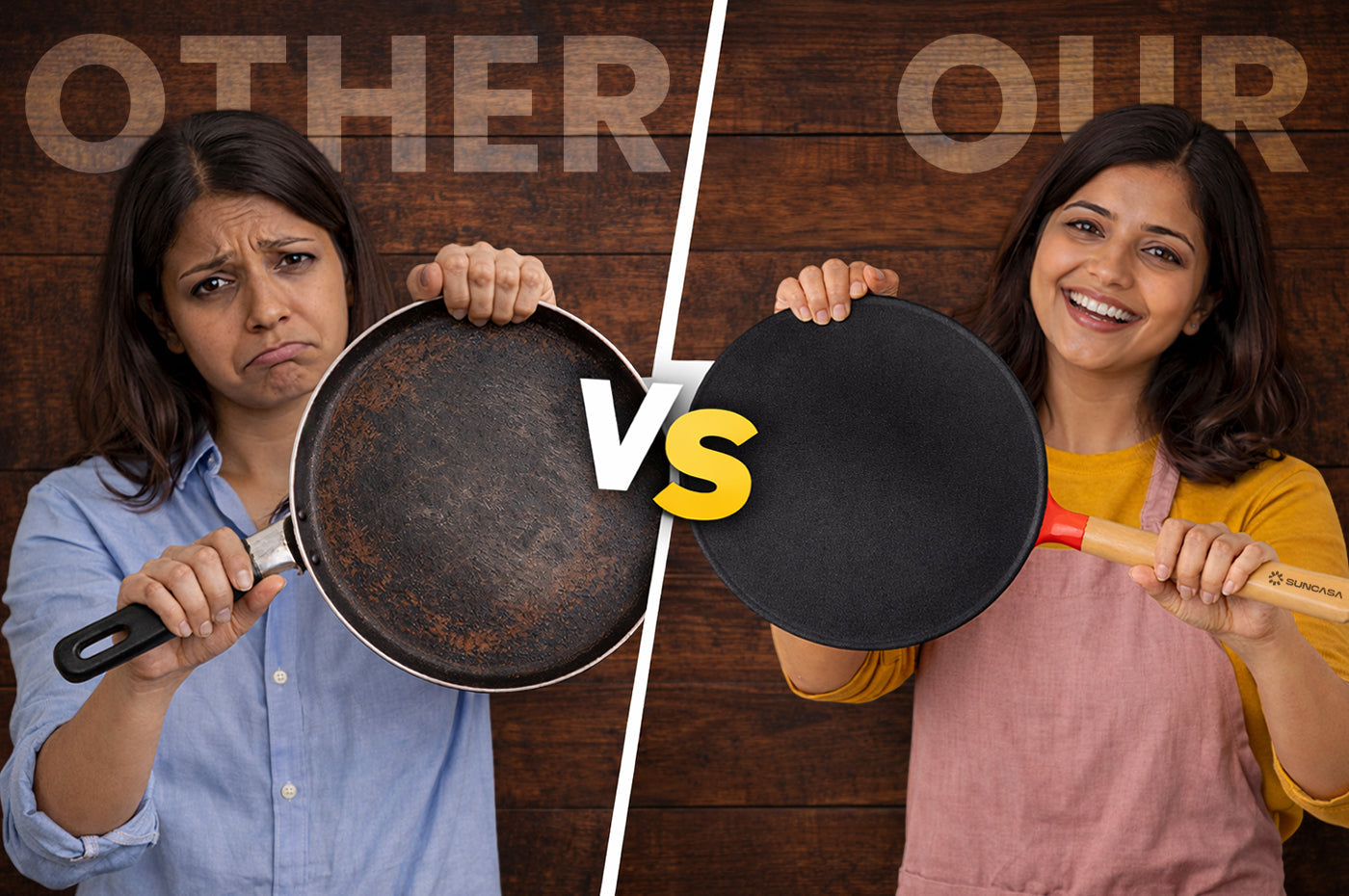
From busy weekday breakfasts to slow-cooked traditional meals, cookware plays a major role in kitchen performance. The debate around non-stick vs cast iron continues because both offer unique advantages. Non-stick cookware provides speed and simplicity, while cast iron delivers durability and superior heat retention, making the ideal choice dependent on how you cook most frequently at home.
Why Non-Stick Cookware Became So Popular
Non-stick cookware has become a staple in modern kitchens because it makes everyday cooking easier and faster. The smooth-coated surface prevents food from sticking, allowing meals to cook with less oil and minimal effort.
For busy households, non-stick cookware works especially well for:
- Omelettes and scrambled eggs
- Pancakes and dosas
- Stir-fried vegetables
- Grilled sandwiches
- Quick breakfast preparations
One of the biggest advantages of non-stick cookware is convenience. These pans heat quickly, are lightweight to handle, and require very little scrubbing during cleaning. For people with fast-paced routines, non-stick cookware often becomes the first choice because it simplifies everyday cooking.
Benefits of Non-Stick Cookware
- Requires less oil
- Easy food release
- Quick heating
- Lightweight construction
- Faster cleanup
- Comfortable for daily use
The Limitations of Non-Stick Cookware
Despite its convenience, non-stick cookware has certain limitations that buyers should understand before investing. Even high-quality non-stick coatings gradually wear down over time. Frequent exposure to high heat, sharp utensils, or aggressive cleaning methods can damage the coating and reduce performance.
Most non-stick cookware also performs best at medium or low heat. Extremely high temperatures can shorten the lifespan of the coating and affect cooking efficiency. This means non-stick cookware is excellent for lighter everyday cooking but may not always be ideal for recipes requiring intense heat or prolonged cooking times.
Why Cast Iron Cookware Continues to Remain Popular
Cast iron cookware has existed for generations and remains highly respected in Indian kitchens for its durability and cooking performance.
Unlike lightweight non-stick cookware, cast iron feels solid, heavy, and extremely sturdy. It heats slowly but retains heat exceptionally well once hot. This makes it highly effective for recipes that need consistent temperatures and deeper flavour development.
Cast iron cookware is particularly suitable for:
- Parathas and rotis
- Shallow frying
- Searing vegetables or meats
- Roasting
- Slow cooking curries
- Dosa preparation
One of the biggest advantages of cast iron cookware is longevity. With proper care, a cast iron pan can last for decades and often improves with regular use.
The Unique Cooking Benefits of Cast Iron
A properly seasoned cast-iron pan gradually develops a naturally smooth cooking surface that becomes increasingly non-stick over time. Many home cooks also prefer cast iron because it contains no synthetic coating, which aligns perfectly with the growing awareness around the natural health benefits of cast iron cookware.
Another benefit is heat retention. Cast iron cookware maintains stable cooking temperatures for longer durations, helping food cook evenly while enhancing texture and flavour. For Indian cooking styles that rely on roasting spices, frying, or preparing layered gravies, cast iron offers excellent cooking control.
Cookware options like the SUNCASA Pre-Seasoned Cast Iron Frypan and the SUNCASA Pre-Seasoned Cast Iron Kadai are good examples of how traditional cast iron cookware is now being adapted for modern Indian kitchens with pre-seasoned convenience.
The Maintenance Side of Cast Iron
The main difference in the non stick vs cast iron discussion often comes down to maintenance.
Cast-iron cookware requires more care than non-stick cookware. To maintain performance and prevent rust, it needs:
- Proper drying after washing
- Occasional oil seasoning
- Careful storage
- Avoiding prolonged moisture exposure
For some people, this maintenance feels rewarding because cast-iron cookware becomes better with age. For others, the additional care may feel less practical for everyday use.
Still, many experienced cooks believe the cooking quality and durability make the extra effort worthwhile.
Non-Stick or Cast Iron: Which is Better?
The answer depends entirely on your cooking style and kitchen routine.
Choose Non-Stick Cookware If:
- You cook quick meals regularly
- You prefer lightweight cookware
- You want easy cleaning
- You cook mostly on medium heat
- You prefer low-oil cooking
Choose Cast Iron Cookware If:
- You enjoy slow cooking
- You cook at higher temperatures
- You want cookware that lasts for years
- You prefer natural seasoning over synthetic coating
- You prepare Indian breads, dosas, or fried dishes frequently
When asking which is better, non-stick or cast iron, there is no universal answer because both cookware types excel in different situations.
Understanding Heat Performance
One of the biggest differences between non stick pan and cast iron cookware is how they handle heat.
Non-Stick Cookware:
- Heats quickly
- Performs best on low to medium heat
- Suitable for fast cooking
Cast Iron Cookware:
- Heats slowly but evenly
- Retains heat longer
- Ideal for high-temperature cooking
For recipes like crispy dosas or evenly roasted parathas, cast iron often delivers superior results because of its excellent heat retention.
The SUNCASA Castella Pre-Seasoned Cast Iron Dosa Tawa is designed specifically for this type of cooking, offering even heat distribution and long-lasting performance for Indian kitchens.
The Smart Kitchen Approach: Use Both
Many experienced home cooks no longer see cookware selection as a competition between non-stick and cast iron. Instead, they use both strategically.
Non-stick cookware handles:
- Everyday breakfasts
- Quick meals
- Fast cleanup tasks
Cast iron cookware handles:
- High-heat cooking
- Traditional Indian recipes
- Long-duration cooking
- Crisp textures and roasting
This balanced approach gives kitchens more flexibility while allowing each cookware type to perform where it works best.
Final Thoughts
The debate around non-stick pan or cast-iron cookware ultimately comes down to personal cooking preferences. Non-stick cookware offers convenience, speed, and easy maintenance, while cast iron delivers durability, superior heat retention, and long-term cooking performance.
A thoughtfully equipped kitchen often benefits from both options. By understanding how each cookware type supports different cooking techniques, you can build a kitchen that feels practical, efficient, and enjoyable to use every day.
Whether you prefer quick weekday cooking or traditional slow-cooked meals, choosing cookware that matches your lifestyle will always matter more than following trends.


