

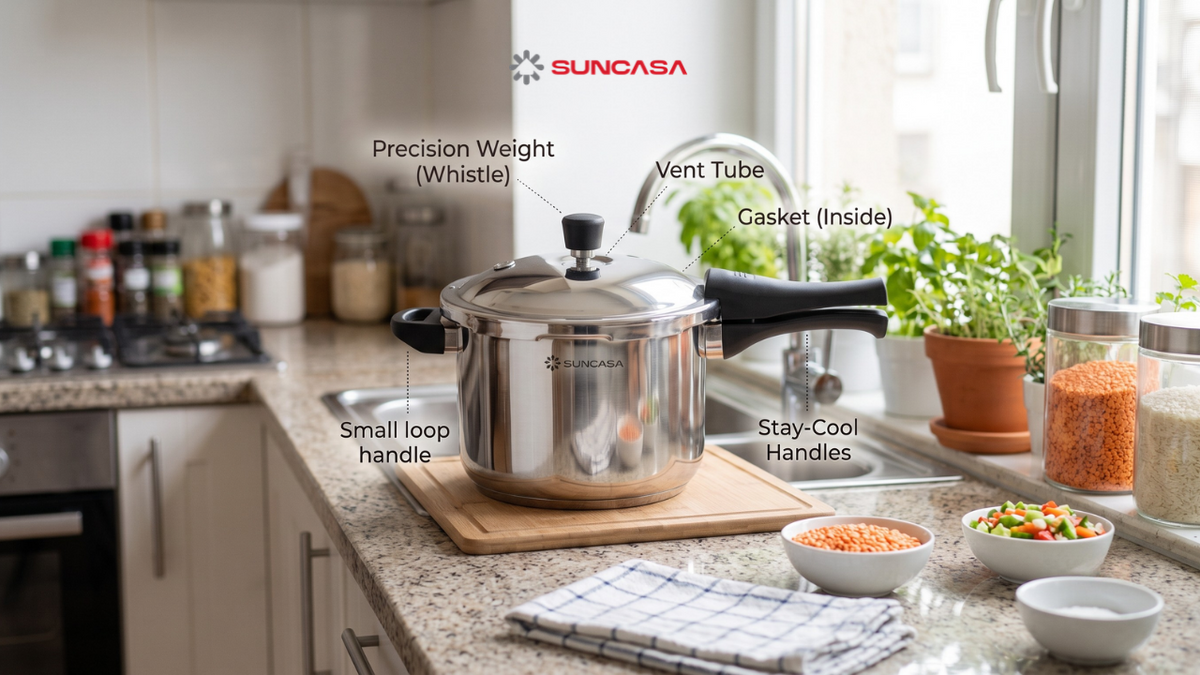
A pressure cooker is one of the most useful cookware in an Indian kitchen, but it works under high heat and pressure. This makes pressure cooker safety an important part to consider for everyday cooking. From the cooker material to the gasket, valve, handles, and usage habits, several details matter. Here is a practical checklist to help you cook with greater confidence.
Why Pressure Cooker Safety Matters
Pressure cooking involves intense steam pressure, high temperatures, repeated pressure cycles, and regular wear and tear. A cooker that is poorly maintained or made from unsuitable materials may develop issues over time. Before buying or continuing to use a pressure cooker, check these important areas:
|
Safety factor |
What to check |
|
Material |
Food-grade, durable construction |
|
Base |
Even and stable heat distribution |
|
Gasket |
Flexible and free from cracks |
|
Valve |
Clean and functioning correctly |
|
Handles |
Firmly attached and undamaged |
|
Lid |
Locks and unlocks properly |
|
Capacity |
Not overfilled during cooking |
These checks form the foundation of good pressure cooker safety tips for everyday Indian cooking.
9 Essential Pressure Cooker Safety Checks
1. Check the Cooker Material
The material of your pressure cooker affects its durability, cooking performance, and maintenance. Stainless steel is widely valued for its strength, corrosion resistance, and ability to handle repeated cooking cycles. The SUNCASA Impact Pro pressure cooker is constructed with premium 304 food-grade stainless steel, giving it a rust-resistant body that is safe for everyday cooking.
2. Look for a Strong, Stable Base
A pressure cooker needs to distribute heat properly while cooking. An uneven or weak base can create hot spots and affect cooking consistency. The SUNCASA Impact Pro pressure cooker features an impact-bonded bottom with a heavy-gauge base. It is designed to provide uniform heat distribution, support faster cooking, and improve fuel efficiency. Even heating is especially useful when preparing dals, rice, vegetables, beans, and other dishes that require consistent cooking.
3. Check the Pressure-Release System
A reliable pressure-release system is one of the most important parts of a pressure cooker. The valve, safety plug, and gasket work together to manage pressure during cooking.
SUNCASA Impact Pro cooker includes:
- Precision weight valve: Helps regulate pressure.
- Safety plug: Provides an additional safety mechanism.
- Gasket release system: Supports pressure management.
- Lock and unlock button: Helps provide secure lid handling.
These built-in features are designed to support secure pressure cooking.
4. Inspect the Gasket and Valve Regularly
Even a well-designed pressure cooker needs regular inspection. The gasket should not be cracked, hardened, loose, or visibly damaged. The vent and valve should also remain clean and unobstructed.
|
Part |
What to look for |
|
Gasket |
Cracks, hardening, or loss of flexibility |
|
Vent tube |
Blockage or food residue |
|
Valve |
Damage or improper movement |
|
Lid |
Difficulty locking or unlocking |
|
Handle |
Looseness or visible damage |
Regular checks are among the most practical pressure cooker safety tips because small maintenance issues should not be ignored.
5. Never Overfill the Cooker
Overfilling can leave too little space for steam to circulate properly. Foods such as dal, rice, beans, and other ingredients that expand during cooking need particular attention. Follow the manufacturer's recommended filling limits and avoid packing the cooker beyond its safe capacity. This simple habit helps maintain proper pressure circulation and supports safer everyday cooking.
6. Manage the Heat Properly
Pressure cooking does not require high heat throughout the entire process. Start according to the cooking instructions and reduce the heat once the required pressure builds. Good heat distribution also goes a long way in improving cooking efficiency. The SUNCASA impact bottom pressure cooker is designed to retain heat effectively, helping reduce cooking time and energy use. Using controlled heat is therefore one of the most useful pressure cooker safety tips for regular cooking.
7. Watch for Warning Signs
An old pressure cooker should not be used simply because it still appears functional. Pay attention to visible or operational changes. Replace or inspect the cooker if you notice:
- A warped or uneven base
- Persistent steam leakage
- Damaged or loose handles
- Deep dents or significant scratches
- A cracked or hardened gasket
- A blocked or damaged vent
- Problems with locking or unlocking
Regular inspection becomes particularly important when a cooker is used frequently.
8. Choose the Right Cookware for Pressure Cooking
Not every cookware material is suitable for pressure cooking. The supplied safety guide highlights high-quality stainless steel and suitable tri-ply construction as options designed for repeated high-heat cooking. It also advises against using non-stick cookware for pressure cooking.
For an everyday Indian kitchen, consider these factors before buying:
|
Feature |
Why it matters |
|
304 stainless steel |
Strength and corrosion resistance |
|
Impact bonded bottom |
More uniform heat distribution |
|
Safety mechanisms |
Better pressure management |
|
Secure locking |
Supports safe operation |
|
Easy-clean surface |
Simplifies maintenance |
|
Cooktop compatibility |
Adds everyday versatility |
9. Consider SUNCASA Impact Pro for Everyday Cooking
SUNCASA Impact Pro Pressure Cooker range combines a 304 food-grade stainless steel body with an impact-bonded bottom and multiple safety features. It is compatible with both gas and induction cooktops, making it suitable for different Indian kitchens.
Its mirror-finish stainless steel surface is designed to resist stains and make cleaning easier. The cooker also comes with a five-year limited warranty covering defects in material and workmanship under normal household use.
The Pressure Cooker Safety Checklist
Before using your pressure cooker, run through this quick checklist:
- Check the gasket: Make sure it is clean and in good condition.
- Check the valve: Ensure the vent is clean and unobstructed.
- Check the lid: Confirm that it locks and unlocks correctly.
- Check the handles: Make sure they are secure.
- Check the filling level: Avoid overfilling.
- Check the base: Look for warping or major damage.
- Control the heat: Reduce heat once pressure builds as instructed.
- Inspect regularly: Replace worn or damaged components as recommended.
These simple checks can make pressure cooker safety a regular part of your cooking routine rather than something considered only after a problem occurs.
Choose Quality for Your Kitchen
A pressure cooker should be chosen for more than capacity or appearance. Strong materials, a stable base, reliable pressure-control mechanisms, secure locking, and regular maintenance all contribute to safer everyday cooking. Pressure cooker safety starts with choosing the right product and using it correctly. SUNCASA Impact Pro combines 304 stainless steel, an impact-bonded base, and advanced safety features. Visit the official SUNCASA website store to explore the Impact Pro range today.
FAQs
What makes SUNCASA Impact Pro pressure cooker a reliable choice?
SUNCASA Impact Pro pressure cooker is made from 304-grade food-grade stainless steel and features an impact-bonded bottom for uniform heat distribution. It also includes pressure-safety features such as a precision weight valve, safety plug, and gasket release system.
How often should a pressure cooker gasket be checked?
The gasket should be inspected regularly for cracks, hardening, or other signs of wear. SUNCASA pressure cookers include a gasket release system, but replacing worn components promptly remains important for safe and reliable everyday pressure cooking.
Can SUNCASA Impact Pro Click-On Pressure Cooker be used on induction cooktops?
Yes. SUNCASA Impact Pro pressure cookers are compatible with both induction and gas cooking. Its impact-bonded bottom supports uniform heat distribution, making it a practical option for Indian kitchens using different cooking surfaces.
How should I use a pressure cooker safely?
Avoid overfilling the cooker, keep the vent and valve clean, check the gasket regularly, and reduce the heat once pressure builds. SUNCASA recommends using its pressure cooker according to the product's safety features and guidelines.
What warranty does the SUNCASA Impact Pro pressure cooker offer?
The SUNCASA Impact Pro Click-On Pressure Cooker comes with a five-year limited warranty against defects in materials and workmanship under normal household use. This adds confidence when choosing a pressure cooker designed for regular kitchen use.


