

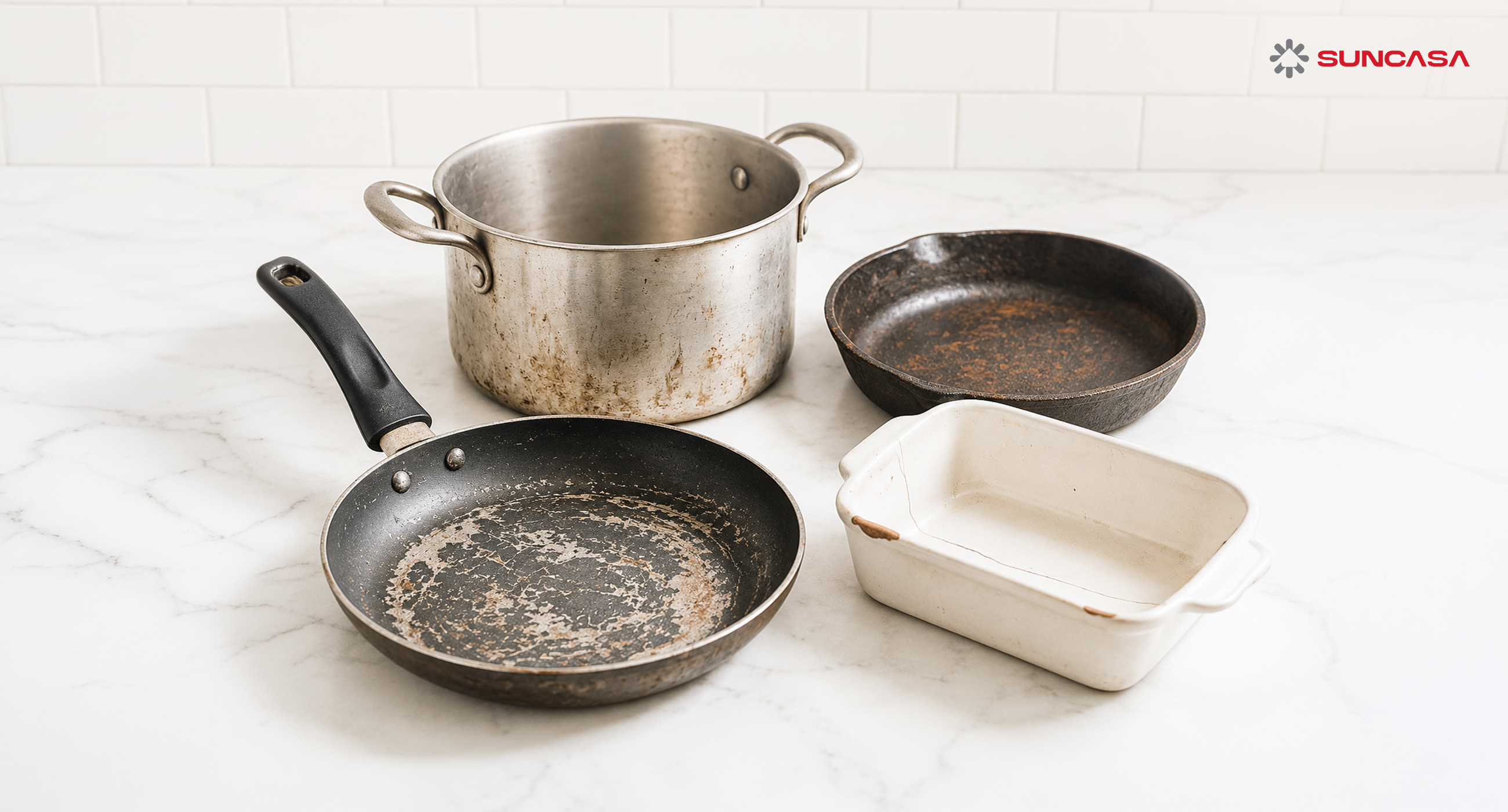
Your favourite kadai or frypan may have served you well for years, but damaged cookware can quietly affect your cooking results and kitchen safety. Peeling coatings, warped surfaces, and stubborn stains are signs it may be time for an upgrade. Choosing high-quality steel utensils can help Indian homes to improve their cooking performance, make maintenance easier, and support healthier everyday cooking in modern Indian kitchens.
1. The Cooking Surface Is Scratched, Chipped, or Peeling
Scratches, peeling coatings, and worn-out cooking surfaces on your frying pans and kadhai are strong signs that your utensils are no longer performing properly. Damaged cookware can lead to uneven heating, sticking food, and difficult cleaning. It may also trap food residue and bacteria over time.
Investing in high-quality stainless steel cookware helps improve durability, safety, and overall cooking efficiency in Indian kitchens. Stainless steel cookware is often considered among the safest cookware for Indian kitchen setups because it is non-reactive, sturdy, and suitable for high-heat cooking.
2. Your Cookware Has Started Rusting
Rust is another major warning sign that should never be ignored.
Rust appears in older iron, cast iron, or carbon steel cookware when seasoning and maintenance are not done for a long time. While light rust can sometimes be cleaned, severe rust affects both safety and cooking performance.
If you enjoy traditional cooking, replacing old, rusted pans with properly maintained cast-iron cookware is a smart choice. The SUNCASA Castella Pre-Seasoned Cast Iron Frypan is already pre-seasoned, making it easier for home cooks to maintain while delivering the rich flavours Indian cooking is known for.
3. The Handles Feel Loose or Unsafe
Cookware with loose handles is one of the most dangerous things to have in a kitchen.
Indian cooking often involves lifting heavy curries, hot oil, or boiling liquids. A weak or shaky handle can lead to accidental spills, burns, or you can accidentally drop the whole thing, leading to even greater casualty.
Sometimes screws can be tightened temporarily, but if the handle still feels unstable, replacing the cookware is the best option. High-quality cookware should feel balanced, secure, and comfortable while cooking.
4. The Bottom of the Pan Is Warped
Have you ever noticed oil collecting only on one side of the pan? That usually means the cookware has warped. Warping happens when cookware is repeatedly overheated or when there are sudden temperature changes. Thin, low-quality cookware is especially prone to bending over time.
A warped base affects:
- heat distribution
- cooking consistency
- fuel efficiency
- food texture
This becomes a major issue while preparing Indian dishes that need even roasting of spices and masalas. For these reasons, a triply cookware is often preferred because it resists warping much better than ordinary cookware. The SUNCASA Tri Smart Triply Kadhai With Lid distributes heat evenly across the surface, making it ideal for curries, deep frying, and daily sabzi preparation.
5. Burnt Stains and Greasy Residue Never Go Away
Over time, cookware can develop stubborn burnt stains and greasy residue that remain even after washing properly. This usually happens when the cooking surface becomes worn out or porous. Old cookware may start absorbing oil and food particles, affecting both hygiene and flavour.
You may notice:
- The food tasted slightly burnt
- uneven browning
- sticky cooking surfaces
- unpleasant odours after heating
When regular cleaning no longer restores the cookware properly, it is usually time for a replacement.
Good cookware should maintain a clean, smooth cooking surface even after repeated use. This is one reason why stainless steel and cast iron remain popular choices for Indian kitchens. With proper care, they continue delivering consistent cooking performance for years. Investing in some of the best cookware for daily cooking for India kitchens can save money in the long run by reducing frequent replacements.
How Long Does Cookware Usually Last?
Different cookware materials have different lifespans.
- Non-stick cookware usually lasts around 3–5 years
- Stainless steel cookware can last 10–20 years or longer
- Cast iron cookware can last for generations with proper seasoning
- Triply cookware offers long-term durability with minimal warping
The actual lifespan depends on:
- cooking frequency
- maintenance
- cleaning habits
- heat exposure
Using cookware carefully and avoiding overheating can significantly extend its life.
Final Thoughts
Cookware plays a major role in both cooking quality and kitchen safety. While it is tempting to keep using old utensils for years, damaged cookware can make cooking difficult and sometimes unsafe.
Recognising signs like peeling surfaces, rust, warped bottoms, loose handles, and stubborn burnt stains helps you upgrade before problems become serious. Whether you prefer stainless steel, cast iron, or triply cookware, choosing durable and reliable products makes everyday cooking smoother and more enjoyable.
With thoughtfully designed cookware from SUNCASA, home cooks can enjoy long-lasting performance, safer cooking, and practical cookware made for modern Indian kitchens.


