

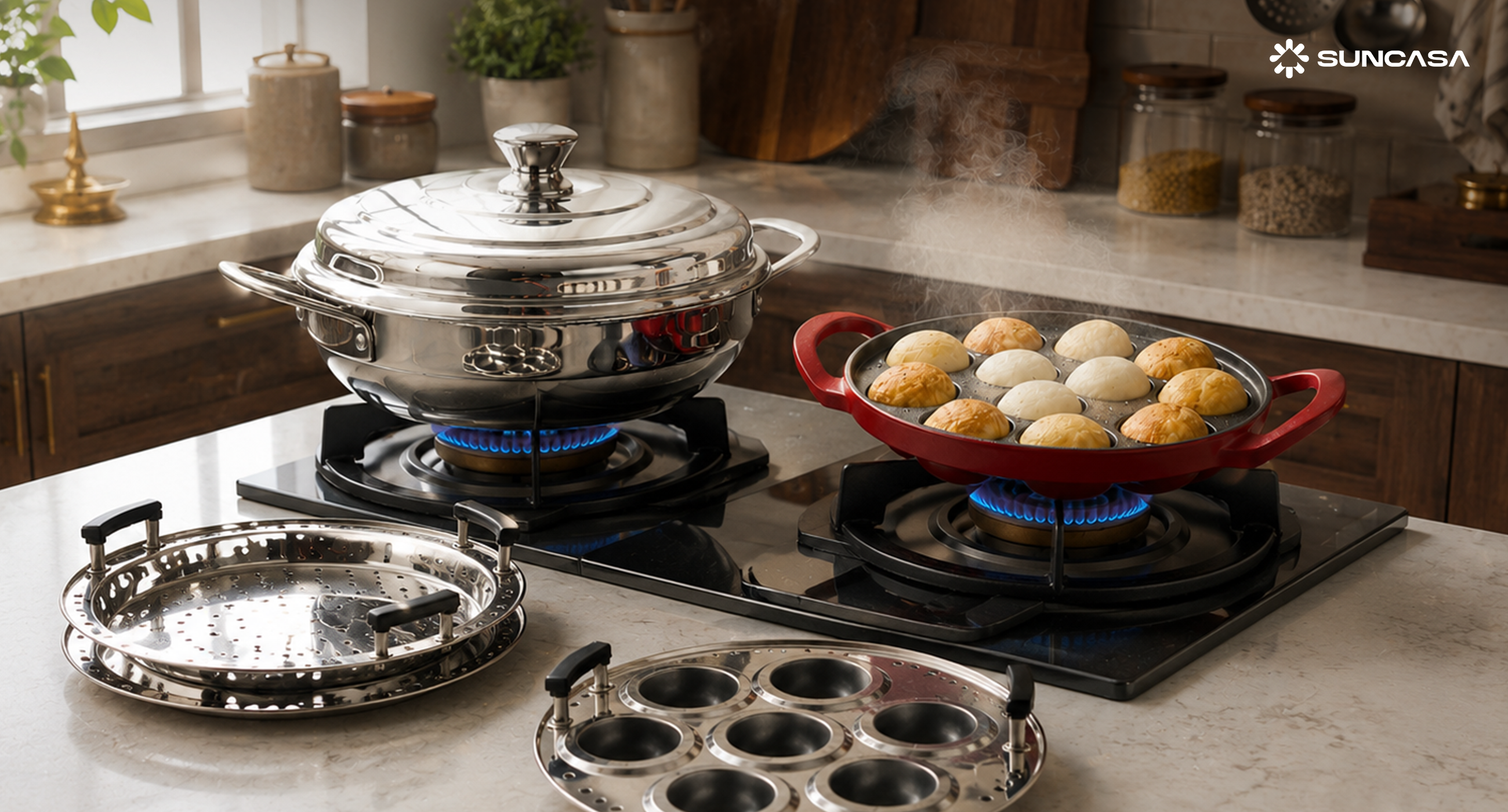
A lot of Indian cooking involves a lot of frying. Sometimes, to fry crispy pakoras, sautéing masalas, deep-frying pooris, or slow-cooking curries. To execute each cook well, choosing the best cookware for frying Indian food makes a huge difference to the dish’s consistency, flavour, oil usage, and long-term kitchen convenience.
While cast iron and stainless steel are both popular choices, they offer very different cooking experiences. Understanding their strengths can help you decide which cookware truly suits your kitchen needs and cooking habits.
Understanding Cast Iron and Stainless Steel Cookware
Both cast iron and stainless steel have remained trusted cookware materials for generations. However, they differ significantly in heat handling, maintenance, durability, and cooking performance.
Cast iron cookware is made using pure iron ore and is known for excellent heat retention and natural seasoning abilities. Meanwhile, stainless steel cookware, especially triply stainless steel, combines durability with modern cooking convenience and even heat distribution.
When discussing the best cookware for frying Indian food, both materials perform well, but each suits different cooking preferences and kitchen routines.
Cast Iron vs Stainless Steel: Quick Comparison
|
Feature |
Cast Iron Cookware |
Stainless Steel Cookware |
|
Material |
Pure iron ore |
Food-grade stainless steel |
|
Heat Retention |
Excellent |
Very good in triply cookware |
|
Heating Speed |
Slower but stable |
Faster and more responsive |
|
Cooking Style |
Traditional slow cooking and frying |
Everyday versatile cooking |
|
Maintenance |
Requires basic care |
Easy to clean and maintain |
|
Durability |
Extremely long-lasting |
Highly durable |
|
Reactivity |
Traditional cast iron may react with acidic foods |
Non-reactive surface |
|
Oil Usage |
Less oil after seasoning |
Controlled oil usage |
|
Weight |
Heavy and sturdy |
Comparatively lightweight |
|
Compatibility |
Gas, induction, oven compatible |
Compatible with all cooktops |
Why Cast Iron Works Well for Indian Frying
Indian cuisine frequently uses high-heat cooking techniques like roasting spices, deep frying, and tempering. Cast-iron cookware performs well in these styles because it retains heat for longer periods and distributes it evenly.
This creates:
- Crispier frying results
- Better browning
- Richer flavour development
- Stable oil temperature
- Improved texture in fried foods
The SUNCASA Castella Pre-Seasoned Cast Iron Kadai is specifically designed for Indian frying and other cooking needs. Made from pure iron ore, it offers quick heating and efficient cooking while maintaining authentic cast iron benefits.
Key Features of SUNCASA CASTELLA Cast Iron Kadai
|
Feature |
Benefit |
|
Exterior enamel coating |
Easier cleaning and maintenance |
|
Pure iron ore construction |
Durable and traditional cooking performance |
|
Naturally non-stick surface |
Requires less oil over time |
|
No chemical coating |
Safer cooking experience |
|
Zero metal leaching |
Safe even for acidic foods |
|
PTFE, PFOA, PFAS-free |
100% non-toxic cooking |
|
Ergonomic wooden handle |
Comfortable handling |
|
Compatible with all cooktops |
Flexible kitchen usage |
One of the biggest advantages of cast iron is its ability to retain heat during frying. This is especially useful for Indian dishes like samosas, pakoras, bhaturas, and puris, where oil temperature consistency directly affects texture and crispiness.
Why Stainless Steel Is Preferred for Everyday Convenience
While cast iron is good for traditional frying methods, stainless steel cookware offers convenience, versatility, and faster cooking responsiveness for modern kitchens. Triply stainless steel cookware, in particular, solves one of the biggest issues associated with traditional stainless steel: uneven heating. The aluminium core between stainless steel layers allows even heat distribution across the cookware surface.
The SUNCASA Tri Smart Triply Kadhai with Lid is designed specifically for efficient daily Indian cooking.
Key Features of SUNCASA TRI-SMART Triply Kadhai
|
Feature |
Benefit |
|
304-grade food-safe stainless steel |
Hygienic and non-reactive cooking |
|
Triply construction |
Even heat distribution |
|
Stay-cool handles |
Safer handling during cooking |
|
Easy-to-clean surface |
Low-maintenance daily use |
|
Drip-free rim |
Cleaner pouring experience |
|
Stainless steel rivets |
Strong long-lasting handles |
|
All cooktop compatibility |
Suitable for gas, induction, ceramic, and ovens |
Stainless steel cookware is especially useful for:
- Everyday frying
- Quick sautéing
- Tempering spices
- Preparing curries
- Cooking acidic dishes safely
Unlike cast iron, stainless steel does not require seasoning or extra maintenance, making it more suitable for both single and busy households. This practicality is why many families consider triply stainless steel among the best cookware for Indian cooking for regular everyday use.
Heat Distribution: Which Performs Better?
Heat distribution is one of the most important factors in frying Indian food. Uneven heat can lead to:
- Burnt masalas
- Uneven frying
- Food sticking
- Excess oil absorption
Cast iron retains heat longer, which helps maintain stable frying temperatures. This makes it excellent for deep frying and slow cooking. Triply stainless steel cookware, however, heats up faster and distributes heat more evenly across the surface because of its aluminium core.
|
Cooking Requirement |
Cast Iron |
Triply Stainless Steel |
|
Deep frying |
Excellent |
Very good |
|
Slow cooking |
Excellent |
Good |
|
Quick cooking |
Moderate |
Excellent |
|
High heat retention |
Excellent |
Very good |
|
Everyday convenience |
Moderate |
Excellent |
When choosing the best cookware For Frying Indian Food, this balance between heat retention and cooking convenience becomes very important.
Maintenance and Long-Term Durability
Both cast iron and stainless steel cookware are highly durable, but they require different levels of care.
Cast Iron Maintenance
- Requires occasional seasoning
- Needs drying after washing
- Performs better over time
- Can last generations
Stainless Steel Maintenance
- Easier daily cleaning
- Dishwasher-friendly
- Resistant to rust and stains
- Minimal maintenance required
For people who enjoy traditional cooking methods, cast iron offers unmatched longevity and flavour enhancement. For users prioritising convenience and low maintenance, stainless steel becomes more practical.
Which One Should You Choose?
The choice between cast iron and stainless steel depends entirely on your cooking style. Choose cast iron if you want:
- Traditional cooking performance
- Superior heat retention
- Crispy frying results
- Naturally non-stick cooking
- Chemical-free cookware
Choose stainless steel if you prefer:
- Faster cooking
- Easy maintenance
- Everyday convenience
- Lightweight handling
- Non-reactive cooking surfaces
Both SUNCASA CASTELLA cast iron cookware and TRI-SMART triply stainless steel cookware are thoughtfully designed to support Indian cooking requirements efficiently.
Final Verdict
Choosing the best cookware for frying and other Indian cooking depends on whether you prioritise traditional heat retention or modern convenience. Cast iron delivers authentic flavour, crisp texture, and long-lasting performance, while triply stainless steel offers faster, low-maintenance everyday cooking. Both materials serve Indian kitchens beautifully in different ways.
Explore SUNCASA’s CASTELLA and TRI-SMART cookware collections to find premium cookware designed for healthier, safer, and more efficient Indian cooking.


1 comment
🍳👏 Excellent and highly informative article! Thank you for providing such a clear comparison between cast iron and stainless steel cookware for Indian cooking. The practical tips and detailed explanations make it much easier for home cooks to choose the right cookware based on their cooking style. Truly a valuable guide—keep up the great work, and please continue sharing more insightful and helpful blogs like this! 😊
<a href= “https://medicompares.com”> Blood test Hyderabad