

An Indian kitchen needs versatile cookware to run the space efficiently, to constantly churn out delicacies without any hassle. While there are many cookwares available today, stainless steel and aluminium remain two of the most commonly used choices in Indian households.
However, families at present are now paying closer attention not just to cooking performance, but also to safety, durability, and long-term health impact. This is why the discussion around stainless steel vs. aluminum cookware has become more active than ever.
Both materials have their advantages, but they behave very differently during everyday cooking. Understanding these differences can help you choose cookware that suits your needs perfectly.
Understanding Stainless Steel and Aluminium Cookware
Aluminium cookware is a popular choice because it is available at cheap rates, it’s lightweight, and heats up quickly. Stainless steel cookware, on the other hand, is known for its durability, strength, and non-reactive cooking surface. It is commonly preferred in professional kitchens because it handles heavy daily cooking far better over time.
Difference Between Stainless Steel and Aluminium Cookware
|
Feature |
Stainless Steel Cookware |
Aluminium Cookware |
|
Durability |
Highly durable and long-lasting |
Softer metal, dents and scratches easily |
|
Food Safety |
Non-reactive and safe for acidic foods |
Uncoated aluminium may react with acidic ingredients |
|
Heat Conductivity |
Slower heating but stable cooking performance |
Heats quickly and cools quickly |
|
Maintenance |
Easy to clean and low maintenance |
Requires careful handling to avoid damage |
|
High Heat Cooking |
Excellent for high-temperature cooking |
Can warp or discolor over time |
|
Longevity |
It can last for years with daily use |
Shorter lifespan compared to stainless steel |
|
Cooking Style Suitability |
Ideal for Indian cooking methods |
Better for quick and light cooking |
|
Health Concerns |
Does not leach into food |
Uncoated aluminium may leach into food |
|
Induction Compatibility |
Usually induction compatible |
Not naturally induction compatible |
Why Uncoated Aluminium Can Be Harmful
One of the biggest worries with using aluminium cookware is chemical leaching. Indian cooking often incorporates acidic ingredients such as tomatoes, tamarind, lemon, curd, and vinegar. When these ingredients are cooked at high temperature in an uncoated aluminium pan or khadai, the metal starts leaching small amounts of metal into the meals.
While occasional exposure may not seem serious, repeated long-term exposure has raised health concerns over time. Another issue is durability: Aluminium is a softer metal, which means cookware can:
- Scratch easily
- Dent over time
- Warp under high heat
- Become more reactive after surface damage
Why Stainless Steel Is Better for Daily Indian Cooking
Indian cooking involves high heat, long simmering, pressure cooking, roasting spices, and cooking acidic curries regularly. These cooking styles need cookware that is durable, stable, and non-reactive.
Stainless steel cookware performs well because it:
- Does not react with food
- Handles high temperatures safely
- Resists rust and corrosion
- Supports hygienic cooking
- Lasts for years without losing performance
The SUNCASA Impact Pro Stainless Steel Frypan is made for everyday cooking, such as sautéing vegetables, shallow frying, stir-frying, and preparing quick meals. Its durable stainless steel design makes sure that each dish is cooked well without any risks of chemical leaching.
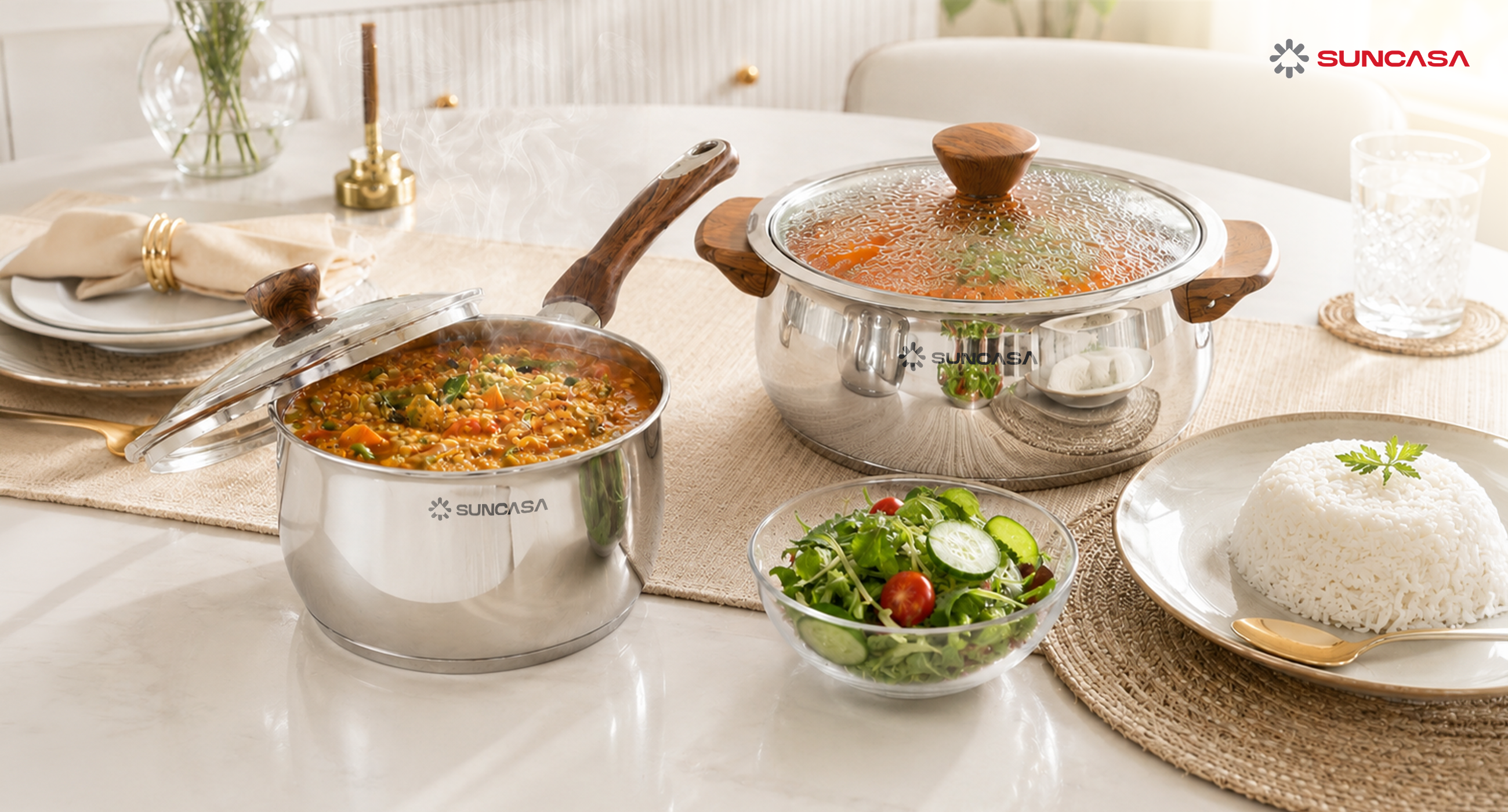
For daily tea, coffee, and sauces, the SUNCASA Impact Pro Stainless Steel Saucepan is ideal for making them safely and without the bottom burning. These practical benefits strongly support the growing preference for stainless steel compared to aluminium cookware in modern kitchens.
Better Durability and Long-Term Value
Cookware is a long-term kitchen investment. Families want cooking tools that continue performing well even after years of daily use. This is where stainless steel stands out clearly. Unlike aluminium cookware, stainless steel:
- Maintains shape under high heat
- Resists scratches and dents
- Handles metal utensils better
- Requires less replacement over time
- Maintains cooking quality consistently
The SUNCASA Induction pressure cooker is designed for heavy-duty Indian cooking needs. Its durable stainless steel body supports safe pressure cooking for dals, rice, curries, and one-pot meals while ensuring long-lasting performance.
For busy households that cook every day, durability becomes a major advantage when weighing stainless steel against aluminium cookware.
Cooking Performance and Convenience
Aluminium cookware heats faster, but it also loses heat quickly. This can lead to uneven cooking, especially during slow simmering or high-heat cooking.
Stainless steel cookware provides:
- More controlled cooking
- Better heat stability
- Improved cooking consistency
- Reliable everyday performance
This makes it especially suitable for:
- Daily Indian meals
- Slow-cooked curries
- Pressure cooking
- Frying and sautéing
- Long-duration cooking
Plus, stainless steel utensils are easier to maintain in the long run because it resists staining, corrosion, and surface damage.
Which One Should You Choose?
If your priority is lightweight cookware with quick heating at a lower price, then aluminium cookware might feel convenient initially. However, for families looking for safer cooking, better durability, and long-term reliability, stainless steel is the smarter choice.
The growing preference for stainless steel over aluminium cookware reflects how Indian kitchens are becoming more health-conscious and quality-focused. SUNCASA’s Impact Pro stainless steel range is designed to support everyday Indian cooking with safety, durability, and dependable performance.


