

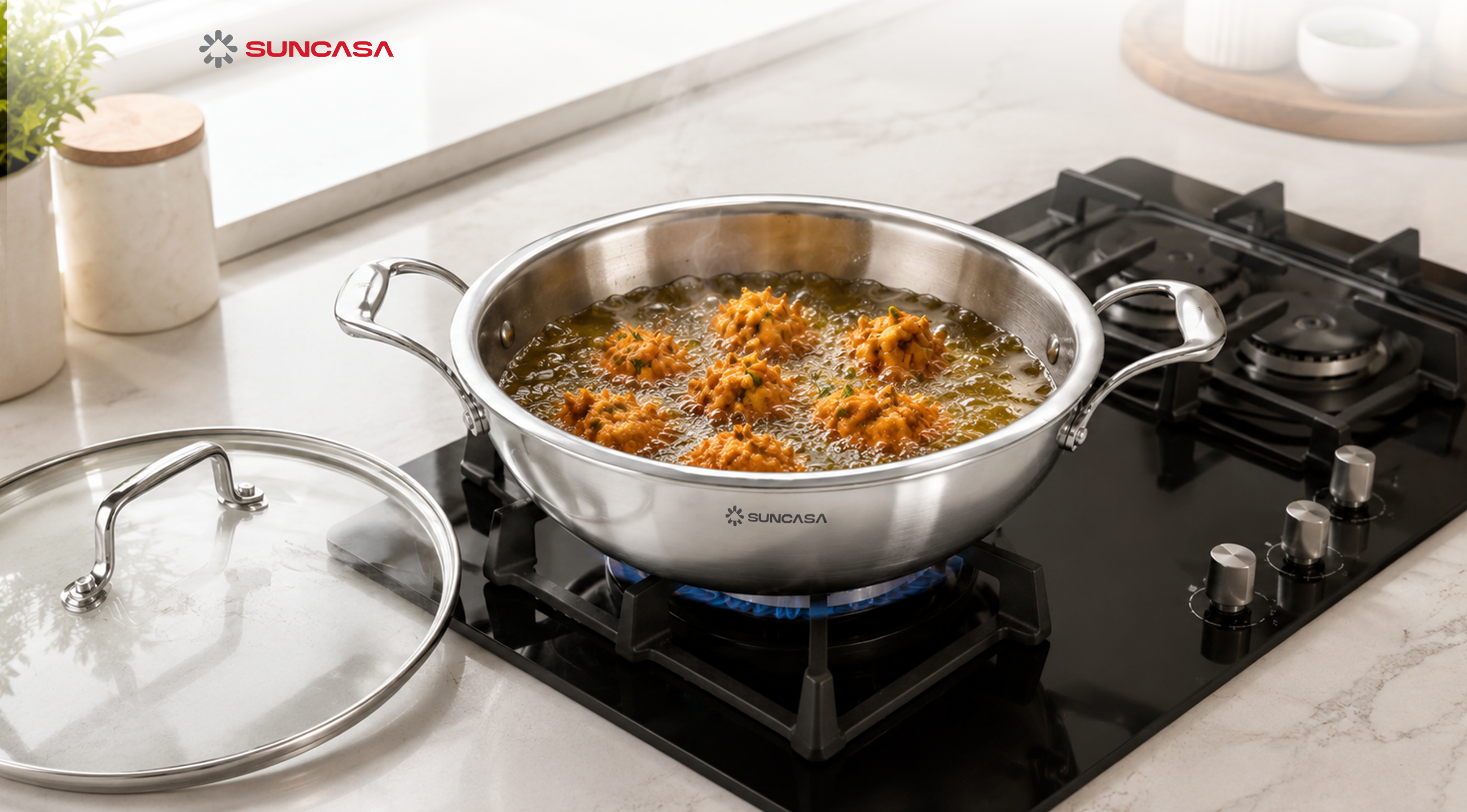
A burnt stainless steel kadai can happen to anyone, whether you're simmering dal, boiling milk, or preparing a rich curry. Fortunately, burnt cookware doesn't always need replacing. Knowing how to clean burnt stainless steel using simple home remedies can very much bring back its shine without damaging the surface. In this guide, we'll explore easy cleaning methods, common mistakes to avoid, and practical tips to keep your kadai looking as good as new.
Why Does a Stainless Steel Kadai Get Burnt?
Burn marks usually appear when food cooks for too long or at excessively high temperatures. Thick dishes like dal, milk, rice, and gravies are especially prone to sticking once moisture begins to evaporate. Some common reasons include:
|
Cause |
Why It Happens |
|
High cooking flame |
Excessive heat burns food before it cooks evenly. |
|
Thick-bottomed dishes left unattended |
Ingredients settle at the bottom and begin to scorch. |
|
Insufficient stirring |
Dense gravies and milk require regular stirring to prevent sticking. |
|
Low water content |
Less moisture causes food residue to carbonize quickly. |
Understanding these causes is the first step in learning how to clean burnt stainless steel while preventing future damage.
Why You Should Clean Burnt Cookware Immediately
Once burnt food cools, it sticks more firmly to the cooking surface, making it increasingly difficult to remove.
If possible:
- Allow the kadai to cool naturally before cleaning.
- Fill it with warm water immediately after use.
- Avoid letting the burnt bottom sit overnight.
Even a simple warm-water soak can greatly reduce the effort required during cleaning.
What You Should Never Do
Before trying any cleaning method, avoid practices that may permanently damage your cookware.
|
Avoid |
Why |
|
Scraping with knives or metal tools |
Can scratch the stainless steel surface unnecessarily. |
|
Pouring cold water into a hot kadai |
Sudden temperature changes may warp the cookware. |
|
Using extremely abrasive scrubbers |
May dull the polished finish over time. |
|
Leaving acidic cleaners for long periods |
Prolonged exposure can affect the cookware's appearance. |
Gentle cleaning almost always delivers better long-term results.
5 Easy Home Remedies for Cleaning Burnt Stainless Steel
Most burnt stains can be removed using ingredients already available in your kitchen.
1. Salt Water Boiling Method
One of the simplest methods is boiling salted water inside the kadai.
Steps:
- Fill the kadai until the burnt portion is submerged.
- Add 2–3 tablespoons of table salt.
- Bring the water to a gentle boil for about 10–15 minutes.
- Allow it to cool before gently scrubbing with a soft sponge.
The boiling water loosens burnt residue, while salt helps lift stubborn food particles without too much scrubbing.
2. Lemon and Warm Water
Lemon's natural citric acid works effectively on burnt food while restoring the shine of stainless steel.
Steps:
- Fill the kadai with water.
- Squeeze half a lemon into the water.
- Add the lemon halves as well.
- Boil for approximately 10 minutes.
- Wash gently using a non-abrasive sponge.
This remedy works especially well for burnt milk stains and light discoloration.
3. Baking Soda Paste
Baking soda is a gentle cleaning agent that helps soften burnt residue.
Steps:
- Mix baking soda with a small amount of water to create a thick paste.
- Apply it over the burnt surface.
- Leave it for 20 minutes.
- Scrub gently using a soft sponge.
- Rinse thoroughly.
This method removes stubborn stains without scratching the cookware.
4. Vinegar and Warm Water
White vinegar helps loosen burnt deposits while removing stubborn discoloration.
Steps:
- Add equal parts water and vinegar to the kadai.
- Heat until the mixture begins to simmer.
- Turn off the heat and allow it to cool slightly.
- Wash with mild dish soap.
Avoid soaking stainless steel in vinegar for extended periods. A short simmer is sufficient.
5. Cream of Tartar Paste
Cream of tartar is another gentle cleaning solution for stainless steel cookware.
Steps:
- Mix cream of tartar with warm water.
- Apply the paste over burnt areas.
- Leave for around 10 minutes.
- Wipe clean using a soft sponge.
It effectively removes burnt residue while helping maintain the cookware's polished appearance.
Why Stainless Steel Is Easier to Restore
Among common cookware materials, stainless steel is one of the easiest to clean because it has a durable, non-coated cooking surface.
|
Stainless Steel Advantage |
Benefit |
|
No synthetic coating |
Allows gentle cleaning methods without worrying about peeling surfaces. |
|
Corrosion-resistant surface |
Helps maintain durability despite frequent washing. |
|
Handles gentle acidic cleaning |
Suitable for remedies like lemon and vinegar when used correctly. |
|
Long-lasting finish |
Proper maintenance keeps cookware looking new for years. |
These qualities make stainless steel one of the most forgiving cookware materials for everyday kitchens.
Tips to Prevent Your Kadai from Burning Again
Preventing burnt food is easier than removing it.
- Cook on medium heat: Moderate temperatures allow food to cook evenly while reducing the risk of scorching.
- Stir thick recipes regularly: Curries, kheer, dal, and gravies should be stirred frequently to prevent food from settling at the bottom.
- Use enough liquid: Adequate water or stock prevents ingredients from drying out during cooking.
- Choose heavy-bottom cookware: Thick-bottom stainless steel cookware distributes heat evenly and minimises hotspots.
- Avoid leaving cookware unattended: Even a few extra minutes on high heat can create stubborn burnt residue.
Stick to these simple habits, and you can save yourself the hassle of figuring out how to clean burnt stainless steel.
When Should You Replace Your Kadai?
While most burnt cookware can be restored, replacement may be necessary in certain situations.
|
Sign |
Recommendation |
|
Deep warping |
Replace the cookware as uneven heating affects cooking performance. |
|
Severe pitting |
Consider replacement if corrosion becomes extensive. |
|
Persistent stains after repeated cleaning |
Replace only if the cooking surface has deteriorated significantly. |
Fortunately, quality stainless steel cookware is extremely durable and rarely requires replacement due to burnt food alone.
Why Choose Quality Stainless Steel Cookware?
Choosing premium cookware is one of the easiest ways to reduce the chances of food burning during everyday cooking. SUNCASA's IMAPCT-PRO and TRI-SMART collections are crafted with 304 food-grade stainless steel and advanced triply construction to deliver even heat distribution, helping eliminate hotspots that often cause food to stick or burn.
Its durable design, easy-to-clean surface, and thoughtful features like stay-cool handles and a drip-free rim make cooking more efficient and cleanup effortless. Whether you're preparing simple weekday meals or elaborate weekend recipes, SUNCASA's premium cookware is designed to deliver reliable performance for years to come.
Effortless Cooking and Easy Maintenance
Learning how to clean burnt stainless steel doesn't have to be difficult. With simple home remedies like salt water, lemon, baking soda, vinegar, and cream of tartar, most burnt stains can be removed safely without damaging your cookware. Pair these cleaning methods with good cooking practices and quality stainless steel cookware for long-lasting performance.
Visit the SUNCASA online store today to explore premium stainless steel cookware designed for effortless cooking and easy maintenance.
FAQs
1. Is SUNCASA stainless steel cookware easy to clean?
Yes. SUNCASA TRI-SMART cookware features premium stainless steel that cleans easily using simple household ingredients while maintaining its polished finish and everyday cooking performance.
2. Can burnt food permanently damage SUNCASA stainless steel cookware?
Usually not. Most burnt residue can be removed using gentle cleaning methods, allowing SUNCASA stainless steel cookware to retain its durability, appearance, and cooking efficiency for years.
3. Why does SUNCASA cookware reduce food burning?
SUNCASA TRI-SMART cookware features advanced triply construction that distributes heat evenly, helping minimize hotspots that commonly cause ingredients to stick or burn during everyday cooking.
4. Which cleaning methods are safest for SUNCASA stainless steel cookware?
Gentle methods using warm water, baking soda, lemon, vinegar, or salt help remove burnt residue while protecting the premium stainless steel finish and extending cookware lifespan.
5. Why should I choose SUNCASA for stainless steel cookware?
SUNCASA combines premium 304 food-grade stainless steel, advanced engineering, even heat distribution, and easy maintenance to deliver cookware that supports healthier cooking and long-term everyday performance.


