

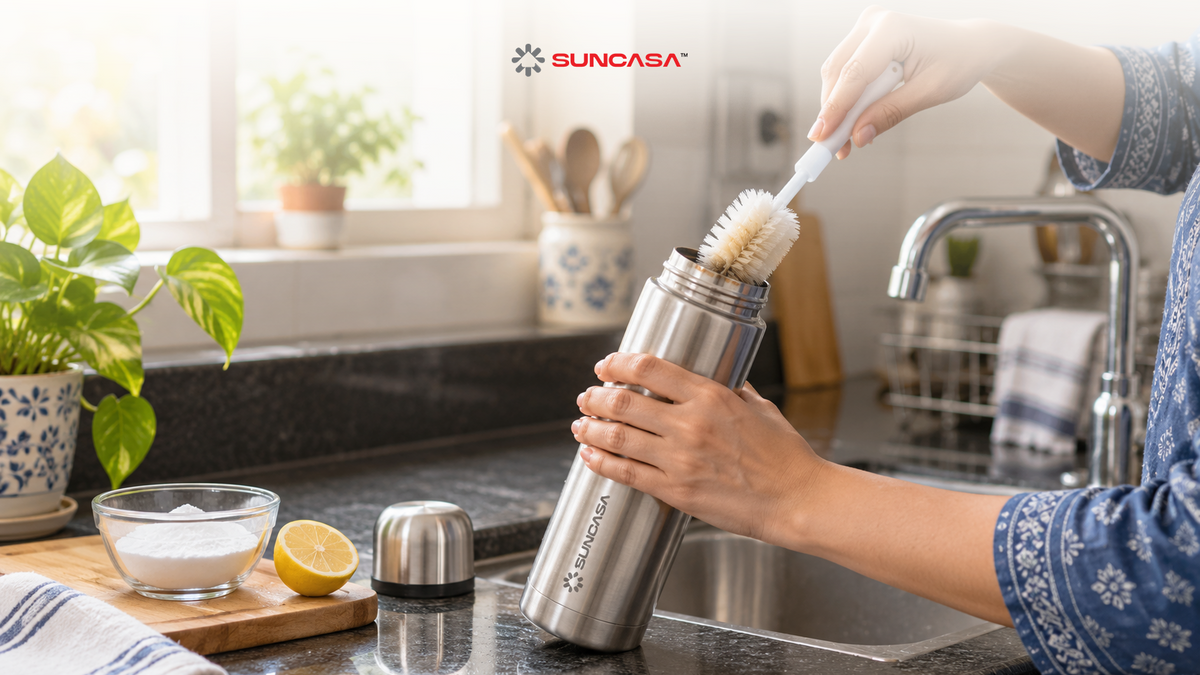
Tea and coffee are everyday favourites, but they can leave behind stubborn brown stains inside your vacuum flask. Over time, these marks can become harder to remove, especially when drinks are left inside for several hours.
The good news is that you do not need complicated cleaning products to remove tea and coffee stains from vacuum flasks. Simple household ingredients such as baking soda and vinegar, combined with the right cleaning technique, can help restore the inside of your flask and keep it fresh.
Why Do Tea and Coffee Stain Vacuum Flasks?
Tea and coffee contain natural compounds that can gradually stick to the inner surface of a flask. When the residue is not washed away properly, repeated use can make these marks darker and more noticeable.
Stains can become particularly stubborn when:
- Drinks sit for too long: Leaving tea or coffee inside for several hours gives residue more time to settle on the surface.
- The flask is only rinsed: A quick water rinse may remove the liquid but leave behind traces that build up over repeated use.
- The bottle stays closed: Trapped moisture and beverage residue can contribute to unpleasant smells along with visible staining.
- The lid is overlooked: Coffee and tea residue can also collect around the cap, mouthpiece, threads, and seals.
3 Simple Ways to Clean Tea and Coffee Stains
1. How to Clean Tea Stains from Flask with Baking Soda
Baking soda is one of the simplest options for dealing with everyday tea and coffee marks. Its mild abrasive action can help loosen residue without requiring harsh scrubbing.
If you are wondering how to clean tea and coffee stains from a flask, follow these steps:
- Add baking soda: Put around two tablespoons of baking soda into the empty flask.
- Add warm water: Fill the flask with warm water, leaving some space at the top.
- Let it soak: Close the flask and allow the solution to sit for several hours or overnight for stubborn stains.
- Brush the inside: Use a soft bottle brush to gently scrub the walls and bottom.
- Rinse thoroughly: Empty the solution and rinse several times with clean water.
For particularly stubborn marks, make a paste with baking soda and a little water. Apply it gently to the stained areas before brushing and rinsing.
2. Use White Vinegar for Mineral Deposits and Stubborn Marks
Vinegar is another simple household cleaning option. Its mild acidity can help loosen mineral deposits, stains, and residue that may build up inside the flask.
To remove tea and coffee stains from a vacuum flask, try the following:
- Mix vinegar and water: Combine equal amounts of white vinegar and water and pour the mixture into the flask.
- Allow it to soak: Leave the solution inside for approximately 30 minutes. Avoid unnecessarily prolonged exposure.
- Brush gently: Use a soft bottle brush to clean the interior, paying attention to the bottom and corners.
- Rinse well: Empty the solution and rinse the flask several times with clean water.
- Air-dry: Keep the flask open until completely dry to prevent a lingering vinegar smell.
3. Try Dish Soap for Everyday Cleaning
Not every stain requires a deep cleaning treatment. If your flask is cleaned after every use, mild dish soap and warm water are usually enough to prevent heavy buildup.
A simple routine can include:
- Add warm water and a small amount of mild dish soap.
- Close the flask and gently shake it.
- Use a soft bottle brush to clean the interior.
- Wash the lid and sipper separately.
- Rinse everything thoroughly.
- Leave all components open to air-dry.
This regular routine can reduce the need for deep cleaning later.
How to Clean a Stained Thermos Flask Without Damaging It
When dealing with stubborn marks, scrubbing harder is not always the answer. Using aggressive tools can scratch the surface and make future residue easier to accumulate.
Here is how to clean stained thermos flask surfaces safely:
- Use a soft bottle brush: Choose a brush that can reach the bottom without scratching the interior.
- Avoid steel wool: Metal scrubbers can leave scratches and should not be the first choice for cleaning stainless-steel drinkware.
- Skip harsh chemicals: Strong cleaning agents may leave behind residues or affect components such as seals and caps.
- Clean the lid separately: Pay attention to the mouthpiece, threads, gasket, and other areas where beverage residue can collect.
- Rinse completely: Any cleaning solution should be thoroughly washed away before the flask is used again.
Can You Prevent Tea and Coffee Stains?
Yes. A few small habits can significantly reduce buildup and make cleaning easier.
- Rinse immediately: Empty leftover tea or coffee and rinse the flask soon after use.
- Clean regularly: Do not wait until visible brown marks appear before washing the flask.
- Dry it open: Leave the cap off while the bottle dries to allow moisture to escape.
- Clean the cap: The sipper, mouthpiece, and seals need attention because beverage residue can collect there too.
- Avoid storing leftovers: A vacuum flask is convenient for carrying beverages, but storing tea or coffee in it unnecessarily long can increase residue buildup.
SUNCASA Oceana Vacuum Flask: Built for Your Daily Brew
The SUNCASA Oceana Vacuum Flask is made from 304 food-grade stainless steel, providing a safe, durable, and eco-friendly way to transport your favourite hot beverages. It is perfectly suited for the office, school, gym, travel, and outdoor activities. Oceana Vacuum Flask is also available in cola shape.
Its practical features include:
- Vacuum insulation: The vacuum-insulated design keeps drinks hot for up to 24 hours and cold for up to 24 hours.
- Leak-proof design: The leak-proof and airtight body prevents spills and ensures mess-free carrying.
- Odour-free finish: An odour-free, hygienic finish helps preserve the natural taste of your beverages.
- Durable construction: It is ISI certified, sturdy, and built for long-lasting performance.
- Premium stainless steel: The durable construction makes it suitable for repeated everyday use.
- Everyday convenience: The flask is easy to clean and ideal for daily use.
Because the Oceana Vacuum Flask is designed to be easy to clean for daily use, maintaining it after your morning tea or coffee is completely hassle-free. Even a premium vacuum flask benefits from simple habits such as rinsing promptly, washing the cap, and allowing the bottle to dry completely.
Make Deep Cleaning Part of Your Routine
Knowing how to clean tea stains from flask surfaces is useful, but preventing heavy buildup is even easier. A quick wash after every use can save you from dealing with stubborn marks later.
For occasional deep cleaning, baking soda or diluted white vinegar can help loosen residue. Always use gentle cleaning tools, rinse thoroughly, and allow the flask to dry completely before closing it. With consistent care, your vacuum flask can remain cleaner, fresher, and ready for your next cup of tea or coffee without those stubborn brown marks becoming a permanent part of it.
FAQs
How can I remove tea and coffee stains from a SUNCASA flask?
Use mild dish soap for regular cleaning or baking soda for stubborn stains. Gently brush the interior, rinse thoroughly, and allow your SUNCASA flask to dry completely.
Can baking soda clean stains inside the SUNCASA Oceana Sipper Flask?
Yes. Baking soda can help loosen tea and coffee residue. Let a baking soda solution soak briefly, gently brush the interior, rinse thoroughly, and air-dry afterward.
How often should I clean my SUNCASA vacuum flask?
Clean your SUNCASA flask after every use, particularly after tea or coffee. Regular washing prevents residue buildup, while occasional deeper cleaning can address stubborn stains and lingering smells.
Can I use vinegar to clean the SUNCASA Oceana Sipper Flask?
Yes. Diluted white vinegar can help loosen stubborn deposits. Use it for a short soak, rinse the flask thoroughly afterward, and leave it open to air-dry completely.
What makes the SUNCASA Oceana Sipper Flask suitable for everyday use?
The Oceana Sipper Flask features vacuum insulation, premium stainless steel, a leak-proof sipper cap, airtight construction, and an odour-free design, keeping beverages hot or cold for everyday hydration.


