

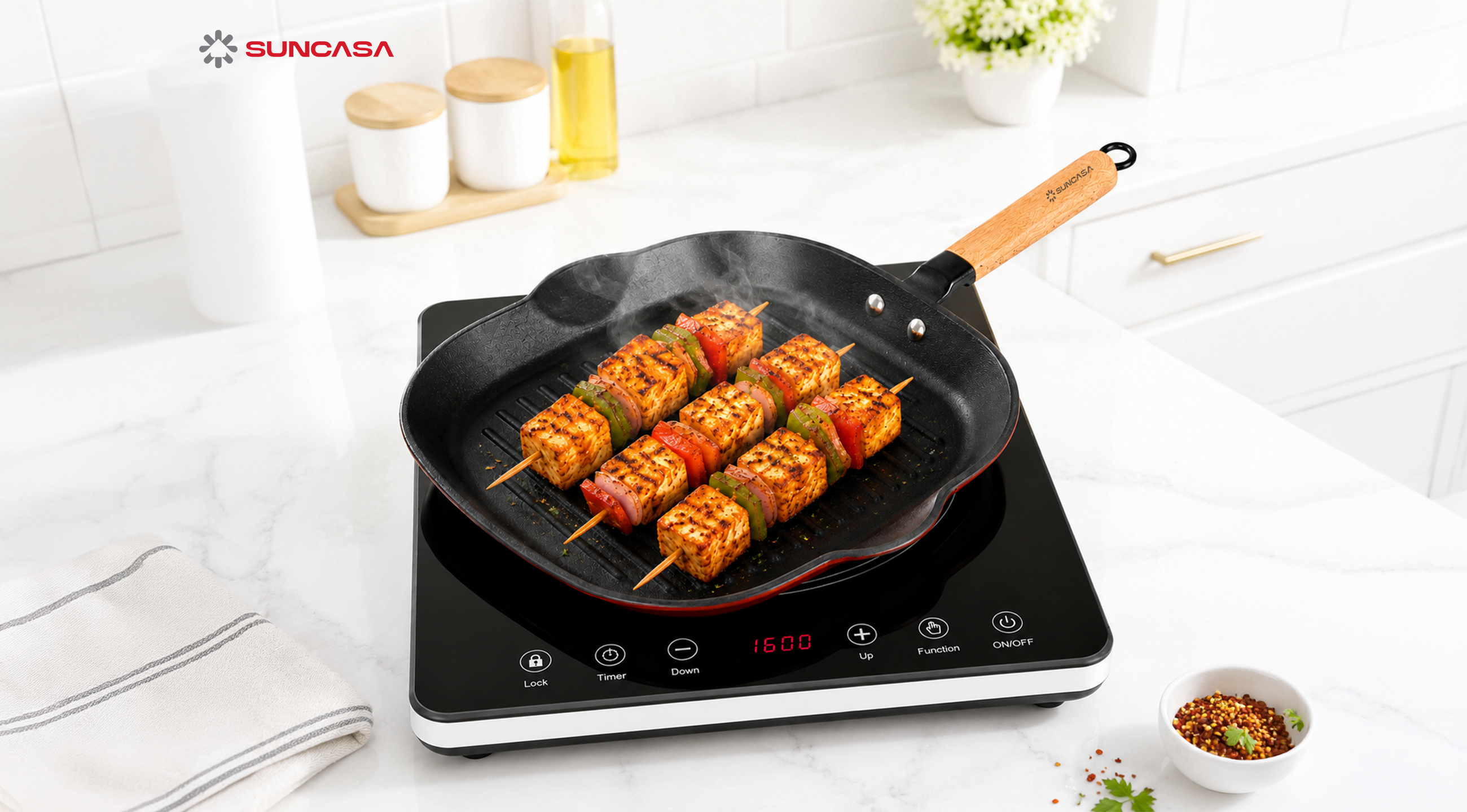
A cast-iron tawa is one of the most reliable cookware pieces you can have in your kitchen. For any kind of Indian cooking, the cast-iron delivers exceptional heat retention and cooking performance. However, many people struggle with food sticking to the surface and assume there is something wrong with the cookware.
In reality, the easiest way to fix it is to know how to season cast-iron tawa properly. Correct seasoning creates a naturally non-stick surface, improves cooking results, and significantly extends the lifespan of your cookware. In this guide, we'll explore everything you need to know about seasoning, maintaining, and getting the best performance from your cast iron cookware.
Understanding Cast Iron Seasoning
Before learning how to season cast-iron tawa, it is important to understand what seasoning actually means.
Seasoning is the process of applying a thin layer of oil to the surface of cast iron cookware and heating it until the oil bonds with the metal. This process creates a protective layer known as a patina. Unlike synthetic non-stick coatings, this layer develops naturally and becomes stronger with regular use.
A properly seasoned tawa prevents the food from sticking, protects the cookware from rust, improves heat distribution, and enhances the overall cooking experience. Plus, the more you cook on a seasoned cast-iron surface, the better it performs.
Benefits of a Well-Seasoned Cast Iron Tawa
|
Benefit |
Advantage |
|
Natural Non-Stick Surface |
Easier food release |
|
Improved Heat Distribution |
Consistent cooking results |
|
Rust Protection |
Longer cookware lifespan |
|
Better Cooking Performance |
Less sticking and burning |
|
Enhanced Flavor Development |
Improved taste over time |
Why Food Sticks to a Cast Iron Tawa
One of the most common concerns among new cast iron users is food sticking to the cooking surface. Fortunately, this problem is usually easy to fix. Food sticks when the seasoning layer is weak, damaged, or not fully developed. In some cases, improper cooking techniques can also contribute to sticking.
Common Causes of Food Sticking
|
Cause |
Impact on Cooking |
|
Inadequate seasoning |
Food adheres to the surface |
|
Cooking on a cold tawa |
Uneven cooking and sticking |
|
Using too little oil |
Reduced food release |
|
Excess moisture |
Weakens seasoning |
|
Improper cleaning |
Damages protective coating |
Many people search for how to season cast iron tawa after facing these issues, but the good news is that proper seasoning and maintenance can solve most sticking problems permanently.
Step-by-Step Guide to Seasoning a Cast Iron Tawa
Creating a durable seasoning layer requires patience, but the process itself is straightforward.
Step 1: Thoroughly Clean the Tawa
Start by washing the tawa to remove dust, packaging residue, or any contaminants that may interfere with seasoning. Use warm water and a soft sponge. If necessary, use a mild detergent for the first wash. Once cleaned, dry the tawa completely using a clean cloth.
Why This Step Matters
Any moisture left on the surface can interfere with seasoning and may eventually lead to rust formation.
Step 2: Apply a Thin Layer of Oil
The next step in how to season cast iron tawa involves selecting the right oil. Choose oils with a high smoke point such as:
- Sunflower oil
- Vegetable oil
- Canola oil
- Flaxseed oil
Apply a very thin layer across the entire cookware surface, including:
- Cooking surface
- Edges
- Bottom
- Handle (if cast iron)
Important Tip
Many beginners make the mistake of applying too much oil. Excess oil can create a sticky, uneven coating rather than a smooth seasoning layer. The surface should appear lightly coated, not greasy.
Step 3: Heat the Tawa Properly
Place the oiled tawa on the stovetop over medium heat. As the tawa heats, the oil begins to break down and chemically bond with the cast-iron surface. This process is known as polymerization. Continue heating until you notice slight smoke.
What Happens During Heating?
|
Process |
Result |
|
Oil bonds with iron |
Creates a protective layer |
|
Surface hardens |
Improves durability |
|
Non-stick coating develops |
Better cooking performance |
|
Moisture evaporates |
Prevents rust formation |
This stage is the most important part of learning how to season cast-iron tawa effectively.
Step 4: Allow the Tawa to Cool Naturally
Once the oil has bonded with the metal, turn off the heat and allow the cookware to cool completely. Avoid rushing this process by exposing the tawa to cold water or sudden temperature changes. Natural cooling helps strengthen the seasoning layer and improves its durability.
Step 5: Repeat the Process for Better Results
For brand-new cookware, one round of seasoning is often not enough. Repeating the seasoning process two to three times creates a stronger, smoother, and more durable cooking surface.
Each additional layer improves:
- Non-stick performance
- Heat retention
- Surface protection
- Cooking consistency
The strongest seasoning layers are developed gradually through repeated seasoning and regular cooking.
Everyday Cooking Habits That Improve Seasoning
Seasoning is not a one-time activity. Every cooking session contributes to building and strengthening the non-stick surface.
Best Practices for Daily Cooking:
Preheat Before Cooking: Always allow the tawa to heat for a few minutes before adding food. A properly heated surface improves food release and prevents sticking.
Use a Small Amount of Oil: Even though cast iron becomes naturally non-stick, a small amount of oil helps maintain the seasoning layer.
Start with Less Acidic Foods: When the seasoning is still developing, focus on foods such as:
- Dosas
- Rotis
- Parathas
- Chillas
- Vegetable stir-fries
Avoid highly acidic foods initially, as they can weaken a newly formed seasoning layer.
Proper Cleaning and Maintenance
Proper maintenance is just as important as understanding how to season cast iron tawa. Incorrect cleaning methods can quickly damage months of seasoning development.
Recommended Cleaning Method
- Allow the tawa to cool slightly.
- Rinse with warm water.
- Use a soft brush or sponge if needed.
- Dry immediately.
- Apply a light coating of oil before storage.
Cleaning Do's and Don'ts
|
Do |
Don't |
|
Use warm water |
Use harsh detergents frequently |
|
Dry immediately |
Leave cookware wet |
|
Apply light oil coating |
Store without protection |
|
Use gentle cleaning tools |
Use steel wool regularly |
These simple practices help preserve the seasoning layer and keep your cookware performing at its best.
Why Choose SUNCASA Castella Cast Iron Cookware?
The SUNCASA Castella collection combines traditional cast iron benefits with modern convenience, making it easier to maintain a healthy seasoning layer.
Castella Features
|
Feature |
Benefit |
|
Pure Iron Ore Construction |
Exceptional durability |
|
Naturally Non-Stick Surface |
Less oil required |
|
No Chemical Coating |
Safer cooking |
|
Exterior Enamel Coating |
Easier maintenance |
|
Quick to Heat |
Faster cooking |
|
Metal Spatula Safe |
Greater convenience |
|
Ergonomic Wooden Handle |
Comfortable handling |
|
Stain & Rust Resistant |
Better longevity |
|
Compatible with All Cooktops |
Versatile usage |
Additionally, Castella cookware is:
- 100% chemical-free
- Free from PTFE, PFOA, and PFAS
- Suitable for gas, induction, ceramic, glass cooktops, and ovens
- Designed for healthy everyday cooking
Common Seasoning Mistakes to Avoid
Even experienced cooks occasionally make mistakes that affect seasoning quality.
Avoid These Common Errors
|
Mistake |
Consequence |
|
Applying too much oil |
Sticky surface |
|
Skipping preheating |
Increased sticking |
|
Leaving cookware wet |
Rust formation |
|
Using harsh cleaners |
Damaged seasoning |
|
Storing improperly |
Reduced longevity |
Conclusion
Learning how to season cast-iron tawa properly is the first step in properly breaking in good cast-iron cookware. A well-seasoned tawa develops a naturally non-stick surface, prevents food from sticking, improves heat distribution, and lasts for generations with proper care. By following the seasoning and maintenance practices outlined above, you can maximize the performance of your cookware.
Explore the SUNCASA’s cast iron cookware collection and visit the SUNCASA online store today to bring home durable, naturally non-stick cookware built for everyday cooking excellence.
FAQs
1. Why is seasoning important for a cast-iron tawa?
Seasoning creates a natural non-stick layer that prevents food from sticking and protects the cookware from rust. SUNCASA Castella cast iron cookware comes pre-seasoned and continues to develop improved cooking performance with regular use and maintenance.
2. How often should I season my cast-iron tawa?
New cast-iron cookware may require additional seasoning during initial use. Afterward, regular cooking and occasional oiling help maintain the surface. SUNCASA Castella cookware is designed to build stronger seasoning naturally over time.
3. What oil should I use for seasoning cast iron cookware?
High smoke point oils such as sunflower, canola, vegetable, or flaxseed oil are suitable for seasoning. Applying a thin layer helps create a durable protective coating that enhances the naturally non-stick properties of SUNCASA Castella cookware.
4. Can I wash seasoned cast-iron cookware with soap?
Occasional mild soap use is generally acceptable, but frequent use may weaken seasoning. SUNCASA recommends gentle cleaning, thorough drying, and applying a light oil coating after washing to preserve the cookware’s performance and longevity.
5. What makes SUNCASA Castella cast iron cookware different?
SUNCASA Castella cookware is made from pure iron ore and features an exterior enamel coating, a naturally non-stick cooking surface, chemical-free construction, and compatibility with multiple cooktops. It combines traditional cast iron benefits with modern convenience and durability.


