

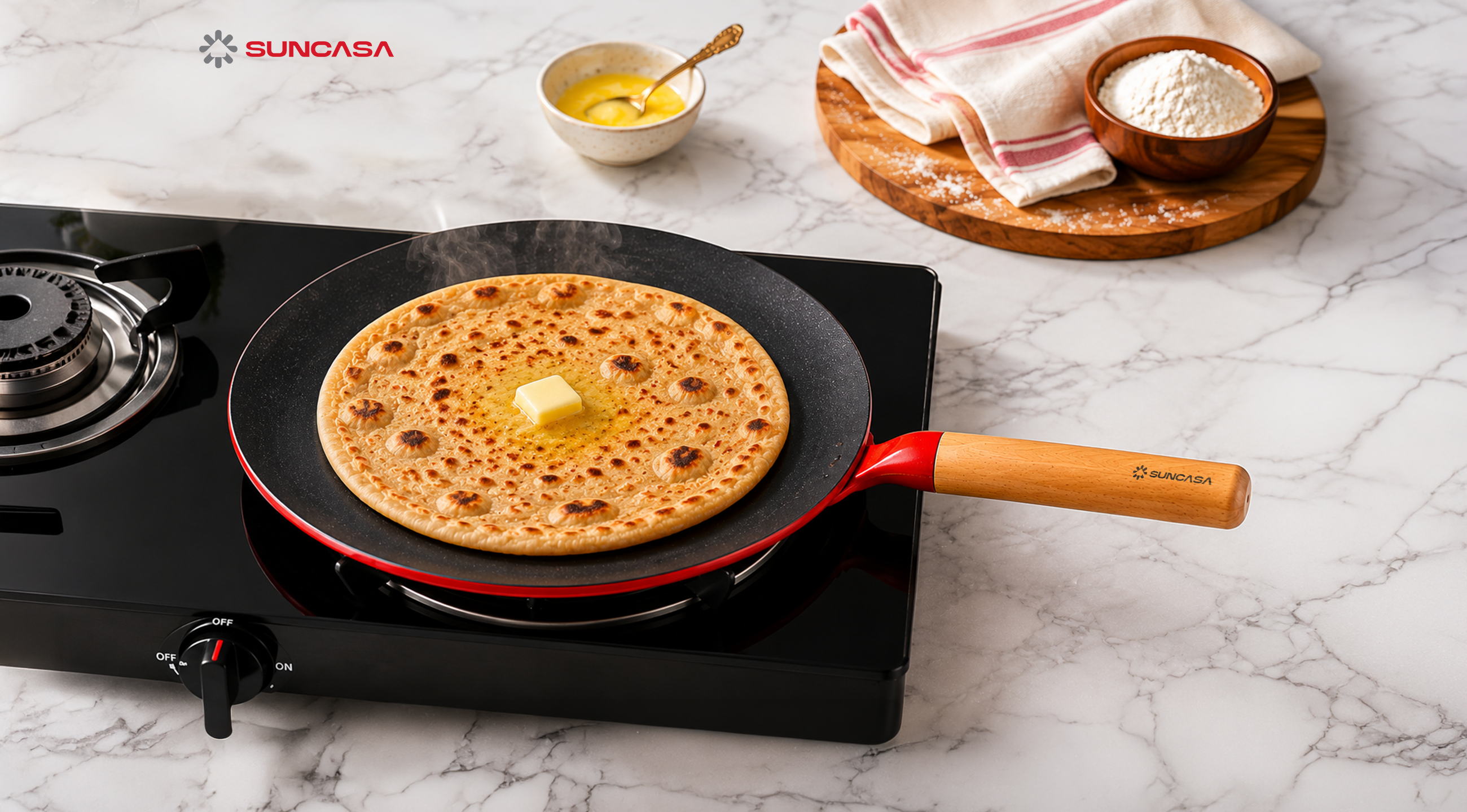
Indian cooking is deeply knitted with traditional cookware that could handle high temperatures, intense cooking sessions, and daily use. Among these cookwares, cast iron still remains as one of the most trusted choices across generations.
Plus, the growing interest in healthier and more sustainable cooking has once again brought to the limelight the benefits of cast iron cookware for modern kitchens. From superior heat retention to natural non-stick performance, cast iron continues to be a valuable addition to Indian homes. Let us explore further into why it remains a preferred cookware choice today.
Why Cast Iron Has Always Been Popular in Indian Kitchens
Before the rise of non-stick cookware, cast-iron pots and pans were a common sight in Indian households. From preparing dosas and rotis to frying snacks and cooking curries, cast-iron cookware suits a wide range of traditional recipes.
The popularity of cast iron comes from its benefits. It can withstand high temperatures, last for decades, and deliver consistent cooking performance. Unlike aluminium or non-stick cookware, which often require frequent replacement, cast iron consistently improves with regular use when properly maintained.
Traditional Benefits That Still Matter Today
|
Feature |
Benefit |
|
High durability |
Can last for decades |
|
Excellent heat retention |
Even cooking results |
|
Natural seasoning |
Improves cooking surface over time |
|
No synthetic coating |
Safer high-temperature cooking |
|
Versatile use |
Suitable for various Indian dishes |
Key Benefits of Cast Iron Cookware for Daily Use
Chemical-Free Cooking for Everyday Safety
One of the biggest reasons the demand for cast iron is increasing is the desire to avoid synthetic coatings. Traditional cast-iron cookware is free from artificial non-stick layers that degrade over time.
This means you can cook confidently at high temperatures without worrying about peeling or flaking coatings. Cast iron cookware health benefits become especially valuable for families that cook multiple meals every day and prefer cookware made from natural materials.
SUNCASA’s Castella Cast Iron range takes this further by using pure iron ore construction with no chemical coating. The cookware is 100% non-toxic and free from PTFE, PFOA, and PFAS, making it suitable for everyday cooking.
Excellent Heat Retention for Indian Recipes
Indian cooking needs many different cooking styles, such as roasting, tempering, shallow frying, and slow cooking. These methods need cookware that distributes heat evenly and maintains temperature consistently. Cast-iron utensils are great in this area because they retain heat longer than many other cookware materials.
How Heat Retention Improves Cooking
|
Cooking Method |
Advantage of Cast Iron |
|
Roti making |
Even browning |
|
Dosa preparation |
Consistent crisp texture |
|
Frying |
Stable oil temperature |
|
Slow-cooked curries |
Better flavor development |
|
Grilling |
Uniform searing |
This ability to maintain steady heat is one of the most important benefits of cast iron cookware for Indian households.
Naturally Non-Stick with Proper Seasoning
A well-maintained cast-iron pan develops a naturally non-stick surface through seasoning. Unlike synthetic coatings, this seasoning improves with regular cooking and can be restored whenever needed.
Many people assume cast-iron requires extensive preparation before first use. However, SUNCASA Castella cookware comes pre-seasoned, allowing users to start cooking immediately without spending additional time seasoning the cookware. The natural non-stick performance also means less oil is needed during cooking, making everyday meals more convenient and efficient.
Supports Traditional Indian Cooking Methods
Indian recipes often mean high-heat cooking and frequent stirring with metal utensils. Cast iron cookware handles these demands exceptionally well. Some common uses include:
- Making rotis and parathas
- Preparing crispy dosas
- Cooking sabzis and curries
- Deep and shallow frying
- Grilling vegetables and paneer
Unlike delicate coated cookware, cast iron is metal spatula safe and designed for regular, intensive use.
Long-Term Durability That Saves Money
One of the advantages of cast-iron cookware is its lifespan. While cookware such as aluminium options needs replacement after a few years, cast iron can serve families for decades with basic maintenance.
Comparing Cast Iron with Conventional Cookware
|
Factor |
Cast Iron |
Standard Non-Stick |
|
Lifespan |
Decades |
Limited years |
|
High heat tolerance |
Excellent |
Moderate |
|
Surface restoration |
Possible |
Usually not possible |
|
Metal utensil compatibility |
Yes |
Often restricted |
|
Sustainability |
High |
Moderate |
These long-term advantages contribute significantly to the overall benefits of cast iron cookware and make it a cost-effective investment.
Easy Maintenance with Modern Improvements
Traditional cast iron cookware often required careful maintenance to prevent rusting. Modern innovations have made this process much easier. The SUNCASA Castella range features an exterior enamel coating that helps simplify maintenance while enhancing durability. Additional advantages include:
- Stain-resistant surface
- Rust-resistant construction
- Easier cleaning
- Improved longevity
Combined with regular drying and occasional oiling, maintenance becomes a simple routine rather than a challenge.
Premium Cast Iron Options from SUNCASA
For those looking to experience the advantages of cast iron with modern convenience, SUNCASA offers a thoughtfully designed Pre-Seasoned Castella collection.
- SUNCASA Castella Cast Iron Roti Tawa: Ideal for preparing rotis, parathas, and dosas with even heating and consistent browning.
- SUNCASA Castella Cast Iron Frypan: Perfect for sautéing vegetables, frying eggs, and preparing quick everyday meals.
- SUNCASA Castella Cast Iron Grillpan: Designed for grilling vegetables, paneer, kebabs, and other dishes that benefit from high-heat searing.
- SUNCASA Castella Cast Iron Kadai: A versatile option for curries, stir-fries, deep frying, and traditional Indian recipes.
The entire range is made with pure iron ore, featuring ergonomic wooden handles for comfortable handling, naturally non-stick performance, and it is compatible with gas, induction, electric, ceramic, glass cooktops and ovens.
A Sustainable Choice for Modern Kitchens
As more people look for environmentally responsible products, cast-iron stands out as a practical solution. Its long lifespan reduces waste, and its recyclable nature supports sustainable living goals.
Unlike cookware that needs frequent replacement, cast iron remains functional for years, reducing overall use of resources. This combination of durability and sustainability further strengthens the benefits of cast iron cookware for today's households.
Upgrade Your Kitchen with Durable Cast Iron Essentials
The enduring popularity of cast iron is rooted in its performance, durability, and ability to support traditional cooking methods. The many benefits of cast iron cookware, from even heating and natural non-stick properties to chemical-free cooking and long-term value, make it an excellent choice for Indian kitchens.
For a premium cast iron cooking experience with modern convenience, explore the SUNCASA Castella collection and visit the SUNCASA online store today.
FAQs
1. Why is SUNCASA Castella cast iron cookware suitable for Indian cooking?
SUNCASA Castella cookware is made from pure iron ore and offers excellent heat retention, making it ideal for rotis, dosas, curries, frying, and other traditional Indian recipes.
2. Does SUNCASA Castella cookware require seasoning before first use?
No. SUNCASA Castella cookware comes pre-seasoned, allowing you to start cooking immediately while enjoying a naturally non-stick cooking surface from day one.
3. Is SUNCASA Castella cookware free from harmful coatings?
Yes. SUNCASA Castella cookware is completely free from PTFE, PFOA, PFAS, and synthetic coatings, ensuring safe and chemical-free cooking.
4. Can SUNCASA Castella cast iron cookware be used on induction cooktops?
Yes. The Castella range is compatible with gas, induction, ceramic, electric cooktops, and even oven cooking for maximum versatility.
5. What makes SUNCASA Castella different from conventional cast iron cookware?
SUNCASA Castella combines traditional cast iron benefits with modern features like an enamel-coated exterior, ergonomic wooden handles, rust resistance, and easy maintenance.


