

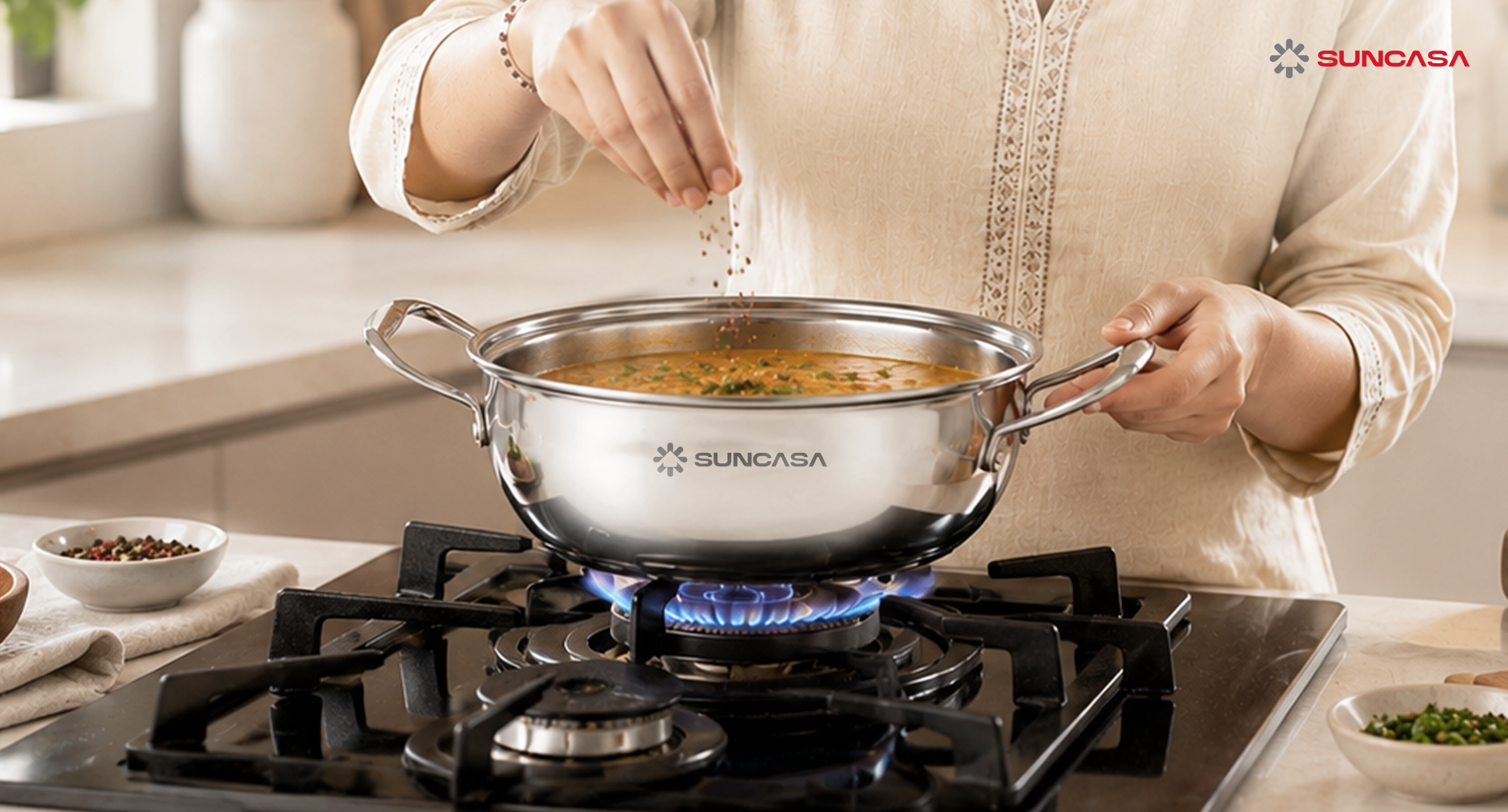
Let's be honest, most of us don't think twice about the pan we're cooking in. We pick it up, turn on the flame, and get going. But here's something worth pausing on: the cookware you use every single day can affect your health, your food's quality, and even the environment around you.
With so many options flooding the market, such as non-stick, ceramic-coated, triply, and cast iron, it can get overwhelming fast. That's exactly why exploring non-toxic cookware options has become such an important issue today, especially for Indian homes where high-heat cooking, acidic ingredients, and daily use put cookware through a good test.
Why Your Cookware Choice Actually Matters
Indian cooking is intense in the best way possible. We’re talking about hot tadkas, tangy tamarind gravies, slow-cooked dals, and deep-fried snacks. All of this puts a lot of pressure on your cookware every single day. And that becomes a problem when you’re using pans with low-quality chemical coatings.
Many budget non-stick pans are made with PTFE (commonly known as Teflon) and PFAS chemicals. When heated above 260°C, which can easily happen during a tadka, they release harmful fumes and mix unwanted toxins in the food. Over time, this can affect your health in ways you don’t immediately notice.
The good part? Safer and more durable options are easily available today; you just need to know what to look for.
What Does "Non-Toxic Cookware" Actually Mean?
Non-toxic cookware simply means cookware that does not release harmful chemicals into your food, even when used on high heat. This includes being free from PTFE, PFOA, PFAS, lead, and cadmium. It’s made from stable, natural materials that can handle everyday Indian cooking without breaking down.
When exploring non-toxic cookware options, look for cookware made from food-grade stainless steel, cast iron, or carbon steel. Make sure it has no plastic coatings, no artificial polish that wears off with heat, and is strong enough to last through years of daily use.
The Safest Cookware Materials for Indian Kitchens
1. Triply Stainless Steel — The Modern Gold Standard
If you want one type of cookware that handles almost everything, triply stainless steel is a great choice. It is made with three layers – stainless steel on the outside, an aluminium core in the middle, and food-grade stainless steel on the inside. The aluminium spreads heat evenly, while the steel keeps your food safe from any reactions.
The SUNCASA Tri-Smart Triply Frypan with Lid is the perfect option for everyday cooking like sautéing vegetables or making quick sabzis. The SUNCASA Tri-Smart Triply Sauce Pan with Lid works well for dals, soups, and reheating gravies without worrying about acidic ingredients reacting. Each of SUNCASA’s Tri-Smart range comes with impact forged bottoms, which means steadier utensil, even heat distribution and durability that lasts for decades.
2. Pre-Seasoned Cast Iron — The Original Non-Stick
Cast iron is one of the oldest cookware materials, and it’s still trusted for a reason. It has no chemical coatings, and when used regularly, it builds a natural non-stick layer that keeps improving over time. It also adds a small amount of iron to your food, which can be beneficial, especially for women and children.
The SUNCASA Castella Pre-Seasoned Cast Iron Frypan is made with pure iron ore and spares you the hassle of first-time seasoning. They are ideal for simmering, grilling anf frying dishes every day. And the best part is that it grows with you, meaning that it gets better with every cook, so that you can get the full benefit of using authentic cast-iron cookware for long years.
3. Carbon Steel — Lightweight Yet Powerful
Carbon steel cookware is often seen as a lighter alternative to cast iron, while still making sure that the food is uncontaminated. It works especially well for Indian cooking styles that require high heat and quick cooking.
Over time, as you continue to use it, carbon steel naturally develops a non-stick surface through seasoning, making it even more efficient and easier to cook with. Because it heats up quickly and responds well to temperature changes, it becomes a reliable option for everyday cooking without feeling too heavy to handle.
4. Clay and Earthen Cookware — The Traditional Touch
Clay and earthen cookware bring back the essence of traditional Indian cooking, offering a completely natural and chemical-free way to prepare meals. Made from raw, biodegradable materials, this type of cookware is known for its ability to improve the flavour of food with a subtle earthy aroma.
It also supports slow cooking, which helps retain more nutrients and allows flavours to develop more deeply over time. However, while clay cookware is good, it does require a bit of care. It’s important to choose unglazed or lead-free glazed options to ensure safety, and it should always be handled gently, as sudden temperature changes can cause it to crack.
How to Spot Genuinely Safe Cookware When Shopping
This is where many people get confused because brands often use words like “eco-friendly” or “healthy” without real proof. So when you’re looking at non-toxic cookware in India, focus on the details that actually matter.
Check the material grade; good stainless steel should clearly mention the 304 or 316 grade. Look for labels like PFAS-free, PFOA-free, and lead-free. See if the brand products have certifications such as BIS, ISO, or FDA-approved materials.
The Long-Term Value of Investing in Safe Cookware
Here's a perspective that might help: quality non-toxic cookware isn’t as much an expense as it is an investment. A cheap non-stick pan might last you a year or two before it starts peeling. A good triply stainless steel kadhai or a well-maintained cast iron pan? Easily 10 to 15 years, sometimes longer.
When you look at the cost per use over that period, non-toxic cookwares like triply and cast iron actually work out to be more affordable in the long run. And that's before even factoring in the health benefits of not exposing your family to chemical-laden cookware day after day.
It's Also Better for the Planet
Stainless steel and cast iron are both fully recyclable. They don't end up in landfills the way peeling non-stick pans do. By choosing durable, natural cookware, you're reducing waste, cutting down on how often you replace things, and making a quiet but meaningful contribution to a more sustainable kitchen.
Where to Start
You don't need to overhaul your entire kitchen at once. Start with one or two pieces that you use most often. A triply frypan or saucepan for everyday cooking, a cast-iron tawa for dosas and parathas, and a deep kadhai for curries and frying, those three pieces alone can cover most of what an Indian kitchen needs.
The point is simply this: your cookware touches every meal you or your family eats. It's worth making sure it's working for your health, not against it.


