

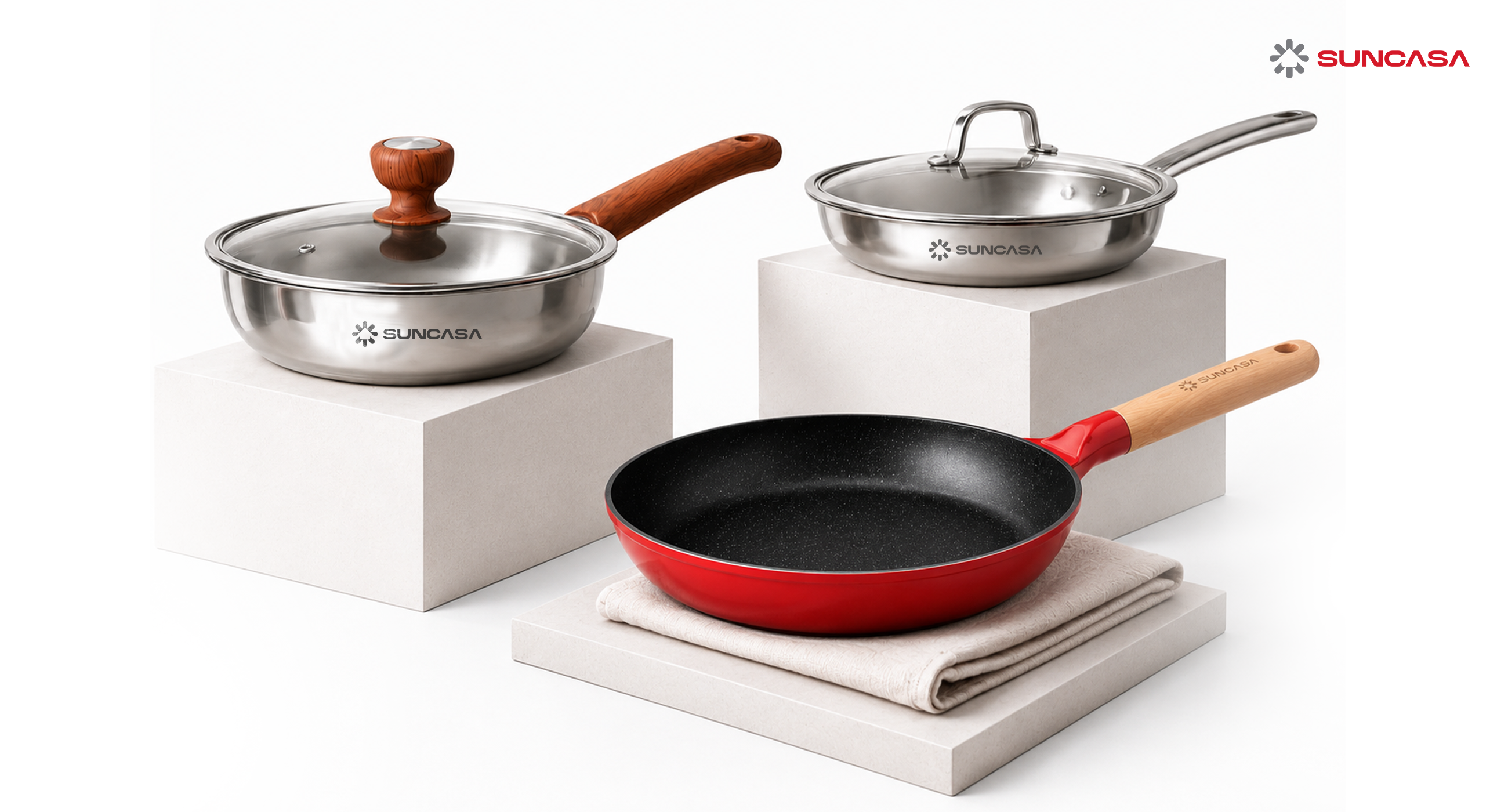
When it comes to curating a functional Indian kitchen, cookware doesn’t just decide the aesthetic; it impacts how the food cooks, tastes, and even how healthy it is. From everyday sabzis to indulgent parathas, each dish needs the right tool.
That’s where a healthy cookware materials comparison becomes useful. Instead of asking “which is best?”, the smarter question is: which cookware works best for what you cook? Let’s break down the most famous options available in the market – stainless steel, cast iron, and non-stick cookware in a way that actually helps you choose, without the confusion.
Understanding Indian Cooking Needs
Indian cooking is diverse and needs a lot of techniques. You might start the day with a light dosa, cook dal for lunch, and end with a rich curry or stir-fry for dinner. That means your cookware needs to:
- Handle both high and low heat
- Distribute heat evenly
- Be durable for daily use
- Support different cooking styles
That’s why a well-equipped kitchen needs the right mix of cookware that makes everyday cooking easier and more comfortable. And that’s exactly what this cookware comparison guide is here to help you understand.
Stainless Steel: Your Everyday Workhorse
If you’re looking for reliability, stainless steel is hard to beat.
A good option is the SUNCASA Impact Pro Stainless Steel Frypan, which is designed for even heating and durability. Stainless steel, especially with a thick impact forged base that distributes heat correctly, makes it perfect for everyday cooking like sautéing vegetables, making curries, or preparing tadka.
Why people love it:
- Non-reactive (safe for tomatoes, tamarind, etc.)
- Handles high heat well
- Extremely durable
- Low maintenance
What to keep in mind:
It’s not naturally non-stick, so you’ll need a bit of technique, like preheating the pan and using enough oil, to avoid sticking.
Cast Iron: For Flavour and Nutrition
Cast iron cookware has always been a part of Indian kitchens and for good reason. The SUNCASA Castella Pre-Seasoned Cast Iron Frypan makes it simple to enjoy these benefits without the extra effort of seasoning it yourself. It’s made from pure iron and has no chemical coatings, so your food stays natural while also getting a boost of iron with every meal.
Why it stands out:
- Excellent heat retention (stays hot longer)
- Enhances flavour over time
- Naturally develops a non-stick surface
- Adds a small amount of iron to food
Best for:
Parathas, searing, shallow frying, and dishes that need slow, even cooking.
What to keep in mind:
It’s heavier than other cookware and needs basic care like drying it properly and occasional re-seasoning. Still, if you’re serious about flavour, cast iron is a must-have in any Indian kitchen.
Non-Stick: Convenience at Its Best
For busy days or quick meals, non-stick cookware is a lifesaver. Whether you’re making omelettes, dosas, or quick stir-fries, non-stick pans require less oil and are incredibly easy to clean.
Why it’s popular:
- Minimal sticking
- Requires less oil
- Lightweight and easy to handle
- Perfect for beginners
What to keep in mind:
- Best used on low to medium heat
- The coating can wear out over time
- Needs gentle handling (no metal spoons or abrasive scrubbing)
Non-stick may not last as long as stainless steel or cast iron, but it definitely earns its place in a practical, healthy cookware materials comparison.
Stainless Steel vs Cast Iron vs Non-Stick: Detailed Overview
Here’s a simple side-by-side breakdown to help you decide:
|
Feature |
Stainless Steel |
Cast Iron |
Non-Stick |
|
Heat Distribution |
Even (especially triply) |
Slower but very even |
Moderate |
|
Heat Retention |
Medium |
Excellent |
Low |
|
Durability |
Very high |
Extremely high (lifetime) |
Moderate |
|
Maintenance |
Low |
Medium (needs care) |
Very low |
|
Stick Resistance |
Low (needs technique) |
Improves over time |
Excellent |
|
Weight |
Medium |
Heavy |
Lightweight |
|
Health Factor |
Non-reactive, safe |
Adds iron to food |
Low oil cooking |
|
Best For |
Daily cooking, curries, sautéing |
Parathas, frying, searing |
Eggs, dosas, quick meals |
|
Lifespan |
Long |
Very long |
Shorter |
So, Which One Should You Choose?
This is where most people get it wrong, trying to rely on just one type of cookware. A smarter, more practical kitchen focuses on the right combination, with special emphasis on long-lasting, reliable materials.
A well-balanced setup includes:
- Stainless steel for everyday cooking, versatile, durable, and perfect for curries, sautéing, and daily meals
- Cast iron is best for high-heat, flavour-rich dishes, which are best for searing, frying, and traditional recipes
Cast iron, especially, is the most suitable option as it actually gets better with you. With every use, it develops a natural seasoning layer, improving its non-stick properties and enhancing flavour over time. It’s a piece that grows with your cooking journey and can last for generations.
Think of it less like choosing between options and more like building a kitchen that works smarter for you. That’s the real takeaway from any healthy cookware materials comparison.
The SUNCASA Advantage
What truly sets SUNCASA apart isn’t just the cookware, it’s the thought behind it. Designed for real Indian kitchens, SUNCASA focuses on making everyday cooking easier, more reliable, and long-lasting. Here’s how:
- Built for Indian cooking: Handles high heat, tadka, frying, and slow cooking with ease
- Quality-first materials: Durable stainless steel and robust cast iron for long-term use
- Safety first: Each SUNCASA product is made with 304-grade steel, which is the safest grade of material available, ensuring that each cook is toxin-free.
- Smart design: Even heat distribution for better cooking results every time
- Low-maintenance approach: Practical features that simplify cleaning and care
- Balanced innovation: Combines traditional cooking benefits with modern convenience
SUNCASA doesn’t overcomplicate cooking; it supports it. Whether you're cooking daily meals or experimenting with flavours, the brand ensures your cookware works with you, not against you.
Final Thoughts
The ultimate winner is the one that adds the most to your daily cooking experience. A smart kitchen balances performance and practicality, and understanding the healthy cookware material options available helps you match the right tool to the right dish.
Stainless steel offers versatility, cast iron adds flavour and nutrition, and non-stick makes booking easy, but not without the risk of contamination. With this understanding of cookware, buying cooking tools and cooking becomes easier, smarter, and far more enjoyable every day.


