

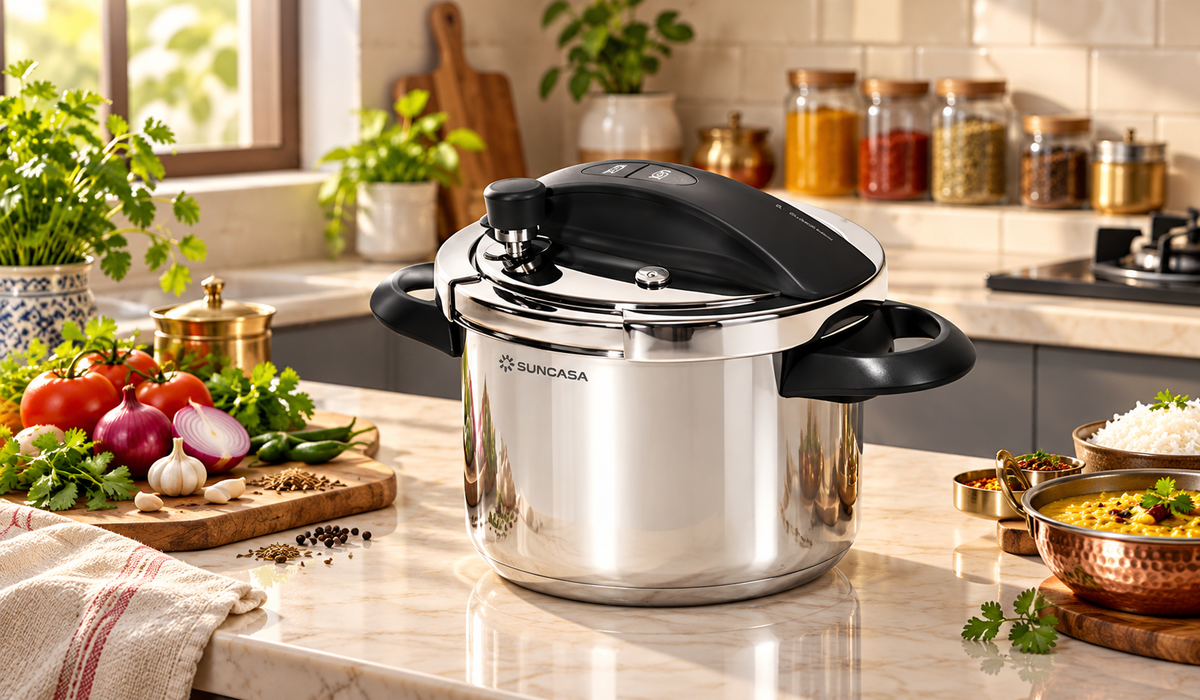
A pressure cooker is one of the hardest-working tools in an Indian kitchen. It may be used for dal in the morning, rice at lunch, chole in the evening and meal prep on the weekend. Because it is used so often, choosing the right stainless steel pressure cooker is less about buying the most expensive option and more about understanding the features that matter in everyday cooking.
This buying guide explains what to check before you buy, how to choose the right capacity, why the base construction matters and how to match the cooker to your gas or induction cooktop.
Stainless Steel Pressure Cookers
1. Start with the Material: Why Stainless Steel Matters
Stainless steel is popular for pressure cookers because it is durable, easy to maintain and suitable for a wide variety of foods. Unlike bare aluminium, a stainless steel cooking surface is comparatively non-reactive, so it is well suited to Indian recipes that use tomatoes, tamarind, curd, lemon and other acidic ingredients.
When comparing a steel pressure cooker, look for clearly stated material specifications rather than relying only on words such as “premium” or “heavy duty.” SUNCASA lists 304 food-grade stainless steel on its Impact Pro pressure cooker range, which makes the material choice easy to verify before purchase.

2. Check the Base Construction
The body material is only one part of the buying decision. The base controls how heat enters the cooker. A well-built heavy base can spread heat more evenly, reduce concentrated hot spots and make the cooker more useful across different cooking methods.
SUNCASA’s Impact Pro pressure cookers use an impact-bonded bottom. In this type of construction, a heat-conducting core is bonded into the base so heat can spread more consistently than it would through a thin single-metal bottom.
3. Choose the Right Capacity for Your Household
Pressure cooker capacity should match the quantity you cook most often. A smaller cooker is convenient for everyday dal, rice and vegetables, while a larger cooker gives you more room for family meals, batch cooking and dishes that expand during cooking.
|
Cooker size |
Often suitable for |
Typical use cases |
|
3 litre |
Individuals, couples and smaller households |
Dal, rice, khichdi, vegetables, smaller one-pot meals |
|
5 litre |
Larger households or people who batch cook |
Family portions, rajma/chole, pulao, larger one-pot meals |
Do not choose capacity by family size alone. Think about portion sizes, how often you cook in bulk and whether you want leftovers for the next meal.
3 litre vs 5 litre pressure cooker
4. Confirm Induction Compatibility
If you use induction today, or may switch to induction later, confirm that the cooker base is induction compatible. Induction works through magnetic interaction with the cookware base, so not every metal vessel works automatically.
A cooker that supports both gas and induction gives you more flexibility and can continue to be useful if your kitchen setup changes.
5. Look Closely at the Locking and Safety System
A pressure cooker should be easy to close correctly and should include clearly described pressure-control and safety mechanisms. Read the manufacturer’s instructions before the first use and never improvise with the valve, gasket or locking parts.
For a click-on style cooker, look for a mechanism that gives a clear locked position and is comfortable to operate. Also check whether the product information explains the pressure valve, gasket-release system and backup safety features.
6. Handle Design Affects Daily Convenience
A cooker can become heavy once it is filled. Handles should feel secure, offer enough room for a comfortable grip and be positioned so the cooker can be moved safely after pressure is fully released. Stay-cool handle design is especially useful for frequent cooking.
7. Do Not Ignore Cleaning and Maintenance
Smooth stainless steel is straightforward to maintain when cleaned soon after cooking. Allow the cooker to cool, wash with mild dish soap and a soft scrubber, and dry it before storing. For stubborn food residue, soaking is usually more effective than aggressive scrubbing.
The gasket, valve and lid assembly need separate attention because these parts are directly related to pressure performance. Follow the product manual for inspection and replacement intervals.
8. Compare Warranty and Spare-Part Support
A pressure cooker is a long-term kitchen purchase. Before buying, check the warranty period, customer-support details and availability of consumable parts such as gaskets or valves. Easy access to the correct replacement part is more useful than a low purchase price if you plan to use the cooker for years.
Quick Buying Checklist
- Clearly stated stainless steel grade and construction
- Capacity that matches your real cooking volume
- Heavy, stable base with even-heating design
- Compatibility with your gas or induction cooktop
- Clearly explained locking and pressure-safety system
- Comfortable, secure handles
- Simple cleaning and maintenance instructions
- Warranty and accessible customer support
Frequently Asked Questions
Is a stainless steel pressure cooker good for daily cooking?
Yes. Stainless steel is durable, easy to maintain and suitable for a wide range of Indian dishes when the cooker is used according to the manufacturer’s instructions.
Which pressure cooker size is best for a small family?
A 3 litre cooker often suits smaller households, but the right size depends on portion sizes and whether you cook in batches.
Can a stainless steel pressure cooker work on induction?
Only if its base is designed for induction. Check the product specification for induction compatibility.
What should I check before using a new cooker?
Read the manual, inspect the gasket and valve, understand the locking mechanism and follow the recommended filling limits.
Is a heavy base useful in a pressure cooker?
A well-constructed heavy base can improve stability and heat distribution, which is helpful for regular cooking.
Conclusion
The best stainless steel pressure cooker in India is not simply the one with the most features. It is the one whose material, size, base, locking system and cooktop compatibility fit the way your household actually cooks. Compare these fundamentals first, then choose the model that gives you the right balance of everyday convenience and long-term durability.


