

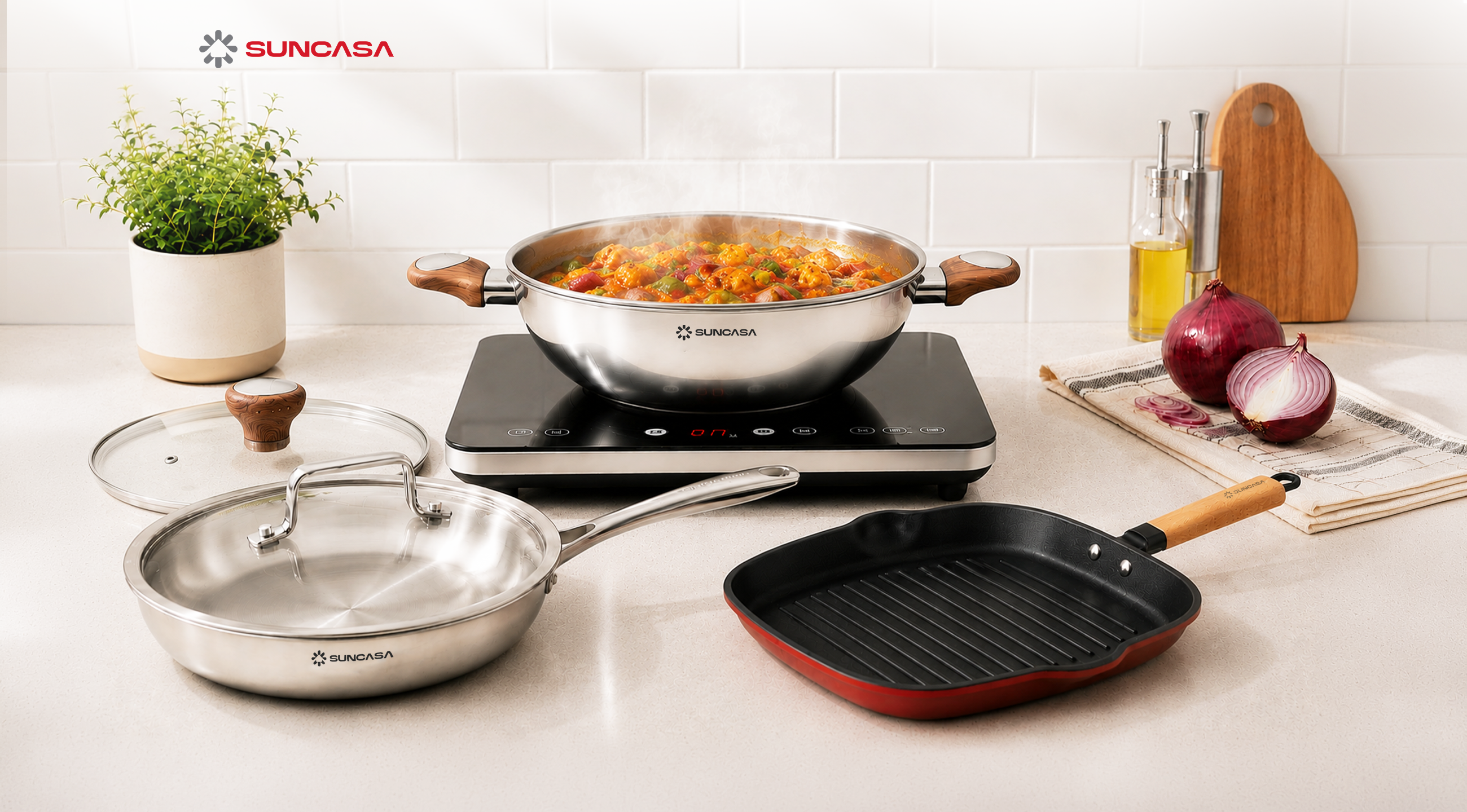
When comparing stainless steel against non-stick cookware, more than convenience, it’s the safety of the cookware that is coming into question. Growing awareness about cookware safety has encouraged many home cooks to rethink what they use every day.
This is why understanding the materials, coatings, and long-term health implications can help you make an informed decision. Let's explore why stainless steel is becoming the preferred choice for healthier cooking.
Why Non-Stick Cookware Is Under Scrutiny
Non-stick cookware gained popularity because it made cooking and cleaning quick and easy. However, many traditional non-stick pans rely on synthetic coatings that can deteriorate over time, especially when exposed to high heat or physical damage.
As these coatings wear down, concerns arise about the release of microscopic particles and chemical compounds into food. While modern manufacturing has improved, damaged or poorly maintained non-stick cookware can still become a cause for concern.
The most common non-stick coating technologies include:
|
Coating Type |
Advantages |
Potential Concerns |
|
PTFE (Teflon) |
Excellent non-stick performance |
Can degrade at very high temperatures, and damaged coatings may release PFAS-related particles |
|
Ceramic Coating |
PTFE and PFOA-free |
Coating durability varies; scratches may reduce performance |
|
Anodized Aluminium |
Durable, lightweight |
Damaged surfaces may expose aluminium beneath the coating |
Understanding PTFE, PFAS, and Why They Matter
Traditional Teflon cookware is primarily coated with Polytetrafluoroethylene (PTFE). Although PTFE performs well under normal cooking temperatures, overheating beyond approximately 260°C (500°F) may cause the coating to break down and release fumes.
Another major concern revolves around PFAS (Per- and Polyfluoroalkyl Substances), often referred to as "forever chemicals" because they remain in the environment and human body for extended periods. Earlier generations of non-stick cookware also used PFOA during manufacturing, which has largely been phased out by major manufacturers.
Research has associated prolonged PFAS exposure with several health concerns, including:
- Reduced fertility and pregnancy-related complications
- Developmental issues in children
- Increased risk of certain cancers
- Weakened immune response
- Hormonal disruption
While cookware is only one possible source of PFAS exposure, replacing worn or damaged non-stick cookware can help reduce unnecessary exposure.
Stainless Steel Vs Non Stick Cookware: A Practical Comparison
For everyday cooking, the debate around stainless steel vs non-stick cookware extends far beyond food contamination. Durability, cooking performance, maintenance, and long-term safety all deserve equal attention.
|
Feature |
Stainless Steel |
Traditional Non-Stick |
|
Chemical Coating |
No synthetic coating |
Synthetic coating applied |
|
Durability |
Extremely durable |
The coating gradually wears down |
|
High Heat Cooking |
Excellent |
Limited by coating temperature |
|
Cooking Acidic Foods |
Safe and non-reactive |
Generally safe until the coating deteriorates |
|
Lifespan |
Can last decades with proper care |
Usually shorter due to coating wear |
|
Metal Utensils |
Safe to use |
May scratch coating |
|
Environmental Impact |
Long-lasting and recyclable |
More frequent replacement required |
4 Reasons Stainless Steel Is the Healthier Investment
Stainless steel cookware has earned the trust of professional chefs and home cooks alike because it combines durability with food safety.
1. No Chemical Coating
High-quality stainless steel cookware does not rely on synthetic coatings to perform. There is no coating to peel, chip, or degrade over time.
2. Non-Reactive Surface
Food-grade stainless steel remains stable even when cooking acidic ingredients such as tomatoes, lemon juice, or vinegar, ensuring flavours stay pure.
3. Exceptional Durability
Unlike coated cookware that may require replacement every few years, premium stainless steel cookware can serve families for decades with proper care.
4. Consistent Heat Distribution
Modern multi-layer cookware spreads heat evenly across the cooking surface, reducing hot spots and improving cooking results.
Why SUNCASA Stainless Steel Cookware Stands Out
Choosing premium cookware matters just as much as choosing the right material. SUNCASA's stainless steel collections are designed to combine everyday convenience with long-lasting performance.
TRI-SMART Triply Collection
The SUNCASA TRI-SMART Triply Frypan and TRI-SMART Triply Kadhai feature advanced triply construction that delivers exceptional cooking performance.
Key features include:
- 304 Grade highest food-grade stainless steel
- Even heat distribution for consistent cooking
- Stay-cool ergonomic handles
- Easy-to-clean surface
- Compatible with gas, induction, and ceramic cooktops and ovens
- Drip-free rim for cleaner pouring
- Stainless steel cap rivets for enhanced durability
These features make them suitable for everything from sautéing vegetables to preparing rich curries with precise temperature control.
IMPACT PRO Luxe Collection
For home cooks seeking everyday reliability, the SUNCASA IMPACT PRO Luxe Frypan and IMPACT PRO Luxe Flat Bottom Kadai offer impressive performance.
The collection includes:
- Premium 304 Grade food-grade stainless steel
- Impact-forged heavy bottom for better heat retention
- Even heat distribution
- Stay-cool handles for comfortable handling
- Easy cleaning after every meal
- Compatibility with gas, induction, ceramic cooktops, and ovens
The heavy-bottom construction helps minimise hot spots while providing better cooking consistency across a variety of dishes.
How to Prevent Food From Sticking to Stainless Steel
One reason many people hesitate to switch from non-stick cookware is the fear of food sticking. Fortunately, proper cooking techniques make stainless steel really easy to use.
|
Best Practice |
Why It Works |
|
Preheat the pan before adding oil |
Helps create a natural cooking surface |
|
Add oil only after the pan is heated |
Improves food release |
|
Let food naturally release |
Prevents tearing delicate ingredients |
|
Avoid overcrowding |
Allows moisture to evaporate properly |
|
Clean after cooling |
Makes maintenance much easier |
Once mastered, these simple habits lead to excellent cooking results without relying on synthetic coatings.
What About Cast Iron?
Cast iron remains another excellent alternative to coated cookware. Benefits include:
- Naturally develops a non-stick seasoning over time
- Excellent heat retention
- Ideal for high-temperature cooking
- Can increase dietary iron content when cooking certain foods
However, cast iron requires regular seasoning and slightly more maintenance than stainless steel. For households aiming for minimal upkeep alongside long-lasting durability, stainless steel often provides the best balance.
Making the Switch to Safer Cookware
One doesn’t need to make a switch overnight. A gradual transition works just as well. While at it, consider these simple steps:
- Replace heavily scratched non-stick cookware first.
- Choose stainless steel for frequently used cookware like frying pans and kadais.
- Learn proper preheating techniques to minimise sticking.
- Invest in cookware made from premium food-grade stainless steel for long-term value.
This gradual approach allows families to upgrade their kitchens while improving cooking performance and reducing dependence on deteriorating non-stick coatings.
Upgrade Your Kitchen for Healthier Daily Cooking
Choosing between Stainless Steel vs Non Stick Cookware ultimately comes down to durability, safety, and long-term value. Premium stainless steel cookware offers reliable performance without relying on fragile chemical coatings, making it an excellent investment for healthier everyday cooking.
Explore SUNCASA's thoughtfully designed stainless steel cookware collections today and visit the SUNCASA online store to upgrade your kitchen with confidence.
FAQs
1. Is stainless steel cookware healthier than non-stick cookware?
Yes. High-quality stainless steel cookware contains no synthetic non-stick coating, making it a durable, non-reactive choice for everyday cooking without concerns about coating deterioration.
2. Can stainless steel cookware replace non-stick pans completely?
Absolutely. With proper preheating and the right amount of oil, stainless steel cookware handles frying, sautéing, searing, and everyday cooking effectively.
3. Why is 304-grade stainless steel recommended for cookware?
304-grade stainless steel is highly durable, corrosion-resistant, food-safe, non-reactive, and ideal for cooking a wide variety of ingredients without affecting taste.
4. What are the advantages of SUNCASA stainless steel cookware?
SUNCASA cookware offers 304-grade stainless steel, even heat distribution, stay-cool handles, induction compatibility, durable construction, and easy maintenance for everyday cooking.
5. When should I replace my non-stick cookware?
Replace non-stick cookware if the coating is scratched, peeling, chipped, or damaged, as worn surfaces may affect cooking performance and long-term safety.


