

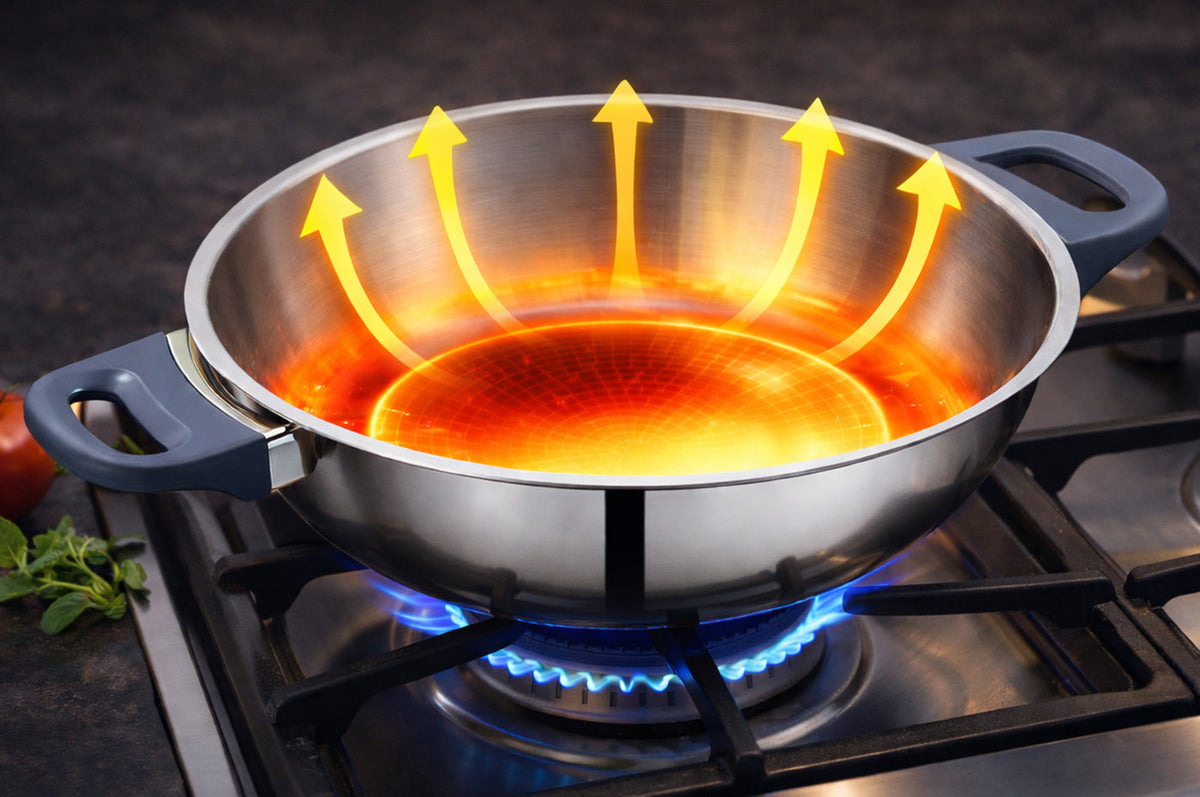
Have you ever cooked a simple sabzi or pancake and noticed that one side browned too quickly while the other remained undercooked? It's easy to blame the stove or the recipe, but the real reason often lies in your cookware. The way heat is distributed in a cookware has a significant impact on how your food cooks. It affects cooking time, texture, flavour, and even how long your cookware lasts.
What is Heat Distribution in Cookware?
Simply put, heat distribution refers to how evenly heat spreads across the cooking surface. Cookware with even heat distribution warms the entire surface uniformly, allowing food to cook consistently. On the other hand, cookware with poor heat distribution develops hot spots, where some areas become much hotter than others.
This uneven heating can cause food to burn in one place while remaining undercooked elsewhere. Whether you're making dosas, stir-fried vegetables, curries, or pancakes, even heat allows you to cook with greater confidence and fewer adjustments.
Why Even Heat Distribution Matters
Consistent heat offers several practical benefits in everyday cooking. With even heat distribution, you can enjoy:
- Uniformly cooked food
- Better browning and caramelisation
- Reduced chances of burning
- Less frequent stirring
- Improved energy efficiency
- More predictable cooking results
For Indian recipes that involve sautéing spices, simmering gravies, or slow-cooking vegetables, balanced heat makes a noticeable difference in both flavour and texture.
How Better Cookware Improves Everyday Cooking
Many cookware pieces look similar at first glance, but their construction can vary significantly. The materials used and the way they are layered determine how efficiently heat moves throughout the cookware.
One of the best examples is triply stainless steel. Triply cookware combines multiple layers of metal, typically stainless steel with an aluminium core, allowing heat to spread evenly across the entire cooking surface rather than concentrating in one area.
This helps:
- Cook food more evenly
- Reduce burning around the centre
- Improve temperature control
- Deliver consistent cooking results
Whether you're preparing paneer bhurji, vegetable pulao, dal, or stir-fried vegetables, evenly distributed heat reduces the need for constant stirring and helps every ingredient cook at the same pace.
The Dangers of Poor Heat Control
What Causes Hot Spots in Pans?
One of the most common cooking frustrations is food sticking or burning in certain areas of the pan. So, what causes hot spots in pans?
Hot spots usually develop when cookware has:
- Thin construction
- Low-quality materials
- Uneven metal thickness
- Poor heat conductivity
As the pan heats, some sections become much hotter than others. These areas cook food faster, leading to scorching while other parts remain undercooked. Over time, repeated uneven expansion can also affect the cookware's structure.
Uneven Heating in Cheap Cookware
One of the biggest drawbacks of lightweight cookware is uneven heating in cheap cookware. Thin pans heat up quickly but lose heat just as fast. This creates inconsistent temperatures throughout the cooking surface, making it difficult to prepare evenly cooked meals.
Common problems include:
- Burnt onions during sautéing
- Rice sticking to the bottom
- Unevenly cooked vegetables
- Difficulty maintaining a gentle simmer
Repeated exposure to uneven heating may also increase the likelihood of warping, reducing the cookware's lifespan. This is why many home cooks are choosing cookware with heavy bases or multi-layered construction that delivers better cooking performance over time.
Which Cookware Materials Offer Better Heat Distribution?
Different cookware materials behave differently when exposed to heat.
Triply Stainless Steel
Among the most popular choices for modern kitchens, triply cookware offers excellent triply stainless steel heat distribution. Its layered construction provides:
- Fast heating
- Uniform heat distribution
- Better temperature control
- Long-lasting durability
It is particularly suitable for everyday Indian cooking, from curries and sabzis to sautéing and slow cooking.
Cast Iron
Cast iron cookware takes longer to heat but retains heat exceptionally well. It is well suited for recipes requiring prolonged cooking, roasting, or high-temperature searing.
Aluminium Core Cookware
Cookware featuring an aluminium core combines quick heat transfer with improved temperature consistency. This construction helps food cook more evenly while reducing the chances of burning. Choosing the right material depends on your cooking style, but cookware designed for even heat distribution consistently delivers better everyday performance.
How Even Heating Improves Food Quality
The quality of your cookware directly affects the quality of your meals. With consistent heat:
- Vegetables remain crisp while cooking evenly.
- Paneer browns uniformly instead of drying out.
- Rice cooks without sticking excessively.
- Gravies simmer steadily without scorching.
Instead of constantly adjusting the flame or moving food around the pan, you can focus on the recipe itself. This makes cooking more enjoyable while helping preserve the natural flavours and textures of your ingredients.
Better Heat Distribution Also Protects Your Cookware
Good cookware isn't just about better food, it also lasts longer. When cookware experiences repeated uneven heating, different sections of the metal expand at different rates. Over time, this may lead to:
- Warping
- Loss of stability
- Reduced cooking performance
Cookware with a heavy base and quality construction distributes heat more evenly, reducing stress on the material and extending its lifespan. Investing in well-made cookware often means fewer replacements and more reliable cooking over the years.
Simple Ways to Improve Cooking Performance
Even the best cookware performs better when used correctly. Here are a few simple habits that help maximise heat distribution:
- Preheat cookware gradually over medium heat.
- Match the pan size to your burner.
- Avoid overcrowding the cooking surface.
- Clean cookware gently to maintain its finish.
- Allow cookware to heat before adding ingredients.
These small practices help maintain consistent cooking performance while extending the life of your cookware.
Enjoy Consistent Cooking Every Day
Understanding heat distribution in cookware changes the way you think about everyday cooking. When cookware heats evenly, meals cook more consistently, ingredients retain their texture, and the cookware itself remains in better condition for longer.
Choosing cookware with Even Heat Distribution, such as triply stainless steel or heavy-base construction, isn't simply about upgrading your kitchen, it's about making every meal easier to prepare.
FAQs
1. Why is Heat Distribution in Cookware important for everyday cooking?
Good Heat Distribution in Cookware ensures food cooks evenly, reduces burning, improves flavour, and helps achieve consistent results across everyday Indian recipes, making cooking easier and more enjoyable.
2. What causes hot spots in pans?
Hot spots usually occur due to thin materials, poor construction, or uneven metal thickness. Premium cookware with heavy-base or triply construction helps minimise hot spots and promotes even cooking.
3. How does triply stainless steel heat distribution improve cooking?
Tri-ply stainless steel heat distribution uses an aluminium core between stainless steel layers to spread heat evenly, reducing hot spots while improving temperature control and cooking consistency.
4. Why does uneven heating in cheap cookware affect cooking results?
Uneven heating in cheap cookware causes certain areas to become hotter than others, leading to burnt food, inconsistent cooking, reduced efficiency, and a shorter lifespan for the cookware.
5. Which SUNCASA cookware offers Even Heat Distribution?
SUNCASA's Triply and Impact Pro cookware collections are designed to provide Even Heat Distribution through advanced construction, helping home cooks achieve consistent cooking performance and long-lasting durability.


