

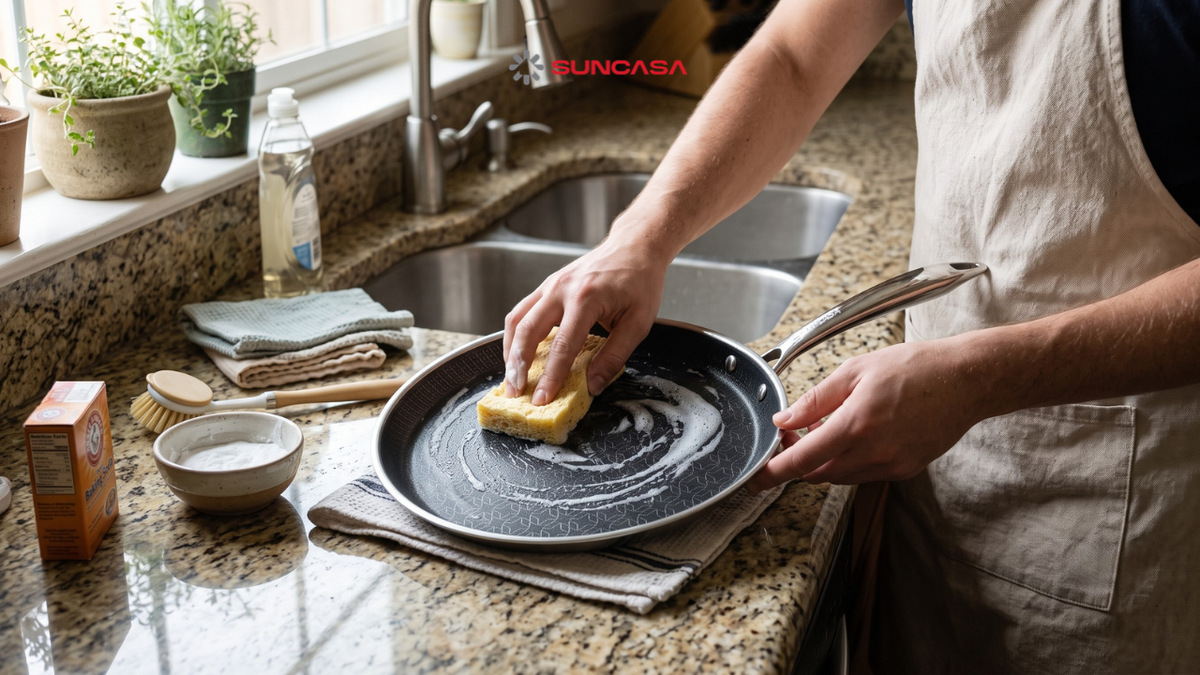
Ceramic cookware is valued for its smooth cooking surface, easy food release, and effortless cleanup. However, regular use can sometimes lead to residue buildup, sticking, or a less-smooth surface. Knowing how to restore a ceramic-coated pan’s performance starts with understanding what causes these changes. With the right cooking temperature, gentle cleaning methods, and proper everyday care, ceramic cookware can continue to perform well. Let’s look at some simple ways to restore and maintain its performance.
Why Does a Ceramic-Coated Pan Start Sticking?
Ceramic-coated cookware does not usually become sticky without a reason. Regular exposure to excessive heat, leftover oil, food residue, unsuitable cleaning tools, and certain cooking sprays can affect how smooth the surface feels. Before trying to restore the pan, it helps to identify what may be causing the problem.
|
Common Cause |
What You May Notice |
Better Practice |
|
Residue buildup |
Food starts sticking in certain areas |
Deep clean the surface |
|
High heat |
Dark marks or baked-on residue |
Use low to medium heat |
|
Cooking sprays |
Sticky or tacky film |
Use a small amount of regular oil |
|
Abrasive cleaning |
Rougher cooking surface |
Use a soft sponge |
|
Sudden temperature changes |
Surface stress |
Allow the pan to cool before washing |
Understanding these causes makes restoring a ceramic-coated pan's performance much easier and helps prevent the same problem from returning.
5 Steps To Restore Your Ceramic Coated Pan
1. Remove Residue From the Cooking Surface
One of the most common reasons a ceramic-coated pan begins to feel sticky is residue buildup. Oil and small food particles can remain on the surface even after regular washing. Over time, these layers can affect food release.
Start by filling the pan with warm water and adding a small amount of mild dish soap. Let it soak for around 20 to 30 minutes. Then gently clean the surface using a soft sponge or cloth. For more stubborn residue, a paste made with baking soda and water can help loosen the buildup. Apply it gently, rinse the pan thoroughly, and dry it completely.
2. Use Low to Medium Heat
Ceramic-coated cookware can heat efficiently, so high heat is not always necessary for everyday cooking. Excessive heat may cause oil and food residue to bond more strongly with the surface, making cleaning more difficult. For dishes such as dosas, pancakes, rotis, or lightly sautéed foods, allow the pan to heat gradually and use low to medium heat wherever practical.
The Mitrix Plus Dosa Tawa combines a ceramic-coated cooking surface with triply construction, making controlled heating an important part of using the cookware effectively. Even heat distribution can support more consistent cooking without requiring unnecessarily high temperatures.
3. Avoid Aerosol Cooking Sprays
Cooking sprays might seem convenient, but some aerosol sprays can leave behind a film that becomes difficult to remove through regular washing. This buildup can make the cooking surface feel less smooth over time.
Instead, use a small quantity of cooking oil applied directly to the pan. Depending on the recipe, options such as olive oil, avocado oil, or other suitable cooking oils can be used. The goal is not to use a large amount of oil. A light and even coating is usually enough when the recipe requires it.
4. Choose Gentle Cleaning Methods
The way a ceramic pan is cleaned can make a significant difference to its long-term condition. Avoid steel wool, harsh scouring pads, and abrasive cleaning products, as aggressive scrubbing can affect the cooking surface.
After cooking, allow the pan to cool before washing it. Clean it with warm water, mild dish soap, and a soft sponge or cloth. Avoid putting a very hot pan directly under cold water. Sudden temperature changes can place unnecessary stress on the cookware.
|
Do |
Avoid |
|
Use a soft sponge |
Steel wool |
|
Use mild dish soap |
Harsh abrasive cleaners |
|
Let the pan cool before washing |
Washing a very hot pan with cold water |
|
Dry thoroughly after cleaning |
Storing while damp |
5. Deep Clean When Regular Washing Is Not Enough
Sometimes regular washing may not completely remove stubborn residue. In such cases, a simple deep-cleaning routine can help refresh the cooking surface.
Follow these steps:
- Fill the pan with enough water to cover the affected area.
- Add around two tablespoons of baking soda.
- Bring the water to a gentle simmer for about 10 minutes.
- Switch off the heat and allow the pan to cool completely.
- Wash with mild dish soap and a soft sponge.
- Rinse thoroughly and dry completely.
The process can help loosen residue that has built up over repeated cooking. However, avoid aggressive scrubbing if the surface still has stubborn marks.
How to Keep Your Ceramic Pan Non-Stick for Longer
Knowing how to restore ceramic-coated pan performance is useful, but preventing unnecessary wear is even better. A few consistent habits can help keep ceramic cookware performing smoothly.
- Cook mainly on low to medium heat.
- Use suitable cooking oils instead of aerosol sprays.
- Choose silicone, wooden, or nylon utensils.
- Clean the pan gently after every use.
- Deep clean occasionally when residue builds up.
- Allow the cookware to cool before washing.
- Dry the pan completely before storing it.
With cookware such as the SUNCASA Mitrix Plus ceramic-coated Dosa Tawa, these habits complement the pan's ceramic coating and triply construction, helping maintain its smooth cooking experience through regular use.
Final Thoughts
Ceramic cookware can remain a dependable part of the kitchen when maintained correctly. Learning how to restore ceramic-coated pan performance involves simple habits such as removing residue, controlling heat, avoiding aerosol sprays, and cleaning gently. These steps can help preserve smooth food release and easier cleanup while supporting the long-term use of ceramic cookware.
For thoughtfully designed ceramic-coated cookware, explore the SUNCASA collection and visit the official SUNCASA website store today.
FAQs
Why does a ceramic-coated pan start sticking?
Residue, excessive heat, cooking sprays, and abrasive cleaning can make a ceramic-coated pan feel less smooth. Gentle cleaning, controlled heat, and suitable oils can help maintain performance. SUNCASA Mitrix Plus combines ceramic coating with triply construction for everyday cooking.
How can you remove residue from a ceramic-coated pan?
Start by soaking the ceramic-coated pan in warm water with mild dish soap for twenty to thirty minutes. For stubborn residue, gently use a baking soda and water paste. Rinse thoroughly and dry completely before storing the pan.
What heat setting is best for ceramic-coated cookware?
Low to medium heat is generally suitable for everyday ceramic-coated cookware because it heats efficiently. SUNCASA Mitrix Plus combines a ceramic-coated cooking surface with triply construction, supporting even heat distribution while helping reduce the need for unnecessarily high heat daily.
Should you use aerosol cooking sprays on ceramic cookware?
Avoid aerosol cooking sprays because they can leave a stubborn film on ceramic-coated surfaces. Instead, use a small amount of suitable cooking oil applied directly to the pan. This can help maintain a smoother cooking surface over time.
How should SUNCASA ceramic-coated cookware be cleaned?
Use mild dish soap, warm water, and a soft sponge or cloth for cleaning ceramic-coated cookware. Avoid steel wool and abrasive scrubbers. SUNCASA Mitrix Plus Dosa Pan can benefit from these gentle care habits, which will go a long way in maintaining its smooth cooking experience after use.


