

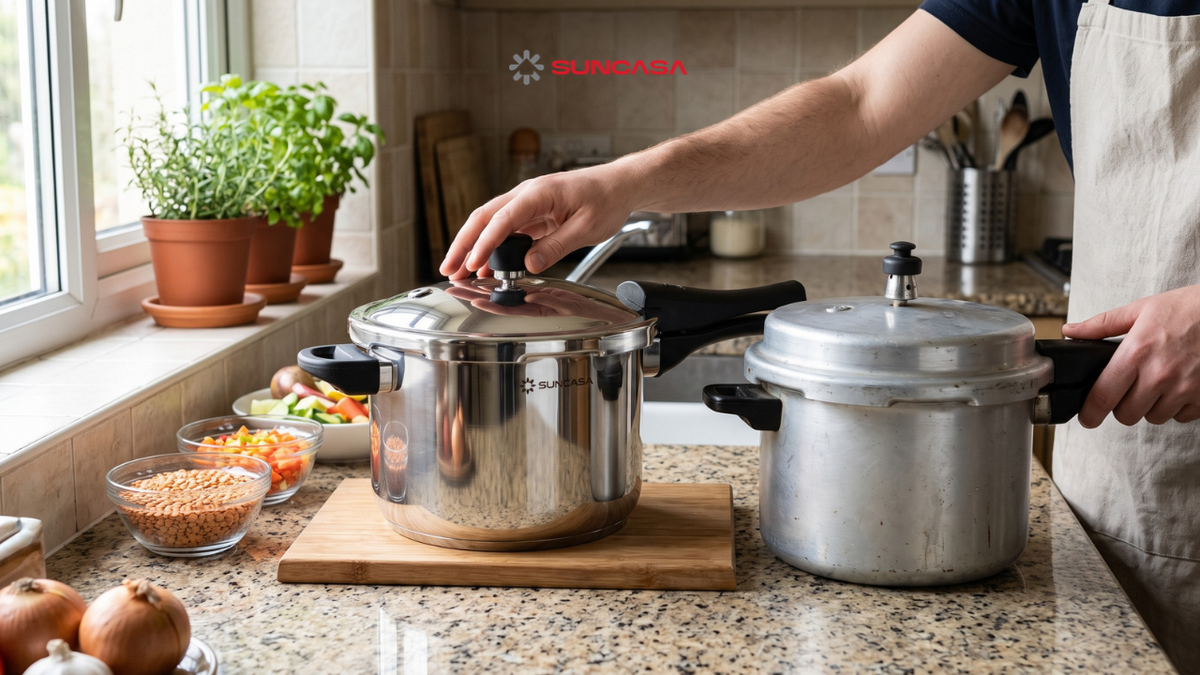
Choosing the right pressure cooker can influence everyday cooking, maintenance, and long-term value. Aluminium cookers heat up quickly and weigh less, while stainless steel offers durability, a non-reactive cooking surface, and greater versatility. This aluminium vs stainless steel pressure cooker guide compares both materials to help Indian households make a practical choice and explains why SUNCASA’s stainless steel Pressure Cooker is designed for modern kitchens.
Aluminium vs Stainless Steel Pressure Cooker Differences
Aluminium and stainless steel pressure cookers work on the same basic principle, but their construction creates different cooking experiences. Aluminium transfers heat quickly and is generally lighter and more affordable.
Stainless steel, on the other hand, is stronger, more resistant to corrosion, and does not readily react with acidic ingredients. For households that cook regularly, the choice should go beyond the initial price. Durability, food compatibility, maintenance, cooktop compatibility, and long-term value also matter.
|
Factor |
Aluminium Pressure Cooker |
Stainless Steel Pressure Cooker |
|
Weight |
Lightweight |
Heavier |
|
Heating |
Heats quickly |
Takes longer to heat |
|
Durability |
Good, but softer |
Excellent |
|
Food reactivity |
May react with acidic foods |
Non-reactive |
|
Maintenance |
Needs more care |
Easier to maintain |
|
Induction use |
Depends on model |
Commonly compatible |
|
Long-term value |
Budget-friendly |
Higher initial investment, longer life |
Aluminium Pressure Cooker: Where Does It Stand?
Aluminium pressure cookers are popular for their quick heating, lightweight design, and affordability. However, aluminium is softer and can be prone to dents, scratches, and discolouration. Standard aluminium may also react with acidic foods such as tomatoes and tamarind. While hard-anodised models address some concerns, they still differ from stainless steel in durability and material performance.
Why Stainless Steel Is a Better Long-Term Choice
When comparing an aluminium vs. steel cooker, stainless steel stands out for households looking for durability and versatility. Stainless steel doesn’t react with the food being cooked, which makes it suitable for a wide variety of ingredients and recipes. It also offers strong resistance to corrosion, staining, and everyday wear. While stainless steel pans take a little while to heat compared to aluminium, well-crafted stainless steel pans such as triply cookware improve heat distribution while retaining the benefits of the stainless steel cooking surface.
Key Benefits of Stainless Steel
- Food-friendly surface: Stainless steel does not readily react with acidic ingredients.
- Durable construction: It can withstand regular cooking and handling for years.
- Easy maintenance: The smooth surface is relatively easy to clean.
- Versatile cooking: Many stainless steel models work across different cooktops, including induction.
- Long-term value: Higher upfront cost can be balanced by durability and extended use.
Aluminium vs Stainless Steel Cookware: Cooking Performance
Heat retention is one area where aluminium has a natural advantage. It heats rapidly and transfers heat efficiently. However, cooking performance can’t be decided based on material alone. The base construction of stainless steel cookware significantly influences how heat is distributed. A well-designed heavy or impact-bonded base helps address the slower heat transfer of stainless steel while offering the durability and non-reactive surface of the material.
|
Cooking Consideration |
Aluminium |
SUNCASA Stainless Steel Cookware |
|
Heat transfer |
Very quick |
Supported by impact-bonded base |
|
Heat distribution |
Good |
Designed for uniform distribution |
|
Acidic foods |
May require more consideration |
Non-reactive stainless steel |
|
Everyday durability |
Moderate |
High |
|
Maintenance |
Requires more care |
Easy to clean |
|
Cooktop versatility |
Model dependent |
Designed for modern cooktops |
This is where a thoughtfully constructed stainless steel cooker can offer more than simply a change in material.
Durability and Maintenance: Which Cooker Makes More Sense?
Pressure cookers are used frequently, often several times a week. Over time, the ability to withstand regular cooking, washing, and handling becomes important. Aluminium is softer and can show dents, scratches, or discolouration with prolonged use.
Stainless steel is more resistant to everyday wear and can retain its appearance for longer with proper care. The supplied comparison also notes that stainless steel cookers generally offer greater longevity than standard aluminium models. For a household looking for cookware that can remain useful for years, stainless steel offers a stronger long-term proposition.
Weight, Handling and Everyday Convenience
There is one clear advantage aluminium continues to offer: it is lighter. This can make a difference when lifting or storing a large cooker. However, weight should not be the only deciding factor. A pressure cooker should also provide a comfortable grip and practical handling when filled.
A premium stainless steel cooker can offset its heavier construction through thoughtfully designed handles and a user-friendly locking mechanism. SUNCASA’s Click-On pressure cooker is designed around this balance, combining robust stainless steel construction with convenient everyday handling.
Which Should You Choose?
If low upfront cost and lightweight handling are the primary priorities, aluminium can remain a practical option. However, for households that prioritise durability, food compatibility, easy maintenance, and long-term value, stainless steel is the stronger choice.
The aluminium vs stainless steel pressure cooker decision therefore comes down to more than heating speed or purchase price. A premium stainless steel cooker combines the inherent benefits of the material with better construction and useful design features.
Why Choose SUNCASA Impact Pro Click-On?
- 304 food-grade stainless steel for durable everyday cooking
- Impact-bonded bottom for uniform heat distribution
- Click-On design for convenient everyday use
- Easy-to-clean stainless steel construction
- Suitable for modern cooking requirements
- Built for regular Indian kitchen use
Make The Right Choice For Your Kitchen Today
When comparing an aluminium vs stainless steel pressure cooker, aluminium offers lightness and quick heating, but stainless steel delivers stronger durability, food compatibility, and long-term value. SUNCASA’s Impact Pro Click-On combines these stainless steel advantages with thoughtful construction and practical features for everyday cooking.
Choose a cooker made for lasting performance and explore the SUNCASA Stainless Steel Collection today. Visit the official SUNCASA website to shop now.
FAQs
Why is stainless steel preferred over aluminium for pressure cookers?
Stainless steel pressure cookers are generally more durable than aluminium models and are less prone to dents, scratches, or discolouration. SUNCASA Impact Pro kadai uses 304 food-grade stainless steel, making it a dependable choice for regular Indian kitchen cooking and daily use.
Is stainless steel better than aluminium for everyday pressure cooking?
Aluminium pressure cookers heat quickly and are lightweight, but stainless steel offers greater durability and long-term material performance. It’s always good to choose quality stainless steel construction when durability, everyday reliability, and consistent cooking are important considerations for any cookware’s daily use.
Does SUNCASA Impact Pro provide even heat distribution?
Yes, the SUNCASA Impact Pro Click-On pressure cooker features an impact-bonded bottom that supports uniform heat distribution, faster cooking, and fuel efficiency. Its stainless steel construction also makes it suitable for regular cooking across different Indian recipes at home.
What safety features should a stainless steel pressure cooker have?
A pressure cooker should offer reliable safety features such as a precision weight valve, safety plug, and gasket release system. The SUNCASA Impact Pro Click-On range incorporates these features, supporting controlled pressure cooking and safer everyday kitchen use for households.
Can stainless steel pressure cookers be used for acidic foods?
Stainless steel pressure cookers are suitable for many acidic foods because stainless steel does not have the same reactivity concerns associated with standard aluminium. SUNCASA Impact Pro uses 304 food-grade stainless steel for dependable everyday cooking and durability for cooking.


