

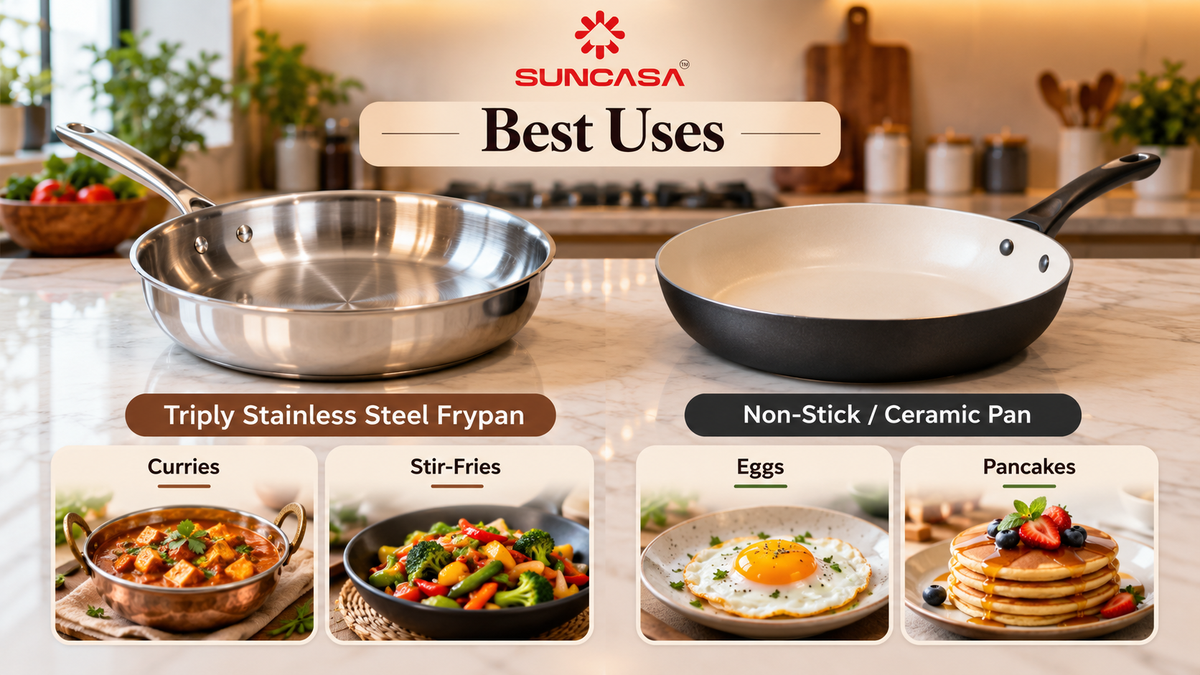
Triply and non-stick cookware solve different kitchen problems. Triply focuses on durable multi-layer construction and controlled heating; non-stick focuses on easy food release and convenience. That is why asking which one is “better” without considering what you cook can lead to the wrong purchase.
For most Indian kitchens, the smarter approach is to understand where each material performs best and build your cookware collection around those tasks.
What Is Triply Cookware?
Triply cookware is built from three bonded layers. In SUNCASA TRI-SMART cookware, the cooking surface is 304 stainless steel, the middle layer is aluminium for heat conduction, and the outer layer is magnetic stainless steel for cooktop compatibility. The layers work together so the pan gets the durability of steel with more even heating than basic single-layer stainless steel.
What Is Non-Stick Cookware?
Non-stick cookware uses a low-friction cooking surface that helps food release more easily. Depending on the product, that surface may be a conventional non-stick coating or a ceramic-style coating. Its main advantages are convenience, easier cooking of delicate foods and simpler cleanup.
Triply vs Non-Stick: Side-by-Side Comparison
|
Factor |
Triply cookware |
Non-stick cookware |
|
Heat distribution |
Very good due to layered construction |
Good, depending on base and pan quality |
|
Food release |
Requires correct preheating and oil technique |
Usually easier, especially for delicate foods |
|
High-heat cooking |
Generally more suitable |
Often needs low-to-medium heat depending on coating |
|
Durability |
Long-lasting metal construction |
Coating life depends on care and use |
|
Utensils |
Usually more tolerant |
Often best with wood/silicone tools |
|
Cleaning |
Easy once cooking technique is learned |
Usually very easy |
|
Typical strengths |
Searing, sautéing, curries, gravies, frying |
Eggs, pancakes, delicate foods, quick low-oil cooking |
Where Triply Cookware Shines in Indian Cooking
Indian cooking often moves through several heat stages: tempering spices, browning onions, cooking masala, adding liquid and simmering. Triply cookware handles these changes well because its aluminium core helps spread heat while the stainless steel cooking surface is durable and suitable for a wide range of ingredients.
-
Sabzis and stir-fries that need controlled browning
-
Curries and gravies that move from sautéing to simmering
-
Shallow frying and pan-searing
-
Milk, sauces and recipes where even heating is useful
-
Everyday cooking where long-term durability matters
Where Non-Stick Cookware Is More Convenient
Non-stick is especially useful when the priority is effortless release. Eggs, pancakes, cheelas and delicate foods can be easier to cook with less sticking. It can also suit beginners who do not yet want to learn stainless-steel preheating technique.
The trade-off is that coated cookware usually needs more careful handling. Follow the manufacturer’s temperature guidance, avoid scratching the cooking surface, and replace the pan if the coating becomes significantly damaged.
Does Triply Require More Oil?
Not necessarily. Stainless steel does not behave like a coated non-stick pan, but correct technique can reduce sticking. Preheat moderately, test the surface, add oil, allow it to heat, then add the food. Once proteins or vegetables develop a proper sear, they often release more easily.
Which One Lasts Longer?
A well-made triply pan has no non-stick layer that gradually wears away, so its core cooking performance can remain useful for many years with proper care. Coated cookware can also last well, but lifespan depends more strongly on heat, cleaning tools, storage and utensil choice.
Do You Need to Pick Only One?
No. Many practical kitchens use both. A triply kadai or frypan can handle high-use everyday cooking, while a smaller non-stick pan can be reserved for eggs, pancakes or other delicate foods. Choosing by cooking task is more useful than treating the materials as rivals.
Frequently Asked Questions
Is triply cookware non-stick?
No. Triply describes layered metal construction, not a non-stick coating. Food release depends on preheating, oil and cooking technique.
Which is better for Indian curries?
Triply cookware is often a strong choice because it distributes heat well and handles sautéing, simmering and acidic ingredients effectively.
Which is better for eggs and pancakes?
A good non-stick pan is usually easier for delicate foods that benefit from quick release.
Can I use metal utensils on triply cookware?
Stainless steel surfaces are generally more tolerant than coated pans, but following the specific manufacturer care instructions is always best.
Should I replace all non-stick pans with triply?
Not necessarily. Use the material that best matches the cooking task and your preferred maintenance routine.
Conclusion
In the triply vs non-stick cookware debate, the right answer depends on what you cook. Triply offers durable construction, versatile heat control and long-term everyday performance. Non-stick offers easier release and convenience for delicate foods. A thoughtfully mixed cookware set often gives an Indian kitchen the best of both.
Explore SUNCASA triply cookware and compare cookware ranges


