

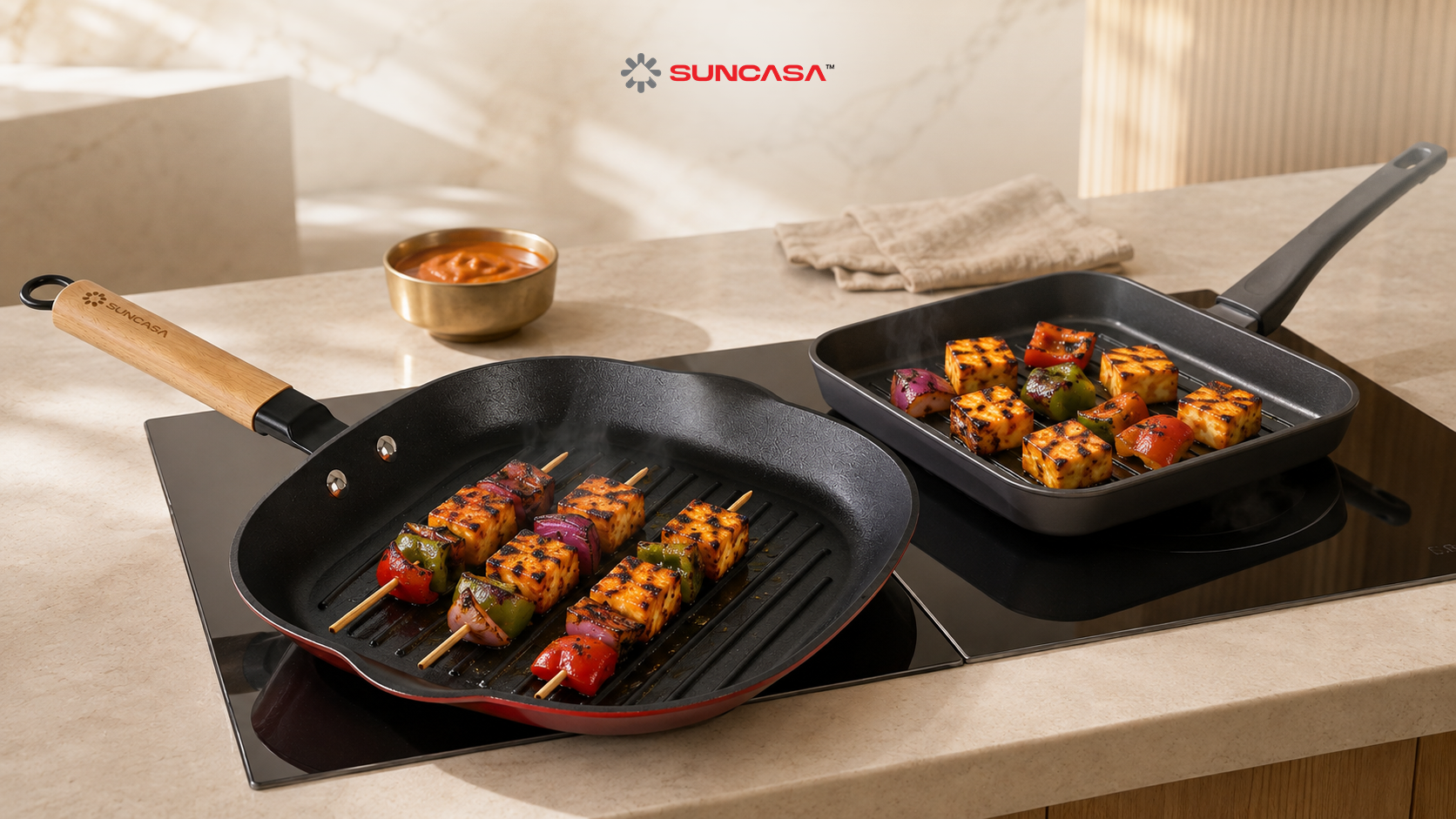
Tandoori cooking is all about high heat, smoky flavours, and that lightly charred exterior that makes every bite satisfying. While a traditional tandoor has its own charm, a grill pan can help recreate some of those textures at home. But when choosing between the two, the question of non-stick vs cast iron grill pans always tends to crop up. Both can cook tandoori dishes, but they behave differently under heat, handle marinades differently, and require different levels of care.
For recipes such as tandoori chicken, paneer tikka, seekh kebabs, or grilled vegetables, understanding these differences can help you choose the pan that suits your cooking style.
Why Tandoori Recipes Need the Right Grill Pan
Tandoori recipes usually involve marinated ingredients cooked at relatively high temperatures. The marinade may contain yoghurt, lemon juice, spices, oil, and other acidic ingredients. This is why a grill pan needs to be durable enough to handle this combination while creating enough surface heat for browning and charring.
The raised ridges are equally important. They allow food to make direct contact with the hot surface at specific points. This is where the comparison of non-stick and cast iron grill pans becomes useful. The right choice is not simply about whether food sticks. Heat retention, durability, surface safety, and the type of cooking you do all matter.
Non-Stick Grill Pans: Easy and Convenient
Non-stick grill pans are popular because they make everyday cooking relatively simple. Food generally releases easily, and cleaning after cooking can be quicker.
They work particularly well when:
- You prefer using less oil.
- You regularly cook delicate foods such as paneer or vegetables.
- You want quick heating and easy handling.
- You prefer minimal maintenance after cooking.
However, there are limitations when high-heat grilling is involved. Many traditional non-stick coatings need careful temperature management, and metal utensils or abrasive cleaning tools can damage some coatings.
For occasional tandoori cooking, a good non-stick pan can certainly be convenient. But if your priority is intense heat, repeated grilling, and long-term durability, another option deserves a closer look.
Cast Iron Grill Pans: Built for High-Heat Cooking
Cast iron is a traditional cookware material known for its ability to absorb and retain heat. This makes it particularly useful for tandoori-style cooking, where heat retention is a key need.
- Excellent heat retention: Cast iron stays hot for longer after heating, helping maintain a steady temperature when you add food.
- Better browning and char: The consistent heat helps create the deep browning, searing, and light char that are important for tandoori-style recipes.
- Less temperature drop: Unlike lighter cookware that can cool quickly when cold or room-temperature food is added, cast iron holds heat more effectively for consistent cooking.
- Pre-seasoned surface: The SUNCASA Cast Iron Grill Pan is made from pure iron ore and comes pre-seasoned, giving it a naturally non-stick cooking surface without relying on a chemical coating.
- Metal-spatula safe: Its surface is designed to work with metal spatulas, making it easier to turn, flip, and move food while cooking.
- Enamel-coated exterior: The exterior enamel coating makes the pan easier to maintain while helping provide resistance against stains and rust.
Cast Iron vs Non-Stick: Which Works Better for Tandoori?
The key difference between a non-stick and a cast iron comes down to how you want your food to cook.
|
Feature |
Non-Stick Grill Pan |
Cast Iron Grill Pan |
|
Heat retention |
Moderate |
Excellent |
|
High-heat cooking |
Depends on coating |
Well suited |
|
Grill marks |
Good |
Excellent |
|
Oil requirement |
Low |
Low once seasoned |
|
Metal utensil use |
Often restricted |
Suitable with CASTELLA |
|
Maintenance |
Generally easy |
Requires some care |
|
Durability |
Coating can wear |
Extremely durable |
|
Natural non-stick surface |
Usually coating-based |
Possible through seasoning |
For tandoori recipes, cast iron has the advantage because the cooking process benefits from strong heat retention and a durable cooking surface.
Why CASTELLA Makes Cast Iron a Practical Choice
SUNCASA's CASTELLA Pre Seasoned grill pan combines traditional cast iron cooking with features designed for everyday kitchens. Its construction supports the argument for cast iron without requiring you to give up practical conveniences.
The pan offers:
- Pure iron ore construction: Suitable for high-heat cooking and repeated use.
- Naturally non-stick surface: Pre-seasoning helps reduce sticking and means there is no chemical non-stick coating.
- No PTFE, PFOA or PFAS: The cooking surface is designed without these chemical coatings.
- Less oil needed: Its naturally non-stick surface can help reduce the amount of oil used.
- Quick heating: Helps the pan reach cooking temperature efficiently.
- Ergonomic wooden handle: Makes handling easier while cooking.
- Multiple cooktop compatibility: Suitable for gas, electric, ceramic, induction and glass cooktops, as well as oven use.
The pan is also designed for zero metal leaching, including during high-heat cooking with acidic foods. This is particularly relevant for tandoori marinades, which often contain ingredients such as lemon or yoghurt.
Cleaning and Caring for Your Grill Pan
Cast iron does require some attention, but it doesn’t have to be difficult. Allow the pan to cool slightly after cooking, clean away food residue, and dry it properly. The exterior enamel coating on CASTELLA also helps simplify maintenance. Avoid treating cast iron like a disposable pan; regular care helps preserve its cooking surface and performance.
Non-stick pans may require less maintenance initially, but their coating can become damaged through overheating, scratching, or unsuitable utensils. Cast iron, on the other hand, can continue serving you for years when properly maintained.
The Better Choice for Tandoori Cooking
When it comes to tandoori-style cooking, cast iron offers the heat retention, high-heat performance, and durability needed for better browning and searing. The SUNCASA CASTELLA Pre-Seasoned Cast Iron Grill Pan adds practical features such as an enamel-coated exterior, ergonomic wooden handle, and chemical-free cooking surface.
Ready to upgrade your grilling experience? Explore the SUNCASA Cast Iron collection and bring restaurant-style searing to your home kitchen.
FAQs
Why is cast iron better for tandoori recipes?
Cast iron retains heat exceptionally well, helping create deeper browning and grill marks. SUNCASA CASTELLA also offers natural non-stick performance without PTFE, PFOA, or PFAS coatings for high-heat tandoori cooking.
Can I cook acidic tandoori marinades on CASTELLA?
Yes. CASTELLA is designed for high-heat cooking and supports acidic foods without metal leaching. Its naturally non-stick surface also helps reduce the need for oil during grilling for better results.
Is CASTELLA cast iron suitable for induction?
Yes. SUNCASA CASTELLA is compatible with induction, gas, electric, ceramic, glass, and oven cooking, making it flexible for different kitchens and tandoori-style recipes at home every day without changing cookware.
Does CASTELLA require seasoning?
CASTELLA comes pre-seasoned and offers a naturally non-stick cooking surface. Basic cleaning and proper drying remain important to maintain its performance and protect the pan during regular use in kitchens.
Can I use a metal spatula with CASTELLA?
Yes. CASTELLA has a metal-spatula-safe surface, giving you flexibility when turning paneer, vegetables, chicken, or other ingredients during high-heat tandoori grilling at home regularly without damaging a chemical coating easily.


