

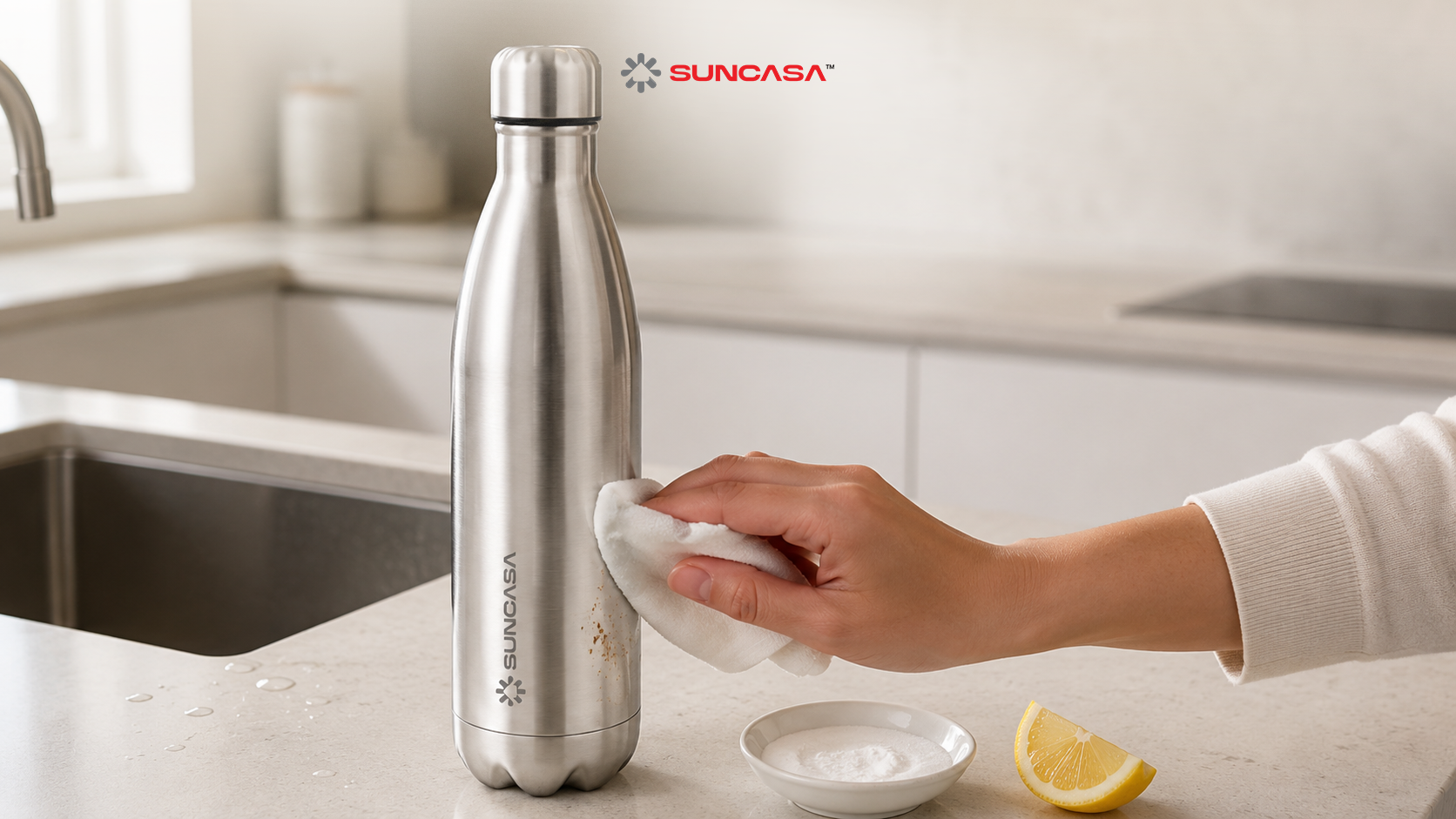
Stainless steel is one of the most popular materials for reusable water bottles, and for good reason. It is strong, durable, easy to clean, and does not easily absorb smells. Good-quality stainless steel can also handle everyday use without becoming fragile or brittle. However, “stainless” does not mean “rust-proof.” Under the right conditions, even stainless steel can develop rust spots, stains, or orange-brown marks.
If you ever notice a steel water bottle rusting inside, there is usually no need to throw the bottle away immediately. With the right cleaning method and regular care, minor surface rust can be removed safely.
Why Does Stainless Steel Rust?
Stainless steel contains chromium, which reacts with oxygen to form a thin protective layer on the surface. This layer helps protect the metal from corrosion, which is why stainless steel generally performs better against rust than ordinary steel.
However, this protective layer can wear down due to moisture, salt, acidic drinks, harsh cleaners, scratches, or iron particles. Leaving water inside for too long can also lead to stains and corrosion.
This matters if you regularly carry juices, fizzy drinks, or other beverages. While the SUNCASA Stainless Steel Water Bottles are suitable for water, juices, and fizzy drinks, cleaning and drying them after every use helps keep them in good condition.
How to Remove Rust from a Steel Bottle Safely
Before trying a strong chemical cleaner or abrasive scrubber, start with gentle methods. The goal is to remove the rust without scratching the stainless-steel surface.
1. Start with Dish Soap and Warm Water
First, empty the steel water bottle and rinse it thoroughly. Add warm water and a small amount of mild dish soap. Use a soft bottle brush to gently clean the inside, paying particular attention to areas where you can see rust or staining. This simple step can remove dirt, residue, and deposits that may be making the rust look worse.
2. Try Baking Soda for Light Rust
For small rust spots, make a thick paste using baking soda and a little water. Apply it to the affected area and leave it for around 10–15 minutes.
Then gently scrub the spot using a soft bottle brush or non-abrasive sponge. Rinse the bottle thoroughly afterwards. Baking soda provides mild cleaning action without requiring an aggressive metal cleaner.
3. Use White Vinegar Carefully
For more stubborn surface stains, white vinegar can be useful. Add a small amount of vinegar to the affected area, allow it to sit briefly, and then rinse the bottle thoroughly with clean water. Do not leave acidic liquids sitting inside the bottle for unnecessarily long periods. After cleaning, wash the bottle with mild dish soap and rinse it several times.
4. Dry the Bottle Completely
Once the rust has been removed, drying is just as important as cleaning. Leave the bottle open and allow the inside to air-dry completely before putting the lid back on. Moisture trapped inside a closed bottle can encourage staining and corrosion over time. This simple habit makes a great difference to the lifespan of your stainless steel water bottles for tea and coffee.
What Should You Avoid?
When trying to remove rust from a cola-shaped steel water bottle, avoid anything that can permanently scratch the metal.
Do not use steel wool, harsh scouring pads, or aggressive abrasive powders. Avoid bleach and strong chlorine-based cleaners unless the manufacturer specifically recommends them. Scratches can damage the protective surface of stainless steel and may make the bottle more vulnerable to corrosion later.
How to Prevent Rust in Your Bottle
Prevention is easier than dealing with rust later. A few simple habits can help prevent rust in some of the bottle rust and keep your bottle looking cleaner for longer:
- Wash the bottle regularly, especially after using beverages other than water.
- Rinse it properly so no soap or drink residue remains.
- Dry the bottle completely before closing the lid.
- Do not leave water sitting inside for days.
- Use a soft bottle brush instead of abrasive scrubbers.
- Clean the lid, seal, and threads as well as the main bottle.
- Avoid storing the bottle while it is still damp.
If you notice a tiny orange spot, deal with it early instead of allowing it to spread or become harder to clean.
SUNCASA Oceana: Stainless Steel Designed for Everyday Use
The material and construction of a bottle can affect its durability, insulation, and everyday usability. The SUNCASA Oceana stainless steel bottles are designed with these needs in mind:
- 304 food-grade stainless steel: Made with 304-grade stainless steel, a commonly used material for food and beverage applications. It offers durability for regular everyday use.
- Vacuum insulation: The vacuum-insulated design helps keep beverages cold for up to 24 hours and hot for up to 18 hours, according to SUNCASA.
- Leak-proof and airtight: Its leak-proof, airtight design helps prevent spills, making it suitable for carrying in bags to the office, gym, school, or while travelling.
- Odour-free material: The stainless steel construction helps prevent lingering odours, keeping your drinking experience fresh when the bottle is cleaned properly.
- ISI-certified: The bottle is described as ISI-certified, adding to its suitability for everyday use.
- Easy everyday choice: Its durable construction and insulation make stainless steel a practical option, although regular cleaning and drying are still important.
When upgrading your reusable drinkware, a reliable, BPA-free stainless steel bottle like the SUNCASA Oceana is the ideal choice if you prioritise everyday durability and material safety.
Make Bottle Care a Simple Habit
A good stainless-steel bottle can last for years when it is treated properly. If you see rust, do not immediately assume that the entire bottle has become unusable. For minor surface rust, gentle cleaning with mild soap, baking soda, or carefully used vinegar can help.
The bigger lesson is that maintaining a clean stainless steel water bottle requires simple habits that matter just as much as the material itself. Regular washing, thorough rinsing, proper drying, and avoiding harsh cleaning tools can help preserve the surface.
With simple stainless steel bottle care, you can enjoy the durability and convenience of stainless steel while reducing the chances of rust becoming a recurring problem.
FAQs
Can stainless steel bottles rust inside?
Yes. Stainless steel resists corrosion, but prolonged moisture, acidic drinks, salt, scratches, or residue can cause surface rust, making regular cleaning and drying important.
How can I remove rust from a SUNCASA bottle?
Use mild soap first, then apply a gentle baking soda paste for light surface rust. Scrub softly, rinse thoroughly, and leave the SUNCASA bottle open until completely dry afterward naturally.
Is 304 stainless steel completely rust-proof?
No. 304 stainless steel offers strong corrosion resistance, but it is not completely rust-proof. Proper stainless steel bottle care still helps protect the surface.
How should I clean the SUNCASA Oceana bottle?
Wash the SUNCASA Oceana regularly with mild dish soap and a soft bottle brush. Rinse thoroughly, leave it open, and allow the interior to dry completely after every wash.
How can I prevent bottle rust from developing?
To prevent bottle rust, wash regularly, rinse away drink residue, avoid abrasive scrubbers, empty beverages after use, and dry the bottle completely before closing and storing it safely.


