

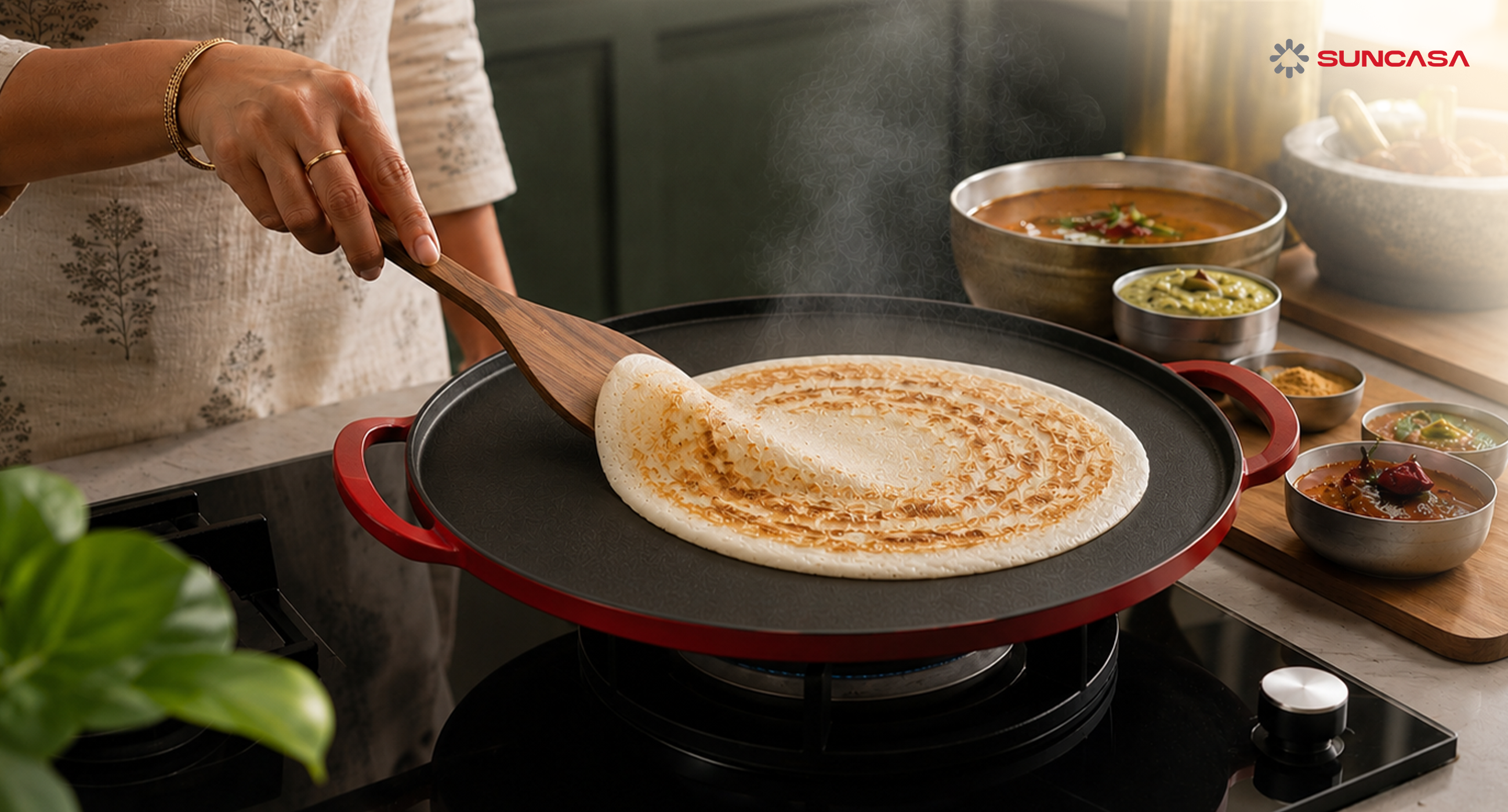
A tawa is a must have item in any Indian kitchen. From crispy dosas and fluffy uttapams to making steaming rotis and toasted sandwiches, a good tawa helps with anything that involves roasting and baking on an open flame. That is why choosing the right tawa is so important for both experienced and beginner home cooks.
The two most popular options available in India would be either a non-stick tawa or a cast-iron tawa. Both do the work, but they deliver very different cooking experiences. Regarding cast Iron Vs non tick cookware, this debate comes up every time anyone is looking for quality utensils which are safe to use, and tawas are no exception. So, which one should you actually buy for your kitchen? Let’s break it down in a simple way.
Understanding the Difference Between Cast Iron and Non-Stick Tawas
Before making the pick, it is a good idea to understand how cast-iron and non-stick tawas differ in terms of cooking performance, durability, maintenance, and long-term health benefits. While both are commonly used in Indian kitchens, they are designed for very different cooking experiences.
Non-stick tawas are usually made using an aluminium base coated with a synthetic non-stick layer. They are lightweight, heat up quickly, and are popular for convenience-based cooking. Cast iron tawas, on the other hand, are made from pure iron and develop a non-stick surface through seasoning over time. They are heavier, extremely durable, and better suited for high-heat traditional cooking.
Here is a detailed comparison to help you understand the difference better:
|
Feature |
Cast Iron Tawa |
Non-Stick Tawa |
|
Material |
Made from pure iron |
Usually aluminium with a synthetic non-stick coating |
|
Heat Retention |
Excellent heat retention for even cooking |
Heats quickly but loses heat faster |
|
Durability |
Extremely durable and long-lasting |
The coating may wear out over time |
|
Surface |
Naturally non-stick after seasoning |
Artificial non-stick coating |
|
Health Safety |
Chemical-free cooking surface |
Low-quality coatings may release fumes if overheated |
|
Oil Usage |
Requires less oil after proper seasoning |
Low oil usage initially |
|
Maintenance |
Needs light seasoning and proper drying |
Easier daily cleaning |
|
Scratch Resistance |
Metal spatula safe |
The coating can be scratched easily |
|
High Heat Cooking |
Performs very well at high temperatures |
Excessive heat can damage the coating |
|
Lifespan |
Can last for decades |
Usually shorter lifespan |
|
Weight |
Heavier and sturdier |
Lightweight and easy to handle |
|
Sustainability |
Eco-friendly and reusable for years |
Less sustainable due to coating wear |
Heat Distribution and Cooking Performance
One of the most important things to look for when buying a tawa is heat distribution. Indian dishes like dosa, paratha, chilla, and uttapam need consistent and even heat to cook properly. Non-stick tawas heat quickly, but they also lose heat just as fast. Over time, the coating also develops uneven heating spots. On the other hand, cast-iron tawas perform differently. They take slightly longer to heat at the stat, but once hot, they retain and distribute heat extremely well. This creates:
- Crispier dosas
- Better browning
- Uniform cooking
- Authentic texture
- Improved flavor development
The SUNCASA Castella Pre-Seasoned Cast Iron Dosa Tawa is specially designed for making evenly cooked, restaurant-style dosas, paratha, and pancakes at home. It's pure iron ore material, and the pre-seasoned surface helps achieve crisp edges and golden texture without excessive oil. When discussing cast-iron vs non-stick cookware, cooking consistency is one area where cast iron clearly stands out.
Health and Safety Considerations
At present, due to social media and the web, people are becoming more aware of what their cookware is made from. This is one of the biggest reasons why cast iron utensil is making a strong comeback in Indian kitchens. Non-stick pans release harmful chemicals when overheated or scratched. Plus, the non-stick coating might also erode over time with regular use.
This is where cast-iron cookware makes a real difference. SUNCASA’s cast-iron tawa delivers the authentic advantages of pure iron ore with modern design features that are:
- 100% chemical-free
- Naturally non-stick through seasoning
- Free from PTFE, PFOA, and PFAS
- Safe for high-temperature cooking
- Metal spatula friendly
This makes them especially suitable for Indian cooking styles that need high heat and regular roasting. Another major point in the cast-iron vs non-stick cookware discussion is that cast-iron supports healthier, low-oil cooking while maintaining authentic taste and texture.
Durability and Long-Term Value
A tawa is not something people replace every few months. Most households want cookware that performs well for years. Non-stick tawas are convenient at the start, but their coating gradually wears out. Scratches, overheating, and regular washing can reduce their lifespan significantly.
Cast-iron tawas, however, become better with time. With proper seasoning and simple care, they can last for decades. This also gives it several long-term advantages:
- Extremely durable construction
- No peeling or coating damage
- Better cooking performance over time
- Scratch resistance
- Sustainable and eco-friendly usage
In fact, many Indian households still use cast-iron cookware passed down through generations.
Ease of Maintenance: Which Is Simpler?
One reason many people prefer non-stick tawas is convenience. It is lightweight, easy to clean, and simple to handle. On the other hand, cast-iron tawa does require slightly more attention, but modern pre-seasoned cookware has made maintenance much easier than before.
To maintain a cast-iron dosa tawa:
- Wash gently after use
- Dry immediately
- Apply a light layer of oil occasionally
- Avoid prolonged soaking
That is usually enough to keep it naturally non-stick and rust-free. SUNCASA cast-iron dosa tawas are pre-seasoned for convenience, which means you can start cooking almost immediately without too much preparation.
Which Tawa Is Better for Indian Cooking?
Indian cooking involves much more than just low-heat cooking. We regularly use:
- High flame cooking
- Roasting
- Crispy dosa preparation
- Dry roasting spices
- Multi-batch cooking
These cooking techniques require cookware that can maintain stable heat and withstand regular heavy use. Cast-iron excels in these situations because it:
- Handles high temperatures safely
- Delivers authentic flavor
- Creates crisp texture naturally
- Improves browning
- Supports even cooking
Non-stick cookware works well for quick and light cooking needs, especially for beginners. However, for long-term cooking performance and traditional Indian recipes, cast-iron delivers better results.
So, Which One Should You Buy?
Choosing between a cast-iron dosa tawa and a non-stick tawa ultimately depends on your everyday cooking needs and priorities. If you prefer lightweight utensils with quick cleanup and easy handling, a non-stick tawa may feel more convenient for daily use. However, for home cooks who value durability, authentic texture, better heat retention, and healthier chemical-free cooking, cast-iron becomes the more reliable long-term choice.
That is why the discussion around cast-iron vs non-stick cookware is increasingly shifting toward cast-iron in Indian kitchens. With SUNCASA’s pre-seasoned cast-iron dosa tawas, families can enjoy crispier dosas, richer flavours, and traditional cooking performance with modern convenience every day.


