

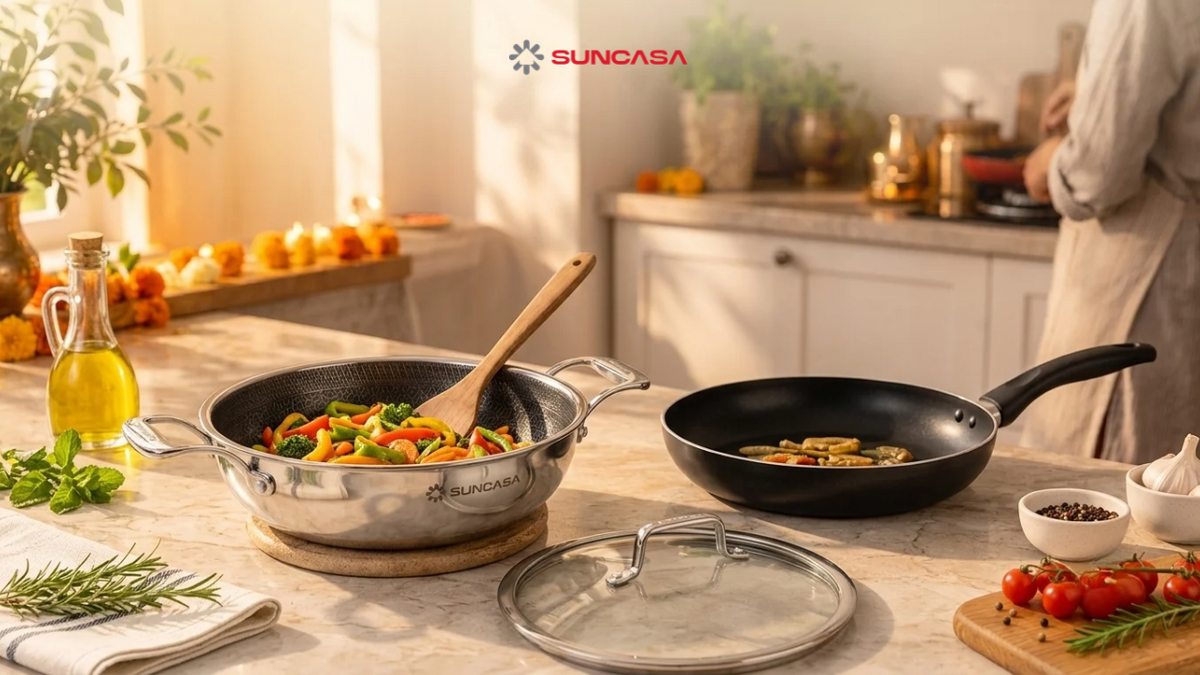
Choosing the right cookware involves more than comparing prices, colours, or designs. The cooking surface matters too, especially when it comes to everyday cooking, which needs to be quick and made with as little oil as possible. The ceramic vs. non-stick cookware comparisons are a constant point of discussion for health-conscious home cooks looking for cookware to add to their kitchens. While traditional Teflon-coated cookware remains popular, ceramic-coated cookware offers another approach to everyday cooking. Let us explore the key differences and what they mean for your kitchen.
Understanding Non-Stick Cookware Coatings
What Is Ceramic-Coated Cookware?
Ceramic-coated cookware generally uses a ceramic-based non-stick coating over a metal cookware body. The coating creates a smooth cooking surface that allows food to release easily with less oil.
The underlying material can vary between products. For example, SUNCASA’s Mitrix range combines a premium triply body with a ceramic non-stick cooking surface. This brings together the heat-conducting properties of a layered metal body with the convenience of a non-stick surface.
This distinction is important when considering ceramic-coated vs. teflon, because the coating is only one part of the cookware. The body, construction, handle, lid, and care requirements also influence the overall cooking experience.
What Is Teflon-Coated Non-Stick Cookware?
Teflon is a brand name commonly associated with PTFE, a non-stick coating known for its smooth, low-friction surface. PTFE cookware is generally safe when used correctly, but excessive heat can damage the coating and release fumes. PFOA is a different chemical that was historically used in making some non-stick products and has since been phased out in many markets.
So, whether ceramic pans are safer than teflon depends on factors such as coating quality, cooking temperature, product standards, and proper use. Neither coating should be judged as universally safe or unsafe.
Ceramic vs Non-Stick: Key Differences
A straightforward comparison can help explain the difference between these two types of cookware.
|
Feature |
Ceramic-Coated Cookware |
Traditional PTFE Non-Stick |
|
Cooking surface |
Ceramic-based non-stick coating |
PTFE-based non-stick coating |
|
Oil requirement |
Supports low-oil cooking |
Supports low-oil cooking |
|
Food release |
Designed for easy release |
Designed for easy release |
|
High-heat use |
Generally better suited to controlled temperatures |
Avoid excessive overheating |
|
Cleaning |
Usually easy to clean |
Usually easy to clean |
|
Care |
Gentle utensils recommended |
Gentle utensils recommended |
|
Coating longevity |
Depends on usage and care |
Depends on usage and care |
When considering between ceramic and non-stick cookware, it is useful to look beyond the word "non-stick". The quality of the coating, cookware body, construction, and maintenance instructions can make a significant difference.
Why Ceramic Coating Is Popular for Everyday Cooking
One of the biggest attractions of ceramic-coated cookware is its ability to support low-oil cooking. Its smooth surface helps food release without having to use a large amount of cooking oil. For everyday dishes such as vegetables, gravies, sautéed ingredients, frying, and simmering, this can make cooking and cleaning more convenient.
Ceramic-coated cookware can also be a practical option for people looking to reduce their dependence on traditional fluoropolymer-based non-stick surfaces. This is why searches around ceramic-coated vs teflon continue to focus not only on performance but also on the materials used in the cooking surface.
Is Ceramic Coating a Healthier Choice?
Ceramic-coated cookware does not use a PTFE-based non-stick surface, which can be an important factor for people who prefer to avoid PTFE coatings. However, ceramic coatings can also wear over time due to high heat, harsh cleaning, or metal utensils.
So, are ceramic pans safer than teflon? It depends on the coating, product quality, manufacturing standards, and how the cookware is used. Proper care is important with either type.
Suncasa Mitrix Plus: Ceramic Coating With Triply Construction
The Mitrix Plus range takes the ceramic-coated concept further by combining it with a premium Triply body. This means the cookware is not dependent on its coating alone for cooking performance.
|
Mitrix Plus Feature |
Everyday Advantage |
|
Premium Triply construction |
Promotes fast and even heat distribution |
|
Ceramic non-stick coating |
Supports low-oil cooking and easy food release |
|
Stainless steel handles |
Comfortable and secure grip |
|
Tempered glass lid |
Allows cooking to be monitored without lifting the lid |
|
Wooden or silicone spatula use |
Helps protect the coating |
Easy Cooking With Less Oil
Low-oil cooking is one of the key reasons people consider ceramic-coated or non-stick cookware. Both types are designed to reduce food sticking, but ceramic-coated cookware provides an alternative for households that prefer a ceramic cooking surface.
SUNCASA Mitrix Plus uses a high-performance ceramic non-stick coating designed for effortless food release. This can help make everyday cooking more convenient while reducing the amount of oil required for many recipes.
The important point is that less oil does not mean no oil is required for every recipe. Cooking requirements vary depending on the ingredients and method.
Care Matters for Long-Lasting Performance
Even premium cookware needs proper care. The way a pan is used can directly influence the lifespan of its coating.
For Mitrix Plus cookware:
- Use wooden or silicone spatulas: These are gentler on the cooking surface than metal utensils.
- Avoid unnecessary high heat: Controlled temperatures help maintain cookware performance.
- Clean after use: Gentle cleaning helps preserve the coating and finish.
- Handle with care: Avoid actions that could scratch or damage the cooking surface.
These simple habits are particularly relevant when comparing ceramic vs non-stick cookware because both depend on proper maintenance for long-term performance.
Ceramic vs Teflon: What Should You Look For?
Instead of choosing cookware based only on the coating name, consider the complete product. Look at the ceramic vs non-stick comparison through these practical factors:
- Cooking surface: Decide whether you prefer ceramic-based or PTFE-based non-stick technology.
- Body construction: Triply construction can support more even heat distribution.
- Handle design: Comfortable handles make everyday cooking easier.
- Lid quality: A transparent tempered glass lid allows food to be monitored conveniently.
- Care requirements: Check which utensils and cleaning methods the manufacturer recommends.
Make a Healthier Choice for Your Kitchen
For households comparing ceramic vs. non-stick, ceramic-coated cookware offers low-oil cooking, easy food release, and an alternative to PTFE-based surfaces. SUNCASA Mitrix combines these benefits with premium Triply construction, comfortable stainless steel handles, and a tempered glass lid. Choose cookware designed for your everyday needs and explore the SUNCASA Mitrix Plus collection on the official website store today.
FAQs
Is SUNCASA Mitrix Plus cookware ceramic coated?
Mitrix Plus ceramic-coated cookware is designed for convenient everyday cooking with a ceramic non-stick coating. It supports easy food release and cleaning while allowing low-oil cooking. For longer coating life, SUNCASA recommends using wooden or silicone utensils and avoiding harsh use.
Does ceramic-coated cookware contain PTFE?
Ceramic-coated cookware does not use a PTFE-based non-stick cooking surface. SUNCASA’s Mitrix Plus range uses a ceramic coating designed for easy release and cleaning. However, correct temperature control, suitable utensils, and proper care remain important for maintaining the coating every day.
Are ceramic pans safer than Teflon?
Whether ceramic pans are safer than Teflon depends on the product, coating, manufacturing quality, temperature, and usage. SUNCASA focuses on well-made cookware and practical care. Mitrix Plus uses a ceramic coating and is designed for convenient, low-oil everyday cooking at home.
What features does SUNCASA Mitrix Plus cookware offer?
Mitrix Plus combines premium Triply construction with a ceramic non-stick coating, helping distribute heat evenly while supporting easy food release. SUNCASA also includes stay-cool stainless steel handles and a tempered glass lid for practical everyday cooking across Indian recipes and simmering.
How should SUNCASA Mitrix Plus cookware be maintained?
To maintain SUNCASA Mitrix Plus cookware, use wooden or silicone spatulas, avoid harsh cleaning methods, and control cooking temperatures. These simple care practices help protect the ceramic coating and support its performance during regular cooking, sautéing, frying, and simmering with care.


