

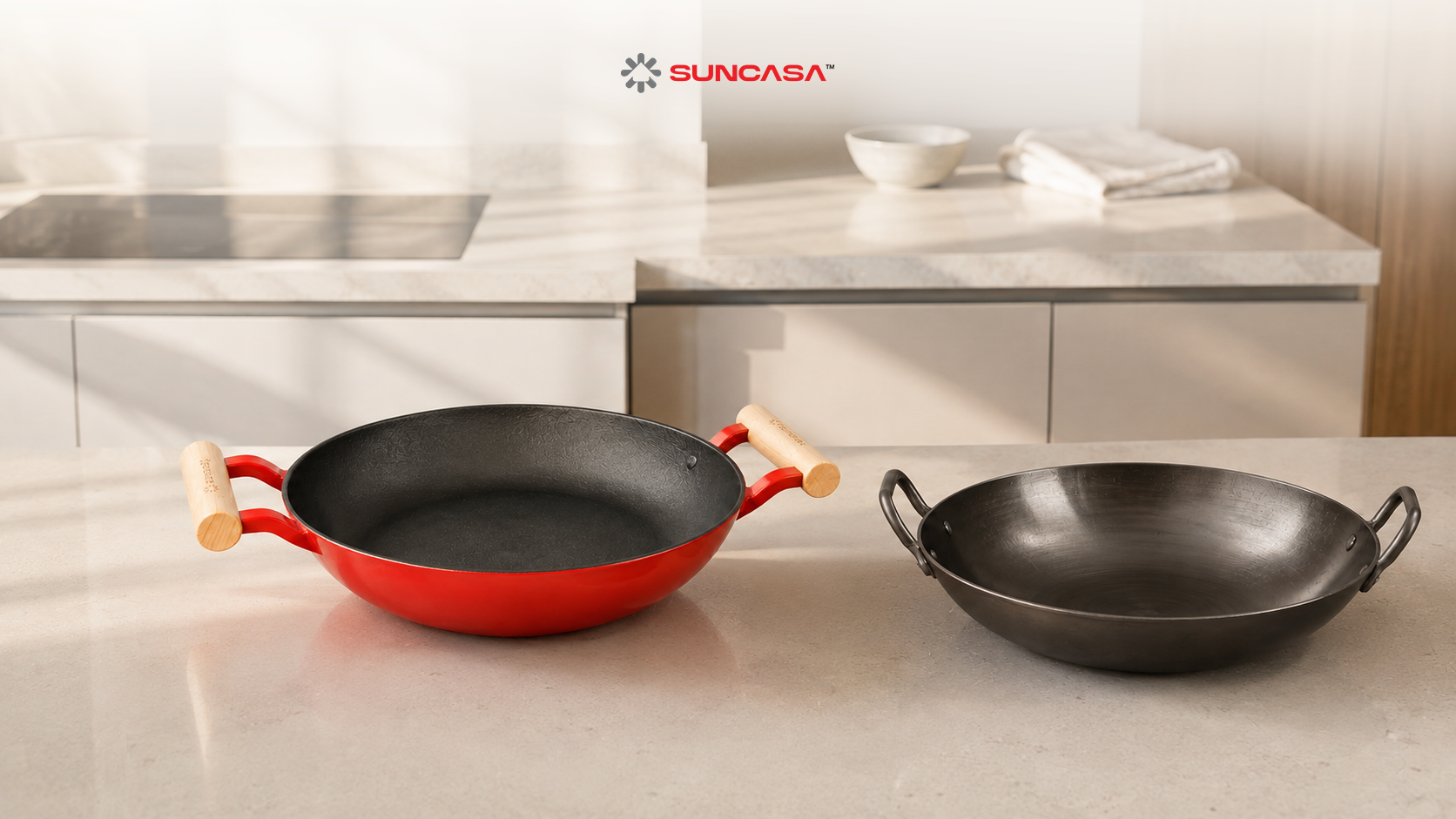
Is the cheaper cookware always the smarter choice? Sheet iron may be lighter on your hands and your wallet, but can it match cast iron when it comes to heat retention, durability, and long-term performance? Understanding Cast Iron vs Sheet Iron can help you see why paying more may actually offer better value. Read on to discover which one truly deserves a place in your kitchen.
What Is Sheet Iron Cookware?
Sheet iron cookware is made by rolling iron into thin sheets and shaping them into cookware such as tawas, chapati pans, and kadais. Its lightweight design makes it easy to handle and quick to heat, making it suitable for rotis, dosas, and parathas.
However, sheet iron loses heat faster, can rust if not cared for properly, and needs regular seasoning. While practical for quick cooking, it may not offer the heat retention and long-term durability of cast iron.
What Is Cast Iron Cookware?
Cast iron cookware is made by melting iron and pouring it into moulds, creating thicker and heavier cookware than sheet iron. It takes longer to heat but retains heat for much longer, making it ideal for searing, frying, roasting, simmering, and slow cooking.
With proper seasoning, cast iron also develops a naturally non-stick surface. The difference between sheet iron and cast iron is most noticeable when consistent heat and even cooking are important.
Cast Iron vs Sheet Iron: At a Glance
|
Feature |
Sheet Iron |
Cast Iron |
|
Weight |
Lightweight |
Generally heavier |
|
Heating |
Heats quickly |
Takes longer to heat |
|
Heat retention |
Lower |
Excellent |
|
Durability |
Good with care |
Extremely long-lasting |
|
Seasoning |
Often requires regular maintenance |
Develops a natural seasoned surface |
|
Best suited for |
Rotis, dosas, parathas |
Searing, frying, roasting, curries |
|
Long-term value |
Budget-friendly |
Higher initial investment, longer lifespan |
This comparison shows why the cheaper option is not necessarily the more economical one.
Why Paying More for Cast Iron Can Save Money
The biggest advantage of cast iron cookware is its long lifespan. With proper care, a good cast iron pan can last for decades. It is also highly versatile, handling everything from frying and sautéing to roasting, baking, and slow cooking.
So instead of replacing lightweight cookware as it wears out or buying separate pans for different tasks, one durable cast iron piece can do more. That makes its higher upfront cost a worthwhile long-term investment.
1. Better Heat Retention
Cast iron's ability to hold heat makes it particularly useful for cooking dishes that benefit from consistent temperatures. It so happens that when you place cold ingredients into a hot pan, the temperature of a lightweight pan drops quickly.
A Cast iron pan for instance can recovers that heat effectively in a short while that helps with browing and searing. For Indian cooking, this makes it useful for dishes such as bhuna masala, kadhai paneer, fried snacks, roasted vegetables, and slow-cooked curries.
2. Naturally Non-Stick With Proper Care
Seasoning creates a protective cooking surface that becomes smoother with continued use. As the cookware is maintained properly, its natural non-stick properties can improve.
SUNCASA's CASTELLA cookware takes this concept further with a design focused on convenient everyday cooking. Its pure iron construction and naturally non-stick surface are designed to reduce the amount of oil required.
3. No Chemical Non-Stick Coating
For homecooks who prefer cookware without conventional synthetic non-stick coatings, cast iron provides an alternative. CASTELLA features no PTFE, PFOA, or PFAS coating and is designed without a chemical non-stick coating. Its surface can be used with metal spatulas, making it practical for everyday Indian cooking. The cookware is also designed for zero metal leaching under its specified cooking conditions, including high-heat cooking with acidic foods.
CASTELLA: Traditional Iron With Modern Convenience
SUNCASA's CASTELLA cookware combines the characteristics of iron cookware with features intended to simplify everyday use.
|
CASTELLA Feature |
Everyday Benefit |
|
Pure iron construction |
Traditional iron cooking experience |
|
Exterior enamel coating |
Easier maintenance |
|
Naturally non-stick surface |
Less oil needed |
|
No PTFE, PFOA or PFAS |
No conventional chemical non-stick coating |
|
Metal-spatula safe |
Suitable for everyday cooking |
|
Ergonomic wooden handle |
Comfortable handling |
|
Stain and rust resistant |
Easier upkeep |
|
Multiple cooktop compatibility |
Gas, electric, ceramic, induction, glass and oven |
Which Is Better for Indian Cooking?
The better choice depends on how you cook. Sheet iron works well for lightweight cookware and quick meals, while cast iron offers better heat retention and greater versatility. If you want one cookware option that can handle a wide range of dishes, cast iron is built to serve you for years.
We say so, while being completely aware of the fact that the true difference between a sheet iron and cast iron isn’t just about the material, but also the kind of performance it would provide along with durability, and long-term value.
How to Make Cast Iron Last Longer
Even durable cookware benefits from proper care. Avoid sudden temperature changes, clean it according to the manufacturer's instructions, and dry it thoroughly after washing. With traditional uncoated cast iron, seasoning is particularly important.
CASTELLA's enamel exterior, however, makes everyday maintenance easier while retaining the advantages of iron cookware. Ultimately, treating the cookware carefully is the key to extending its life significantly and extracting a greater value from your investment.
The Long-Term Value
The value of cookware goes beyond its initial price. While sheet iron is lightweight and convenient, cast iron offers superior heat retention, durability, and versatility, making it a reliable choice for years of cooking. SUNCASA’s CASTELLA combines pure iron construction with an easy-maintenance enamel exterior and naturally non-stick surface. Visit the SUNCASA website store today to explore CASTELLA and bring home cookware built to last.
FAQs
Why choose SUNCASA CASTELLA over sheet iron cookware?
SUNCASA CASTELLA offers cast iron’s excellent heat retention, durability, and versatility, making it suitable for Indian cooking techniques requiring consistent temperatures and dependable long-term performance.
What makes SUNCASA CASTELLA different from traditional cast iron cookware?
CASTELLA combines pure iron construction with an enamel exterior, a naturally non-stick cooking surface, an ergonomic wooden handle, and versatile cooktop compatibility for convenient everyday cooking at home.
Is SUNCASA CASTELLA suitable for Indian cooking?
Yes, CASTELLA is suitable for Indian cooking, including rotis, parathas, curries, frying, and sautéing. Its heat retention supports consistent cooking across numerous traditional recipes and techniques.
Does SUNCASA CASTELLA require extensive maintenance?
CASTELLA’s enamel exterior simplifies maintenance compared with traditional bare cast iron. Follow SUNCASA’s care instructions, clean appropriately, and avoid harsh handling to preserve its performance and finish.
Why can cast iron offer better long-term value than sheet iron?
Cast iron offers excellent durability, heat retention, and versatility. A quality SUNCASA CASTELLA piece can handle numerous cooking tasks, reducing the need for frequent cookware replacement over time.


