

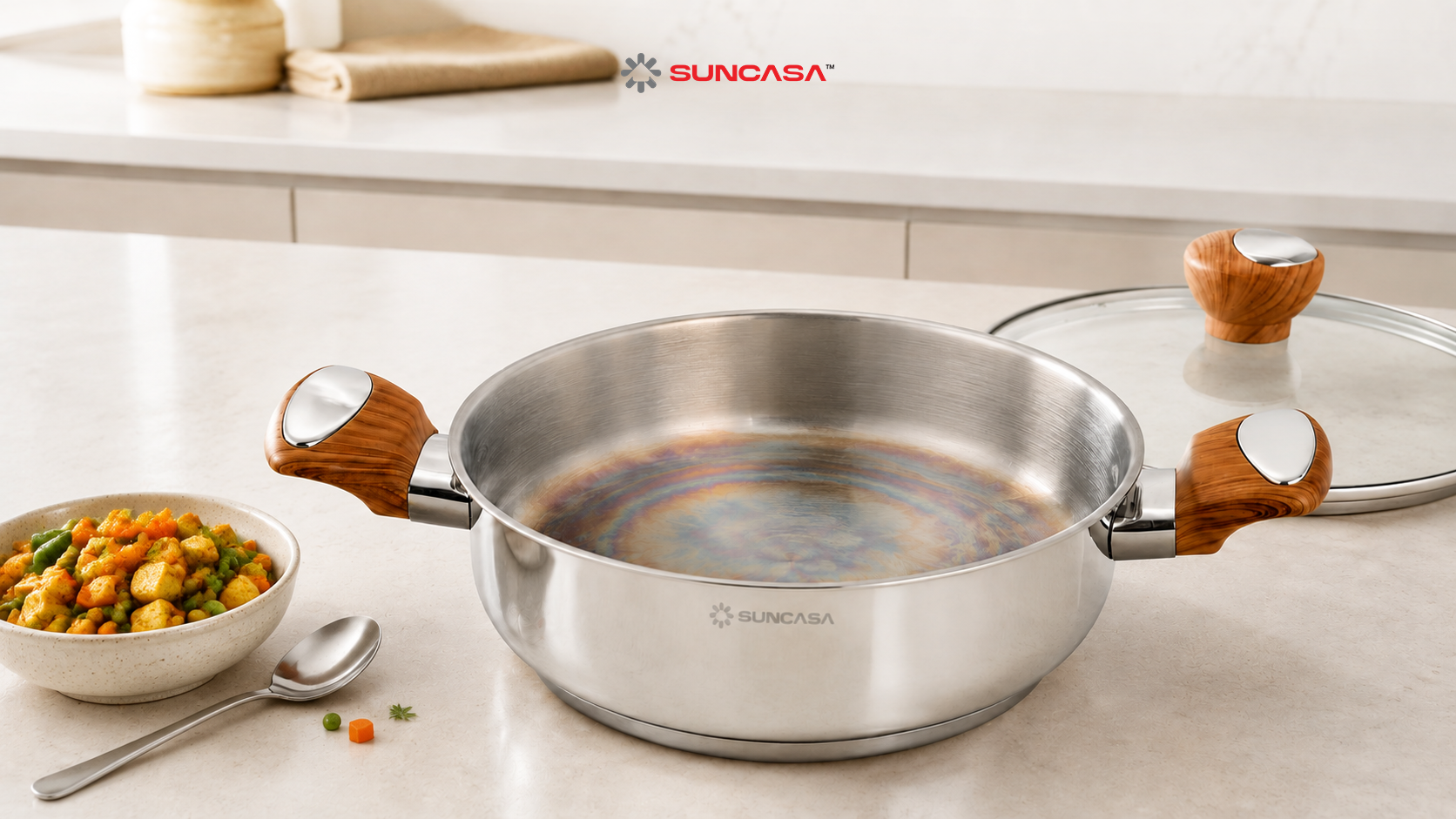
Ever wondered about a rainbow tint appearing on your stainless steel pan after cooking? It may look alarming, but this rainbow stain is usually a harmless surface effect caused by heat. It does not mean your cookware is leaking chemicals or becoming unsafe. That said, in this blog, we are breaking this effect further down to calm your curious minds and to help you actually know when exactly you should be concerned, how to clean it, and how you can care for your stainless steel cookware better.
What Causes a Rainbow Stain on Stainless Steel?
Stainless steel develops its corrosion resistance from a thin protective chromium-rich oxide layer on its surface. Hence, when it’s exposed to high temperatures, this layer becomes slightly thicker. As the thickness changes, it interacts with light differently, producing shades that can range from pale yellow and gold to blue, purple, or green. This is commonly called heat tinting.
A rainbow stain on stainless steel is therefore generally a visual change rather than a sign that the metal is breaking down. The effect is particularly common when an empty pan is overheated, cooking temperatures are very high, or cookware is heated for an extended period. It can also appear after repeated use.
Is Heat Tinting Dangerous?
In normal circumstances, heat tinting itself doesn’t mean that the cookware is forming a toxic coating or chemical contamination. However, it’s best to avoid extreme overheating. Very high temperatures can affect the appearance and performance of cookware, and besides, no food item should be left unattended on a heated pan.
Rainbow Stain vs Other Stainless Steel Marks
Rainbow stains are harmless, but there are certain stains that you should have an eye out for, not just for safety, but also to make daily cleaning earlier on you as well.
|
Mark or appearance |
Common cause |
Usually a safety concern? |
Recommended action |
|
Rainbow or blue-purple tint |
Heat tinting |
No |
Clean with mild acid |
|
White cloudy spots |
Hard-water minerals |
No |
Use vinegar or citric acid |
|
Brown food residue |
Overheated food or oil |
Usually no |
Soak and clean gently |
|
Rust-coloured spots |
Surface contamination or corrosion |
Needs attention |
Clean and inspect |
|
Deep pits or damaged surface |
Corrosion or physical damage |
Potential concern |
Stop using if severe |
What Causes White Spots on Stainless Steel?
Hard water contains dissolved minerals such as calcium and magnesium. When water evaporates from a pan, these minerals can remain behind as white, cloudy circles or patches. These patches are different from stainless steel pan discoloration that is caused by heat.
Avoid scraping them with knives, hard pads, or steel wool. Scratches can make the surface harder to clean, and might permanently affect its finish.
How to Remove Rainbow Stains Safely
You do not need special cleaning tactics to remove rainbow stains from stainless steel cookware. Things like a lemon-based dishwashing soap and other mild household acids can help dissolve the surface film and remove the discolouration.
Method 1: White Vinegar
- Allow the pan to cool completely.
- Mix white vinegar with water.
- Apply the mixture to the affected area using a soft cloth or sponge.
- Leave it for a few minutes.
- Rinse thoroughly.
- Dry with a clean microfiber cloth.
Method 2: Lemon Juice
Lemon juice can also help with light heat marks. Apply a small amount to the affected area, gently rub with a soft sponge, rinse, and dry. For stubborn marks, repeat the process rather than using increasingly abrasive materials.
Can You Prevent Rainbow Discolouration?
While occasional heat tinting is normal, a few cooking habits can help you avoid it.
- Avoid heating an empty pan for long periods.
- Use an appropriate flame or induction setting.
- Do not allow oil or food residue to burn repeatedly.
- Let the cookware cool before cleaning.
- Remove mineral deposits before they accumulate.
- Dry cookware after washing instead of leaving water droplets to evaporate.
These simple practices can help reduce stainless steel pan discoloration while keeping your cookware looking polished.
What About Dishwashers?
Many stainless steel cookware products can be dishwasher-safe, but frequent dishwasher use can also lead to spotting and dullness depending on the detergent and water quality.
Dishwasher detergents can be alkaline and, combined with high temperatures and hard water, may leave marks on the surface. This is why hand-washing with a mild dishwashing liquid is a better option when maintaining the finish is a priority.
Even so, if you use a dishwasher, follow the manufacturer's care instructions and dry the cookware properly after the cycle.
When Should You Be Concerned?
A colourful surface tint by itself is generally not a reason to worry. However, cookware should be inspected if you notice deep pitting, severe corrosion, peeling material, cracks, or significant physical damage.
A rainbow stain on stainless steel is typically only a surface discolouration. The important difference here is between harmless discolouration and actual damage to the cookware. If you are unsure about a mark, avoid aggressive cleaning methods until you understand what caused it.
Keep Your SUNCASA Cookware Looking Its Best
Stainless steel is designed for everyday cooking, but proper care helps preserve its finish. With SUNCASA cookware, simple habits such as controlling heat, avoiding prolonged empty heating, using gentle cleaning methods, and drying after washing can make everyday maintenance easier.
Don't Fear The Rainbow
A rainbow stain on stainless steel is a harmless heat-related surface effect, not a sign that your cookware has become toxic. With gentle cleaning and sensible heat control, you can remove rainbow stains without damaging the surface.
For reliable cookware and easy everyday care, explore SUNCASA’s collection and visit the SUNCASA website store today.
FAQs
Is a rainbow stain on SUNCASA stainless steel cookware toxic?
A rainbow stain is typically heat tinting, a harmless surface effect caused by heating stainless steel. It does not indicate that your SUNCASA cookware has become toxic.
How can I remove rainbow stains from SUNCASA cookware?
To remove rainbow stains, gently wipe the cooled cookware with diluted white vinegar or lemon juice, then rinse thoroughly and dry with a soft microfiber cloth.
Why does SUNCASA stainless steel cookware develop rainbow discoloration?
Rainbow discoloration can occur when stainless steel is exposed to high temperatures. The protective surface layer changes slightly, creating colours that reflect light differently across the cookware surface.
Can hard water cause stains on SUNCASA stainless steel cookware?
Yes, hard water can leave white mineral deposits after evaporation. These marks are usually harmless and can be removed using mild vinegar or citric acid solutions.
How can I prevent stainless steel pan discoloration?
Avoid prolonged empty heating, use suitable cooking temperatures, clean gently, and dry cookware after washing. These simple habits can help maintain SUNCASA cookware’s appearance and finish.


