

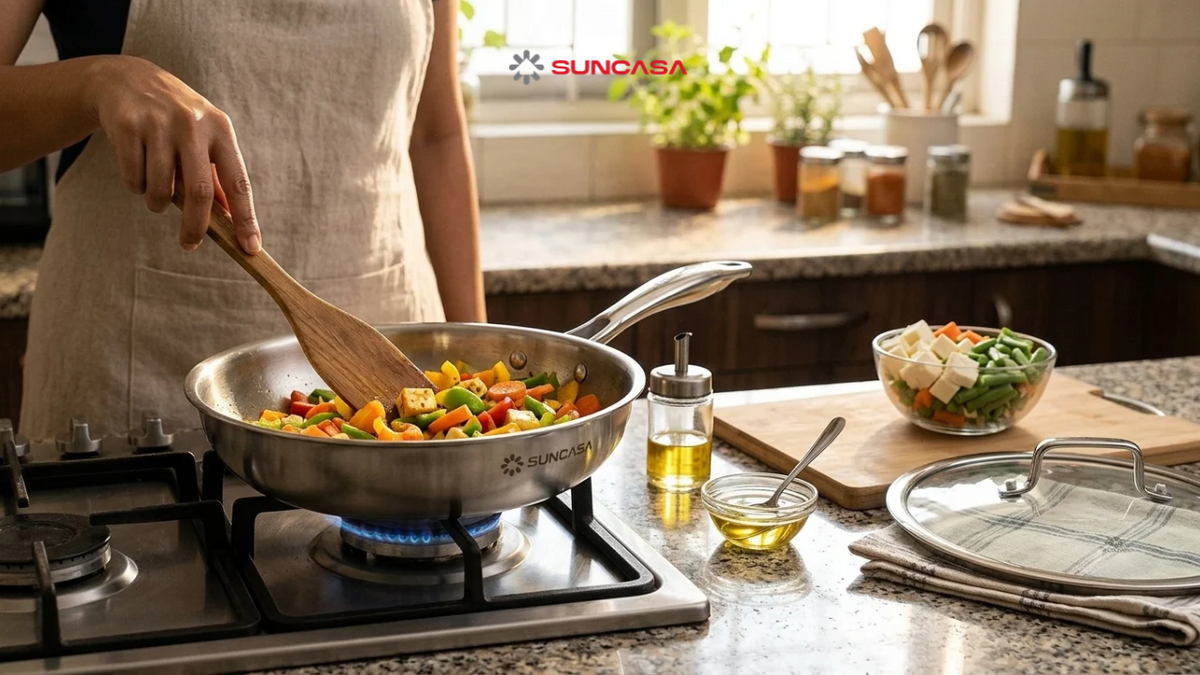
Cooking with less oil does not mean compromising on flavour or texture. The right cookware, heat control, and cooking technique can help make everyday meals more efficient. Stainless steel pans are especially useful when handled correctly. With proper preheating, measured oil, and suitable cooking methods, they can support lighter everyday cooking. Read on to learn simple techniques and choose the best cookware for low-oil cooking.
Helpful Habits For Low Oil Cooking
Using less oil is not simply about reducing the quantity used in a recipe. The way a pan is heated, how ingredients are prepared, and when they are added can all affect cooking results.
Helpful habits include:
- Preheating the pan properly
- Using low to medium heat
- Adding measured oil after preheating
- Keeping ingredients reasonably dry
- Avoiding overcrowding
- Allowing food to cook before stirring
- Using a lid when suitable
These simple techniques can make stainless steel cooking easier while helping you use oil more efficiently.
Step By Step Low Oil Cooking Techniques
1. Preheat the Pan Before Adding Oil
Preheating is one of the most important steps when cooking in stainless steel cookware. Place the pan over low to medium heat and allow it to warm gradually before adding oil. Once the surface is heated, add the required amount of oil and spread it across the cooking area. This helps the oil cover the surface more effectively instead of requiring a larger quantity. A properly preheated pan can also help ingredients cook more evenly and reduce unnecessary sticking.
2. Use Medium Heat Instead of Excessive Flame
High heat is not always the best choice for faster cooking. Excessive heat can cause oil, spices, or food to burn before the ingredients are properly cooked. For most everyday recipes, medium heat provides better control. Higher temperatures can be used when a particular recipe calls for them, such as certain tempering or searing methods.
|
Cooking Stage |
Recommended Approach |
|
Preheating |
Low to medium heat |
|
Sautéing |
Medium heat |
|
Simmering |
Low to medium heat |
|
Tempering |
Medium to high heat when required |
|
Slow cooking |
Low heat |
Maintaining suitable heat can help prevent burning and reduce the need to add extra oil.
3. Spread Oil Across the Cooking Surface
Instead of adding oil in just one corner of the pan, spread it evenly across the pan. You can gently tilt the cookware or use a suitable spatula to distribute the oil; this spreads the oil evenly across the whole surface. The technique can be particularly useful when sautéing vegetables, preparing paneer, or making breakfast dishes.
4. Prepare Ingredients Before They Go Into the Pan
Excess moisture can affect how ingredients cook. Wet vegetables or other ingredients can release additional water when they hit a hot pan, causing them to steam rather than sauté. Before cooking, remove unnecessary surface moisture where practical. Properly prepared ingredients can make it easier to control heat and achieve the desired texture without repeatedly adding oil. This is especially useful when preparing vegetables, paneer, potatoes, and other ingredients that are commonly sautéed.
5. Avoid Overcrowding the Cookware
Putting too much food into a pan at once can lower its temperature. Ingredients may then release moisture and begin steaming instead of cooking evenly. Give the ingredients enough space to make proper contact with the cooking surface. If you are preparing a large quantity, cooking in batches can provide better control.
|
Problem |
Better Approach |
|
Too much food in the pan |
Cook in batches |
|
Excess moisture |
Dry ingredients before cooking |
|
Uneven cooking |
Maintain enough space |
|
Food sticking |
Allow the surface to heat properly |
These small changes can improve cooking without requiring additional oil.
6. Allow Food to Cook Before Stirring
Constantly moving food around the pan can interfere with browning and cooking. When preparing paneer, vegetables, or similar ingredients, allow them to cook for some time before turning or stirring.
As food cooks properly, it may release more easily from the stainless steel surface. This can reduce the temptation to immediately add more oil when ingredients appear to stick.
Learning when to stir and when to wait is an important part of cooking with stainless steel cookware.
7. Use a Lid When the Recipe Allows
A lid can help retain moisture and steam inside the cookware. This can be useful when preparing vegetables, sabzis, curries, rice dishes, and other recipes that benefit from covered cooking.
Instead of relying only on oil to keep food moist, the natural moisture released from ingredients can contribute to the cooking process. However, the lid should be used according to the recipe. Different dishes require different cooking methods and moisture levels.
8. Add Small Amounts of Water When Needed
Masala-based dishes can sometimes begin sticking as moisture evaporates. Instead of immediately adding more oil, try adding a small amount of water when the recipe allows. This can help loosen the masala and allow cooking to continue. Add water gradually rather than pouring in a large quantity at once. This technique can work well for onion-tomato masalas, vegetable preparations, and certain gravies.
9. Choose the Right Pan Size
The size of your cookware can influence how efficiently food cooks. A pan that is too small can overcrowd ingredients, while an oversized pan may leave too much exposed cooking surface. Choose cookware according to the quantity and type of food being prepared.
- Small portions: Frypan or saucepan
- Sautéing: Frypan
- Curries and vegetables: Kadhai
- Family-sized meals: Larger cookware
Choosing the right size can improve heat distribution and make measured oil easier to manage.
Indian Dishes That Can Be Prepared With Less Oil
Many everyday Indian dishes can be prepared with measured quantities of oil when suitable techniques are followed.
|
Dish |
Useful Technique |
|
Mixed vegetable sabzi |
Medium heat and covered cooking |
|
Paneer |
Preheat and allow browning before turning |
|
Poha |
Use measured oil for tempering |
|
Upma |
Controlled heat while roasting |
|
Dal |
Simmer with measured tempering |
|
Stir-fried vegetables |
Avoid overcrowding |
|
Pulao |
Control heat and moisture |
|
Light curries |
Add water gradually when needed |
The purpose is not necessarily to remove oil from cooking but to use it according to the recipe and cooking requirements.
How to Prevent Food From Sticking While Using Less Oil
Stainless steel cookware requires some familiarity. Following a few simple steps can improve results:
- Preheat the pan gradually.
- Add oil after the surface is ready.
- Spread the oil evenly.
- Use reasonably dry ingredients.
- Maintain suitable heat.
- Avoid overcrowding.
- Let the food cook before turning it.
These habits can make stainless steel cooking more comfortable and help reduce the need for unnecessary additional oil.
Consider Stainless Steel and Triply Cookware
Stainless steel cookware is a practical choice for everyday Indian cooking because it can be used for sautéing, shallow frying, simmering, boiling, and preparing a variety of recipes. Triply pans takes this construction further by using multiple bonded layers, generally including an aluminium core between stainless steel layers. This helps distribute heat more evenly across the cookware.
For households looking for the best cookware for low-oil cooking, features such as even heating, good temperature control, and an easy-to-manage cooking surface can be useful considerations.
Why Choose SUNCASA Stainless Steel Cookware?
SUNCASA offers stainless steel cookware designed for practical everyday cooking. The SUNCASA Impact Pro Stainless Steel Frypan, for example, is a useful option for preparing sautéed vegetables, paneer, breakfast dishes, and other everyday recipes.
For those comparing the best cookware for low-oil cooking, practical features such as durable stainless steel construction, easy maintenance, and suitable cookware size can make everyday cooking more convenient.
Enjoy Healthier Everyday Meals
Cooking with less oil is about more than simply reducing the quantity in your pan. Proper preheating, controlled heat, suitable cookware size, ingredient preparation, and timely stirring can all make a difference. Stainless steel cookware can support these techniques while handling a wide range of everyday Indian recipes.
SUNCASA stainless steel cookware is designed to bring practical performance to everyday kitchens. If you are looking for the best cookware for low-oil cooking, explore the SUNCASA Impact Pro Stainless Steel Frypan and discover more cookware options at the official SUNCASA website store.
FAQs
How does SUNCASA stainless steel cookware support low-oil cooking?
SUNCASA stainless steel cookware supports controlled cooking when used with proper preheating, measured oil, and suitable heat. The Impact Pro Stainless Steel Frypan can be useful for sautéing, shallow frying, breakfast preparations, and everyday recipes requiring careful oil management techniques.
How should a SUNCASA stainless steel frypan be preheated?
Preheat the SUNCASA stainless steel frypan gradually over low to medium heat before adding measured oil. Spread the oil across the cooking surface, add prepared ingredients, and allow them to cook before stirring for better control and even cooking results.
Can stainless steel cookware be used for low-oil cooking?
Yes, stainless steel can be used for low-oil cooking when the pan is properly preheated and heat is controlled. SUNCASA cookware can support everyday sautéing, shallow frying, and other recipes when suitable cooking techniques are followed correctly at home.
How can triply cookware help with controlled cooking?
Triply cookware uses multiple bonded metal layers, commonly including an aluminium core between stainless steel layers, to support even heat distribution. This can improve temperature control and cooking consistency, making it useful for measured-oil everyday preparations in Indian kitchens.
Which SUNCASA pan is suitable for low-oil cooking?
The SUNCASA Impact Pro Stainless Steel Frypan is designed for practical everyday cooking. Its stainless steel construction makes it suitable for sautéing, shallow frying, and preparing breakfast dishes, while proper preheating and heat control can support measured oil use effectively.


