

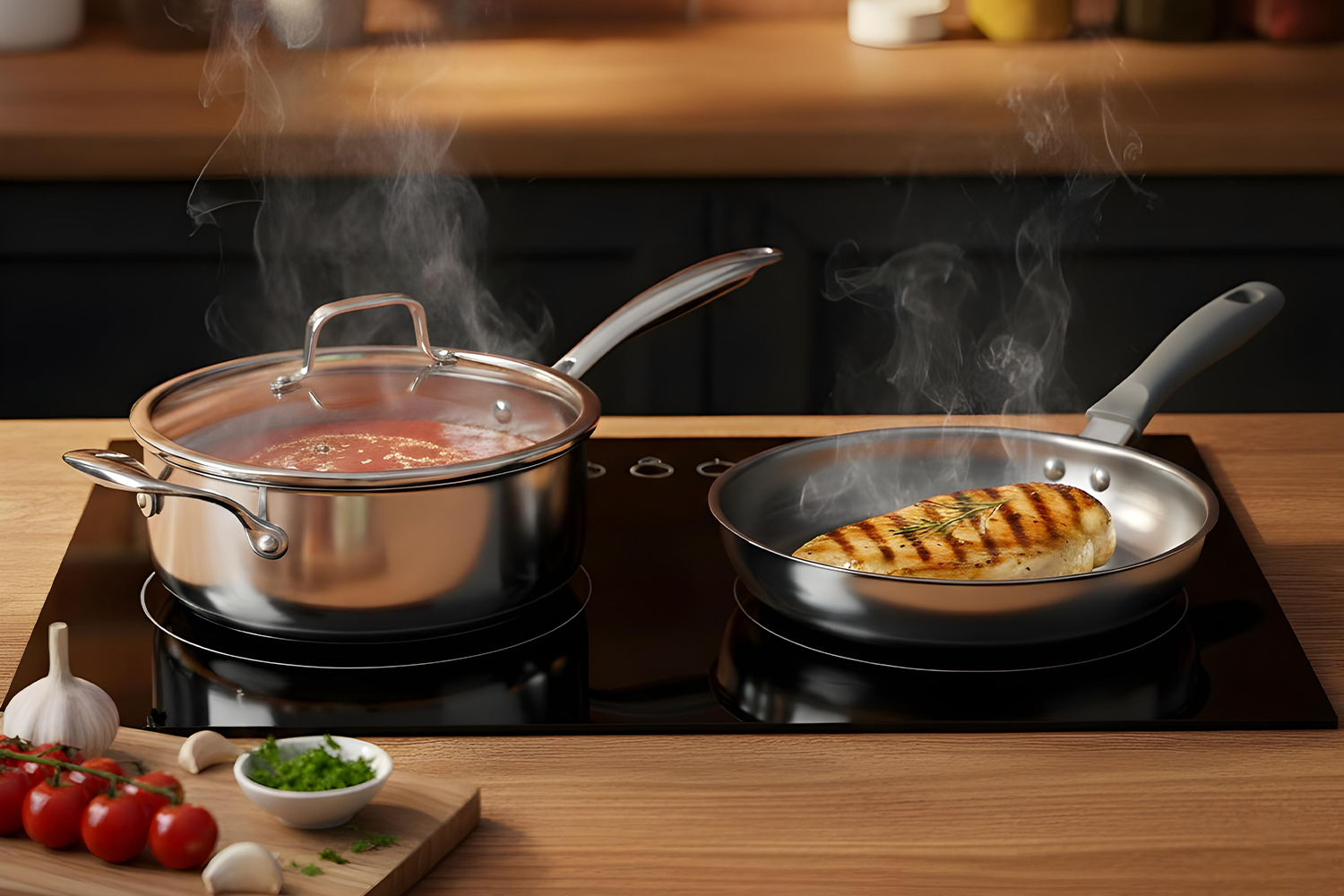
Having good quality, reliable cookware for daily cooking needs goes a long way to make living easier, especially for people and families with hectic schedules. What defines good quality cookware is its cooking performance, proper surface heat distribution, durability, and versatility that help you to cook different dishes using a single kadhai or pan. While on the search, buyers often feel stuck between the argument of impact bonded vs triply cookware.
Both options are regularly used in Indian kitchens and offer reliable cooking performance, but their construction and functionality are significantly different. Understanding these differences can help you buy cookware that matches your cooking habits, meal preferences, and long-term kitchen needs.
Understanding Impact Bottom Cookware
Impact Forged Bottom cookware is made by attaching a thick aluminium disc to the base of a stainless steel utensil using high-pressure impact bonding technology. Unlike other stainless steel cookware that may heat unevenly, impact-bonded cookware distributes heat evenly across the bottom surface. This makes it highly effective for tasks that mainly require bottom heating, such as boiling milk, preparing tea, cooking rice, making soups, or simmering dals.
A good example is the SUNCASA Impact Pro Stainless Steel Flat Bottom Kadai. Its impact forged base ensures efficient heating while maintaining a lightweight structure that is comfortable for everyday cooking.
Benefits of Impact Bottom Cookware
- Heats quickly and efficiently from the base
- Lightweight and easy to handle
- More affordable than triply cookware
- Suitable for daily cooking tasks
- Compatible with modern cooktops, including induction
- Requires less maintenance
What is Triply Cookware?
Triply cookware is constructed using three bonded layers extending throughout the entire body of the cookware rather than only the base.
These layers typically include:
- Inner layer: Food-grade 304 stainless steel
- Middle layer: Aluminium core for faster heat conductivity
- Outer layer: Induction-compatible stainless steel
Because the aluminium core envelops the entire utensil, heat spreads uniformly across both the base and side walls. This allows you to have more control over the cooking process and reduces the chances of hotspots.
This is where the major difference between impact-bonded cookware and triply cookware becomes clearer. While impact bottom cookware focuses heat mainly at the base, triply cookware distributes heat throughout the entire vessel.
The SUNCASA Tri Smart Triply Kadhai with Lid is designed for cooking techniques that demand controlled and even heating. From sautéing vegetables to slow-cooking gravies and preparing biryanis, triply cookware delivers consistent cooking results.
Why Triply Cookware is Preferred for Advanced Cooking
Triply cookware is often preferred by home chefs and cooking enthusiasts because of its superior heat management. Since the heat travels evenly through the sides and base, ingredients cook more uniformly, and flavours develop more effectively.
Advantages of Triply Cookware
- Uniform heating across the entire body
- Better cooking control
- Reduced food burning and sticking
- Ideal for slow cooking and layered recipes
- Retains heat for longer durations
- Durable and long-lasting construction
For recipes that involve sautéing onions, roasting spices, simmering curries, or deep frying, triply cookware can significantly improve cooking consistency.
Comprehensive Difference Between Impact Bottom and Triply Cookware
|
Feature |
Impact Bottom Cookware |
Triply Cookware |
|
Construction |
Stainless steel body with aluminium disc at base |
Three-layer bonded construction throughout the body |
|
Heat Distribution |
Limited mainly to the base |
Even across base and side walls |
|
Cooking Style |
Best for boiling and simple cooking |
Suitable for advanced and multi-step cooking |
|
Heating Speed |
Quick base heating |
Balanced and controlled heating |
|
Weight |
Lightweight |
Slightly heavier |
|
Durability |
Durable for daily use |
Extremely durable and long-lasting |
|
Energy Efficiency |
Efficient for quick cooking |
Efficient for prolonged cooking |
|
Food Texture |
Suitable for liquid-based dishes |
Better texture development in curries and gravies |
|
Cooking Precision |
Moderate |
High precision heat control |
|
Maintenance |
Easier to clean and manage |
Slightly more care is required |
|
Price Range |
Budget-friendly |
Premium investment |
|
Best Use Cases |
Tea, milk, dal, soups, rice |
Sabzis, curries, biryani, frying, roasting |
|
Heat Retention |
Moderate |
Excellent |
|
Induction Compatibility |
Yes |
Yes |
Which Cookware is Better for Indian Cooking?
Indian cooking involves multiple cooking styles ranging from boiling and steaming to frying, roasting, and slow simmering. The right cookware depends largely on what you cook most frequently.
Choose Impact Bottom Cookware If:
- You cook simple everyday meals
- You frequently boil liquids
- You prefer lightweight utensils
- You want budget-friendly cookware
- You need cookware for quick daily tasks
Choose Triply Cookware If:
- You enjoy cooking elaborate meals
- You make gravies and slow-cooked dishes regularly
- You prefer even cooking throughout the vessel
- You need better temperature control
- You want long-term premium cookware
In the debate of impact bonded vs triply, there is no single winner because both serve different kitchen requirements effectively.
Performance, Durability, and Long-Term Value
Both cookware types offer strong durability and a food-safe cooking surface that comes with stainless steel. However, triply cookware usually delivers better long-term performance for users who cook frequently and experiment with different cooking techniques.
At the same time, impact-bonded cookware remains an excellent choice for practical daily use because of its lighter structure and affordability.
SUNCASA’s cookware collections are designed with modern Indian kitchens in mind, combining performance, durability, induction compatibility, and elegant finishes that fit seamlessly into everyday cooking routines.
Final Thoughts
The difference between impact bottom and triply cookware comes down to heat distribution, cooking versatility, and cooking style preferences. If your focus is fast, convenient, everyday cooking, Impact Forged Bottom cookware offers dependable performance with ease of handling. If you want advanced cooking control and evenly distributed heat for flavour-rich recipes, triply cookware is a worthwhile investment.
Both categories deliver excellent functionality when chosen for the right purpose. Whether you select the practical efficiency of impact bottom cookware or the premium performance of triply cookware, investing in high-quality stainless steel cookware can significantly improve your cooking experience and kitchen efficiency.


