

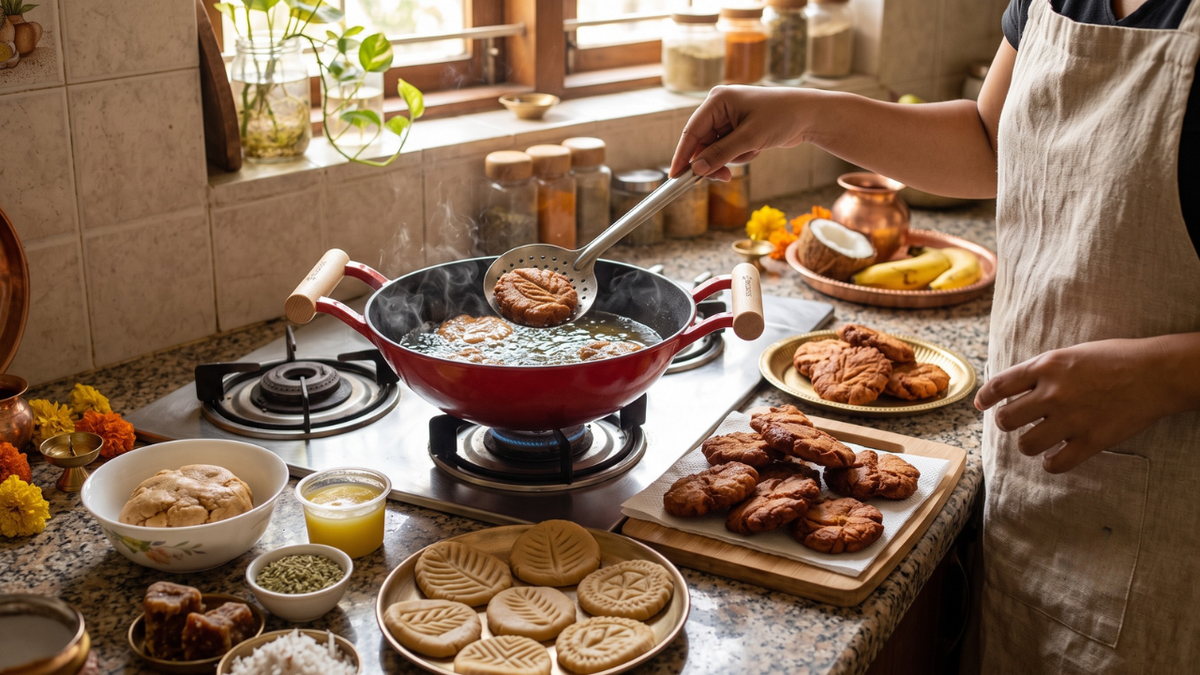
Thekua is a traditional Bihari sweet closely associated with Chhath Puja. Made with whole wheat flour, jaggery, ghee, fennel, and cardamom, these deep-fried treats are known for their crisp edges and rich flavour. A well-made Khasta Thekua recipe needs the right dough consistency and careful frying. SUNCASA Castella Kadai makes the process easier with its quick-heating cast iron body. Read on to prepare this festive favourite at home.
What Is Thekua?
Thekua is a traditional sweet from Bihar and Jharkhand, especially prepared during Chhath Puja. It is made using simple ingredients such as whole wheat flour, jaggery, ghee, fennel seeds, and cardamom.
Unlike perfectly shaped cookies, thekua has a rustic appearance with uneven, cracked edges. Its outside is crisp and crunchy, while the inside can remain slightly soft. Traditionally, the dough is pressed into decorative moulds, but a fork, toothpick, wooden skewer, or cookie press can also be used to create patterns. It is commonly enjoyed as a festive treat or with a warm cup of chai.
Ingredients For Khasta Thekua
The right balance of ingredients helps create the traditional texture and flavour of thekua.
|
Ingredient |
Quantity |
|
Whole wheat flour |
1.25 cups |
|
Salt |
1 pinch |
|
Fennel seeds |
1 tsp |
|
Grated or desiccated coconut |
1 tbsp |
|
Green cardamom powder |
½ tsp |
|
Ghee |
3 tbsp |
|
Jaggery |
½ cup |
|
Water |
¼ cup |
|
Oil for frying |
About 1.5 cups |
These ingredients form the base of the Khasta Thekua recipe. Jaggery gives the thekua its deeper colour and caramel-like sweetness, while fennel and cardamom add their characteristic aroma.
Step by Step Khasta Thekua Recipe
- Mix The Dry Ingredients: Add whole wheat flour, salt, fennel seeds, coconut, and cardamom powder to a mixing bowl. Mix everything well so the spices and coconut are evenly distributed.
- Add Hot Ghee: Heat the ghee and add it to the flour mixture. Mix carefully with a spoon. Once it is comfortable to handle, rub the ghee into the flour until the mixture develops a breadcrumb-like texture. (When pressed, the mixture should hold together instead of falling apart)
- Prepare The Jaggery Syrup: Add jaggery and water to a small saucepan. Heat it on medium-low until the jaggery melts completely. There is no need to make a thick syrup. Add the warm jaggery solution to the flour mixture gradually, mixing after every addition.
- Bring The Dough Together: Once the jaggery solution has been added, lightly knead the mixture into a firm or semi-soft dough. Avoid overworking it. Cover the dough with a kitchen towel and let it rest for around 15 minutes.
- Shape The Thekua: Divide the rested dough into small portions and roll them into balls. Flatten each one gently with your palms or a rolling pin. Now create patterns using a fork, toothpick, or wooden skewer. You can also use a cookie press or traditional mould if available.
Do not worry about making every piece perfectly even. The rustic, uneven edges are part of the traditional look of thekua. Keep the shaped pieces covered with a kitchen napkin until you are ready to fry them.
Thekua Dough Troubleshooting Tips
|
Dough problem |
Simple solution |
|
Dough is dry or crumbly |
Add a little water |
|
Dough is too sticky |
Add a little flour |
|
Dough feels too soft |
Add more flour gradually |
|
Dough is too hard |
Add a little water and knead lightly |
How To Fry Thekua In A Cast Iron Kadai
The frying stage plays an important role in getting the crisp texture expected from a Khasta Thekua recipe. Heat about 1.5 cups of neutral-flavoured oil in the SUNCASA Castella Kadai. Castella is made from pure iron ore and has an exterior enamel coating for easier maintenance, so you don’t have to worry at all about any damage to the cookware while you’re making the tekuas.
Follow These Frying Tips
- Check the oil: Drop a small piece of dough into the oil. It should rise gradually with gentle bubbling.
- Lower the heat: Once the oil is ready, maintain low to medium-low heat.
- Avoid overcrowding: Fry the thekua in batches, so they have enough space to cook evenly.
- Turn gently: Once one side becomes golden, carefully turn the thekua and fry the other side.
- Fry until crisp: Turn them a couple of times until they develop a deep golden colour.
- Drain properly: Transfer the fried thekua to kitchen paper towels to remove excess oil.
Why Use SUNCASA Castella For Thekua?
The right cookware can make deep-frying easier, especially when preparing traditional festive recipes. SUNCASA Castella brings together the strength of cast iron with features designed for everyday convenience.
|
Castella Feature |
How It Helps |
|
Pure iron ore construction |
Provides durable cast iron cookware |
|
Quick heating |
Helps the Kadai heat efficiently |
|
Naturally non-stick surface |
Supports cooking with less oil |
|
Exterior enamel coating |
Makes maintenance easier |
|
Wooden handle |
Offers comfortable handling |
|
Metal spatula safe |
Makes turning food convenient |
|
Stain and rust resistant |
Supports easier upkeep |
|
Multiple cooktops |
Suitable for gas, electric, ceramic, induction, glass, and oven use |
How To Get Crispy Thekua
The oil temperature is one of the most important factors in this Khasta Thekua recipe. If the oil is too hot, the outside can become dark quickly while the inside remains undercooked. Ideally, the oil should be around 180°C to 190°C. If you do not have a thermometer, test it with a small piece of dough. It should rise slowly with gentle bubbles. Frying on low to medium-low heat helps the thekua cook evenly and develop a crisp texture.
Storage And Serving Suggestions
Allow the thekua to cool completely before storing them. Place them in an airtight container and keep them at room temperature. They can stay fresh for around a week when stored properly. Serve them as a festive sweet, tea-time snack, or as part of your Chhath Puja feast. Their crunchy texture pairs especially well with a warm cup of chai.
Enjoy Your Crispy Homemade Thekua
A traditional Khasta Thekua recipe is all about simple ingredients, a well-prepared dough, and careful frying. SUNCASA Castella Kadai adds convenience with its quick-heating cast iron body, naturally non-stick surface, ergonomic wooden handle, and easy-maintenance enamel exterior. Prepare these rustic festive treats at home and bring traditional flavours to your kitchen. Explore SUNCASA’s Cast Iron Cookware and visit the official SUNCASA website store to shop now.
FAQs
What makes SUNCASA Cast Iron Kadai suitable for making Thekua?
SUNCASA Cast Iron Kadai offers a durable cast iron cooking surface that heats quickly and supports consistent frying. Its enamel exterior also makes maintenance easier. The sturdy construction is useful for preparing traditional recipes such as Thekua at home with heat and confidence.
How can Thekua be made crispy in SUNCASA Cast Iron Kadai?
Thekua becomes crisp when the dough is firm, the oil reaches the right temperature, and frying is done over low to medium-low heat. SUNCASA Cast Iron Kadai helps provide a sturdy cooking surface for consistent frying results and better control during frying.
Can Thekua be prepared using less oil in a cast iron Kadai?
Yes, Thekua can be prepared in SUNCASA Cast Iron Kadai using measured oil and controlled heat. Its cast iron construction supports steady cooking, while the enamel exterior simplifies maintenance. Follow the recipe carefully and avoid overcrowding while frying for even results.
What features does SUNCASA Castella offer?
Castella is designed with pure iron ore construction, an exterior enamel coating, an ergonomic wooden handle, and a durable cooking surface. It is also suitable for gas, electric, ceramic, induction, glass, and oven cooking at home for regular family meals.
How should Thekua be stored after frying?
After frying Thekua, allow the pieces to cool completely before storing them. Keep them in an airtight container at room temperature. SUNCASA Cast Iron Kadai can be cleaned after use and maintained according to the recommended care instructions for lasting performance and durability.


