

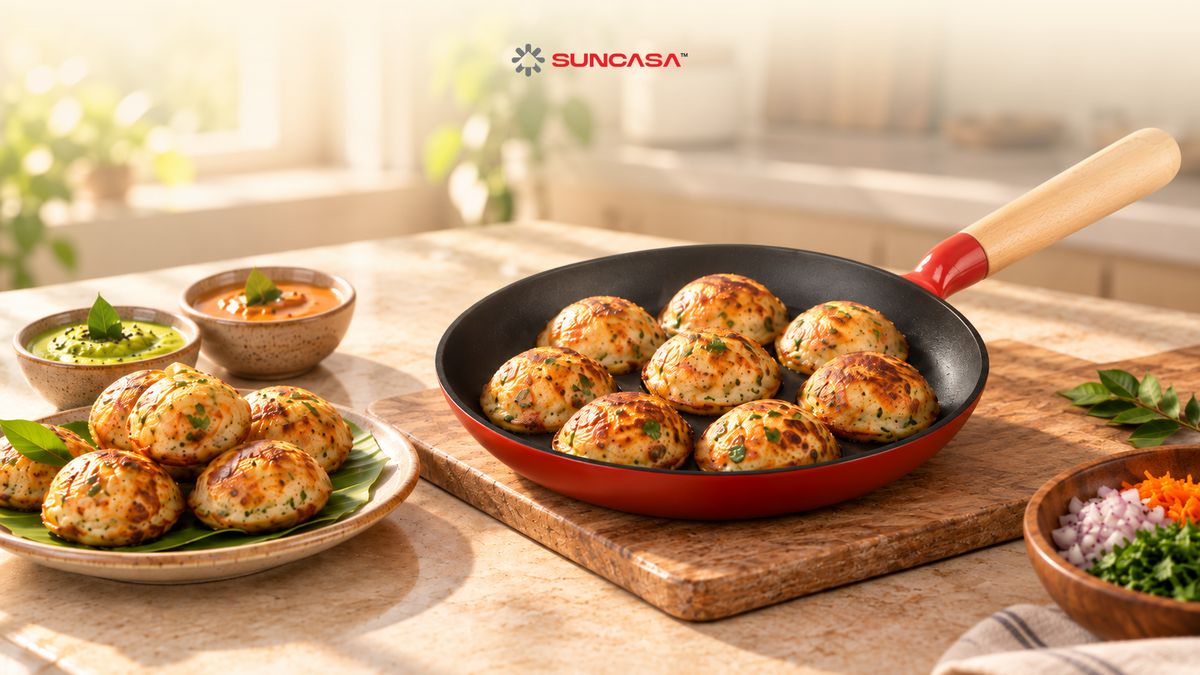
Crispy outside, soft inside, and packed with familiar South Indian flavours, paniyaram makes a delicious breakfast or snack. A good Paniyaram recipe also needs the right pan to achieve that golden, crisp texture. A cast iron pan provides steady heat and helps cook each paniyaram evenly. Let us explore the ingredients, method, pan choice, and tips for making perfect paniyaram at home.
What Is Paniyaram or Paddu?
Paniyaram, also called paddu, appe, or guliappa in different parts of India, is a small South Indian snack made in a special pan with round cavities. Traditional paniyaram uses fermented rice and urad dal batter, similar to dosa batter.
Pour the batter into the cavities and cook until the outside turns crisp while the centre stays soft. You can make it savoury or sweet, depending on the ingredients you add.
|
Type |
Key Ingredients |
Flavour |
|
Kuzhi Paniyaram |
Rice and urad dal batter |
Light and savoury |
|
Masala Paniyaram |
Onion, chilli, curry leaves |
Spicy and savoury |
|
Sweet Paniyaram |
Jaggery, coconut, cardamom |
Sweet and aromatic |
|
Rava Paniyaram |
Semolina and spices |
Crispy and light |
|
Nei Appam |
Batter and ghee |
Rich and sweet |
Whether you call it paniyaram, appe, or paddu, the basic idea remains the same: a simple batter transformed into golden, bite-sized treats.
What Makes a Good Paniyaram Recipe?
The beauty of a Paniyaram recipe lies in its simplicity. You do not need an elaborate list of ingredients. A well-fermented batter, a properly heated pan and a little patience can make a noticeable difference.
For a classic savoury version, you can use:
- Dosa batter: The base of the recipe and the main source of its soft texture.
- Onion and green chilli: Add crunch, freshness, and mild heat.
- Curry leaves: Bring a familiar South Indian aroma to every bite.
- Seasoning: Mustard seeds, cumin, or other spices can be added according to preference.
- Oil: A small amount helps create the crisp outer layer.
You can also add grated vegetables, coriander, or leftover cooked vegetables to give the batter a different flavour.
Why Use a Cast Iron Paniyaram Pan?
The pan matters almost as much as the batter. Cast iron is particularly useful for recipes that need consistent heat and a nicely browned exterior. A well-preheated cast iron paniyaram pan holds heat effectively, allowing the batter to cook evenly across the cavities. With regular seasoning and proper care, the surface can also become naturally easier to cook on.
Here is why cast iron works well for paniyaram:
|
Cast Iron Feature |
Benefit While Cooking |
|
Excellent heat retention |
Helps maintain steady cooking temperature |
|
Durable construction |
Suitable for frequent cooking |
|
Naturally non-stick when seasoned |
Helps release paniyaram more easily |
|
Even cooking |
Supports a crisp, evenly browned exterior |
|
High-heat friendly |
Useful for achieving better browning |
For a versatile option, SUNCASA CASTELLA combines pure iron construction with an exterior enamel coating for easier maintenance. It is designed to heat quickly, uses no chemical coating, and has a wooden handle for comfortable handling.
Ingredients for Crispy Paniyaram
For approximately 4 servings, keep the ingredients simple:
- 2 cups fermented dosa batter
- 1 small onion, finely chopped
- 1–2 green chillies, finely chopped
- A few curry leaves, chopped
- 1–2 tablespoons coriander
- ½ teaspoon mustard seeds
- ½ teaspoon cumin seeds
- Oil, as required
- Salt, if needed
If your dosa batter already contains salt, taste it before adding more. The batter should be thick enough to sit comfortably inside the paniyaram cavities without becoming too runny.
How to Make Paniyaram or Paddu
Follow these steps for a crisp and evenly cooked Paniyaram Recipe:
- Prepare the batter: Take fermented dosa batter in a bowl. Add chopped onion, green chilli, curry leaves, and coriander.
- Add seasoning: Heat a small amount of oil and temper mustard seeds and cumin. Add this to the batter and mix well.
- Preheat the pan: Place the cast iron paniyaram pan on the stove and heat it properly. Once hot, lower the flame to medium.
- Grease the cavities: Add a few drops of oil into each cavity. This helps the paniyaram develop a crisp outer surface.
- Add the batter: Pour the batter into each cavity, filling it around three-fourths. Avoid filling them completely because the paniyaram needs room to rise.
- Cook patiently: Let them cook until the bottom becomes golden and the sides begin to firm up.
- Turn carefully: Use a small wooden skewer or spoon to turn each paniyaram. Cook the other side until evenly browned.
- Serve hot: Remove them from the pan and serve immediately with coconut chutney, tomato chutney, or sambar.
This simple Paniyaram recipe gives you crisp edges without making the centre dry.
How CASTELLA Fits Into Your Kitchen
A good paniyaram pan should be useful beyond one recipe. SUNCASA CASTELLA offers cast iron cookware made from pure iron ore and features an exterior enamel coating for easier maintenance. Its ergonomic wooden handle also makes handling more comfortable.
Some of its practical features include:
- Naturally non-stick cooking: The pan is designed for less-oil cooking.
- No chemical coating: It is metal spatula-safe.
- Versatile cooking: Suitable for gas, electric, ceramic, induction, glass, and oven use.
- Easy maintenance: The enamel exterior is stain- and rust-resistant.
- High-heat cooking: SUNCASA cookware offers zero metal leaching and high heat cooking even with acidic foods.
This makes CASTELLA a practical choice when you want a pan that can move beyond your weekend Paddu Recipe.
Tips for Crispy Paniyaram Every Time
Small cooking details can make a big difference to the final texture.
- Preheat the pan properly: A cold pan can make the batter stick and cook unevenly.
- Keep the flame moderate: Very high heat can brown the outside before the centre cooks.
- Do not overfill: Leave some space for the batter to rise.
- Use enough oil: A little oil around the edges helps create crispier sides.
- Turn only when ready: Wait until the base is firm and golden before flipping.
- Serve immediately: Paniyaram tastes best when hot and freshly cooked.
Make Perfect Paniyaram at Home
A good Paniyaram Recipe does not need complicated ingredients or techniques. With fermented batter, simple seasoning, and a well-heated cast iron pan, you can make crispy, golden paniyaram at home with ease. SUNCASA CASTELLA adds durable iron construction, easy maintenance, and versatile cooking to the experience.
Visit the SUNCASA website store today and explore CASTELLA for your everyday cooking needs.
FAQs
Is SUNCASA CASTELLA suitable for making paniyaram?
Yes, SUNCASA CASTELLA is suitable for making paniyaram, offering pure iron construction, steady heat retention, naturally non-stick cooking, and compatibility with multiple cooktops for versatile everyday use.
Why is CASTELLA useful for a crispy paniyaram recipe?
CASTELLA provides steady heat retention and high-heat cooking capability, helping paniyaram develop golden, crispy edges while keeping the centre soft when the pan is properly preheated.
Does SUNCASA CASTELLA require a chemical non-stick coating?
No, CASTELLA uses a cooking surface designed for naturally non-stick performance without chemical non-stick coatings, making it suitable for preparing paniyaram with controlled oil usage.
Can CASTELLA be used beyond making paniyaram?
Absolutely. SUNCASA CASTELLA is designed for versatile cooking, including frying, sautéing, and high-heat recipes, while supporting gas, electric, ceramic, induction, glass, and oven cooking.
How should I use CASTELLA for making paniyaram?
Preheat your CASTELLA pan properly, lightly grease each cavity, add batter without overfilling, cook over moderate heat, and turn each paniyaram once the base becomes golden.


