

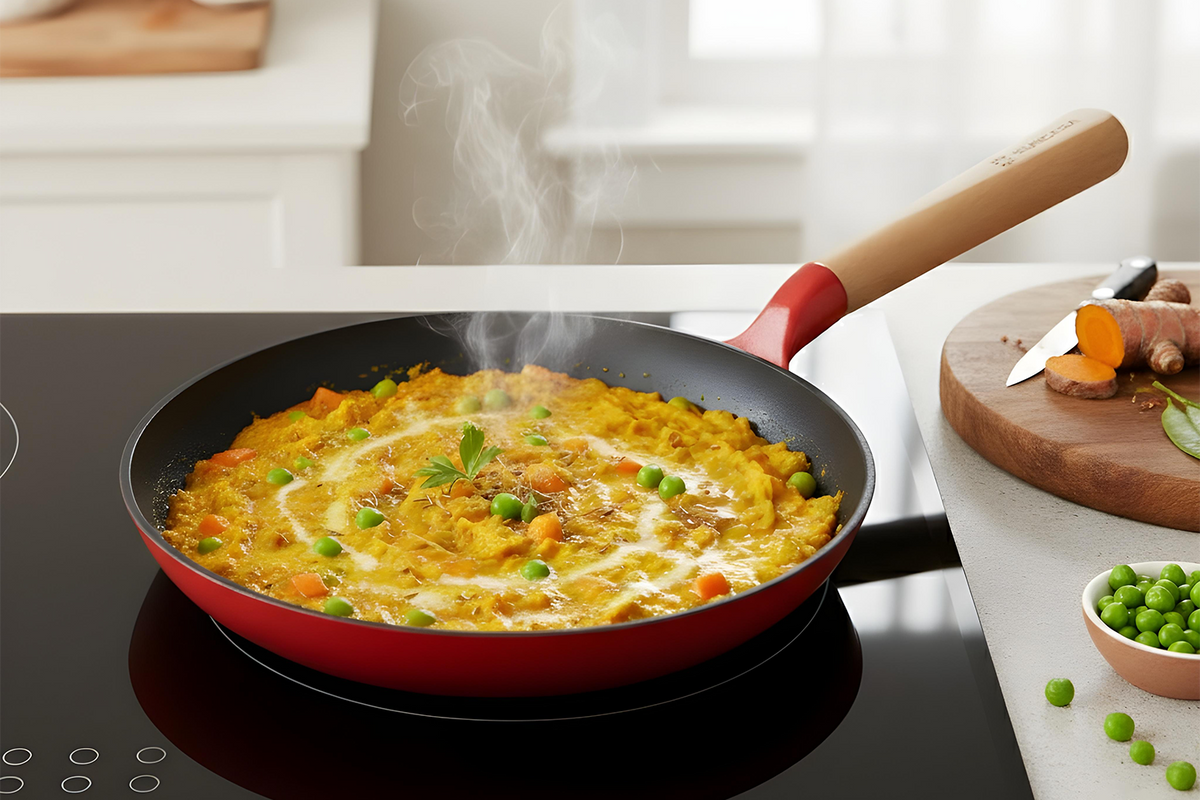
Rajasthan is known for its rich culinary traditions, and Jodhpur offers plenty of dishes that bring together regional ingredients and comforting flavours. One such winter favourite is haldi ki sabji, a traditional preparation made with fresh turmeric roots, aromatic spices, curd, and ghee.
Unlike recipes that use turmeric powder mainly as a seasoning, this dish celebrates fresh turmeric as the main ingredient. Its earthy flavour combines beautifully with the tanginess of curd, the warmth of whole spices, and the richness of ghee.
This Haldi Sabji Recipe brings the traditional flavours of Rajasthan into your home with simple, step-by-step instructions. Prepared in the SUNCASA Pre-Seasoned Cast Iron Frypan with Glass Lid, it is a wonderful addition to your winter cooking routine.
What Makes Haldi Ki Sabji Special?
Haldi ki sabji is a distinctive Rajasthani dish traditionally associated with winter cooking. Fresh turmeric roots are grated, sautéed in ghee, and combined with a spiced curd-based gravy to create a rich, aromatic preparation.
The addition of green peas, cashews, spring onions, and dried fenugreek leaves provides contrasting textures and layers of flavour. The result is a comforting curry that pairs well with phulkas, rotis, or steamed rice. For anyone exploring regional Indian cuisine, this Haldi ki sabji offers a delicious way to experience the traditional flavours of Jodhpur.
Ingredients for Haldi Sabji
Serves: 5–6 people
- 250 g fresh turmeric roots
- 80 g ghee, plus 2 tablespoons for the masala
- 1 bay leaf
- 1 black cardamom
- 1 tablespoon finely chopped ginger
- 1 cup finely chopped onion
- ½ tablespoon chopped green chilli, adjusted to taste
- 1 tablespoon chopped garlic
- 1 teaspoon cumin seeds
- 1 cup chopped tomatoes
- 1 teaspoon salt, or to taste
- ½ teaspoon red chilli powder
- 1 teaspoon coriander powder
- 1 cup thick curd, whisked
- 2 teaspoons gram flour (besan)
- ¼ cup green peas, fresh or frozen
- ¼ cup chopped spring onion
- 2 tablespoons cashews
- 1 tablespoon kasuri methi
- 1 tablespoon chopped fresh coriander
Fresh turmeric is the key ingredient, so choose firm roots with a fresh aroma. Since turmeric can stain your hands and kitchen surfaces, wearing gloves during preparation is a practical precaution.
How to Make Haldi Ki Sabji at Home
Step 1: Prepare the Fresh Turmeric
Wash the turmeric roots thoroughly, peel them, and grate them using a regular grater. Wear kitchen gloves to help prevent staining. Keep the grated turmeric ready before you begin cooking. Preparing the other ingredients in advance will also make the cooking process easier.
Step 2: Sauté the Turmeric in Ghee
Heat approximately 5½ tablespoons of ghee in your SUNCASA Castella Pre-Seasoned Cast Iron Frypan over medium-low heat. Add the grated turmeric and sauté for 4–5 minutes, stirring regularly.
The turmeric should soften slightly and develop a more rounded aroma. Avoid cooking it over excessively high heat, as this can cause the ingredients to brown too quickly. Remove the turmeric from the pan and set it aside.
Step 3: Prepare the Aromatic Masala
Add the remaining 2 tablespoons of ghee to the same frypan. Add the bay leaf and black cardamom, allowing them to release their aroma.
Stir in the chopped ginger and cook briefly. Add the onions and sauté until golden. Follow with the green chilli, garlic, and cumin seeds, then cook for another minute or two. Add the chopped tomatoes and cook for approximately five minutes, until they soften and the mixture thickens. Stir in the salt, red chilli powder, and coriander powder. This fragrant masala forms the flavourful base of your Haldi Sabji Recipe.
Step 4: Add the Curd Mixture
In a separate bowl, whisk the curd and besan until smooth, ensuring there are no lumps. Reduce the heat to low. Gradually add the curd mixture to the masala, stirring continuously to help prevent it from splitting.
Avoid adding cold curd directly to a very hot pan. Allow the mixture to cook gently until the gravy begins to thicken. If needed, add a small splash of water to achieve your preferred consistency.
Step 5: Add the Turmeric and Other Ingredients
Add the green peas, spring onions, and cashews to the gravy. Return the sautéed turmeric to the pan and stir gently until the ingredients are evenly coated with the masala.
Cover the frypan with its glass lid and simmer on low heat for 8–10 minutes, stirring occasionally if necessary. Check that the turmeric and peas are cooked to your preferred tenderness. This slow cooking helps the spices, curd, and turmeric come together into a cohesive gravy.
Step 6: Garnish and Serve
Finish the dish with kasuri methi and freshly chopped coriander. Stir gently and taste the gravy, adjusting the seasoning if required. Serve your Haldi ki sabji hot with phulkas, rotis, or steamed rice. For a traditional-style meal, pair it with another Rajasthani accompaniment and enjoy it fresh.
Tips for Making Better Haldi Ki Sabji
A few small adjustments can help you achieve the right flavour and consistency.
- Control the heat: Cook the turmeric and masala over moderate heat to avoid burning the ingredients.
- Prevent curd from splitting: Whisk the curd with besan and add it gradually over low heat.
- Adjust the consistency: Add water in small quantities if the gravy becomes too thick.
- Balance the spices: Adjust the green chilli and red chilli powder to suit your preference.
- Allow the flavours to develop: Gentle simmering helps the ingredients blend without overcooking the turmeric.
For a more traditional serving experience, transfer the finished curry to a pre-warmed serving dish or SUNCASA hot hammered casserole to help keep it warm at the table.
Why Choose the SUNCASA Castella Cast Iron Frypan?
The SUNCASA Castella Frypan with Glass Lid is a practical choice for recipes that involve sautéing, simmering, and covered cooking. Cast iron retains heat well, making it useful for maintaining a steady temperature when preparing dishes such as this traditional turmeric curry.
Its pre-seasoned cooking surface is designed for cooking, while the glass lid lets you monitor the dish without repeatedly uncovering it. Follow the product's care instructions to maintain the seasoning and protect the cookware.
SUNCASA offers cookware designed to support a range of everyday Indian cooking needs, from regional curries to quick weekday meals. Choosing cookware that suits your cooking methods can make traditional recipes easier to prepare at home.
Final Thoughts
This Haldi Sabji Recipe celebrates the earthy flavour of fresh turmeric and the comforting spices of Rajasthan. With a rich curd-based gravy, fragrant ghee, and carefully balanced seasonings, it brings a regional winter favourite to your dining table.
Whether you are discovering Haldi ki sabji for the first time or recreating a familiar family dish, the key is to cook patiently, manage the heat, and allow the ingredients to develop their flavour. Prepare it in the SUNCASA Castella Cast Iron Frypan with Glass Lid, serve it hot with your favourite Indian bread or rice, and enjoy a comforting taste of Jodhpur at home.
FAQs
Can I prepare Haldi ki sabji in the SUNCASA Castella Frypan?
Yes, the SUNCASA Castella Pre-Seasoned Cast Iron Frypan is suitable for sautéing fresh turmeric, preparing the masala, and simmering the curry. Its heat retention makes it useful for recipes requiring steady cooking temperatures.
What makes traditional Rajasthani Haldi ki sabji different?
Traditional Rajasthani Haldi ki sabji uses fresh turmeric roots as its main ingredient rather than relying only on turmeric powder. Ghee, whole spices, curd, and gram flour create its distinctive flavour and rich gravy.
How do I prevent curd from splitting when making Haldi Sabji?
Whisk the curd thoroughly with gram flour until smooth. Reduce the heat before adding the mixture gradually, stirring continuously. Avoid introducing cold curd into an excessively hot pan, and maintain a gentle simmer.
How should I maintain my SUNCASA Castella cast iron frypan?
Allow the frypan to cool before cleaning it according to SUNCASA's care instructions. Use appropriate cleaning methods for seasoned cast iron, dry it thoroughly, and apply a thin layer of cooking oil if recommended for maintaining its seasoning.
What can I serve with Haldi ki sabji?
Haldi ki sabji pairs well with phulkas, rotis, or steamed rice. You can also serve it alongside other Rajasthani dishes for a more elaborate meal. A warm serving casserole can help keep the curry ready for the table.


