

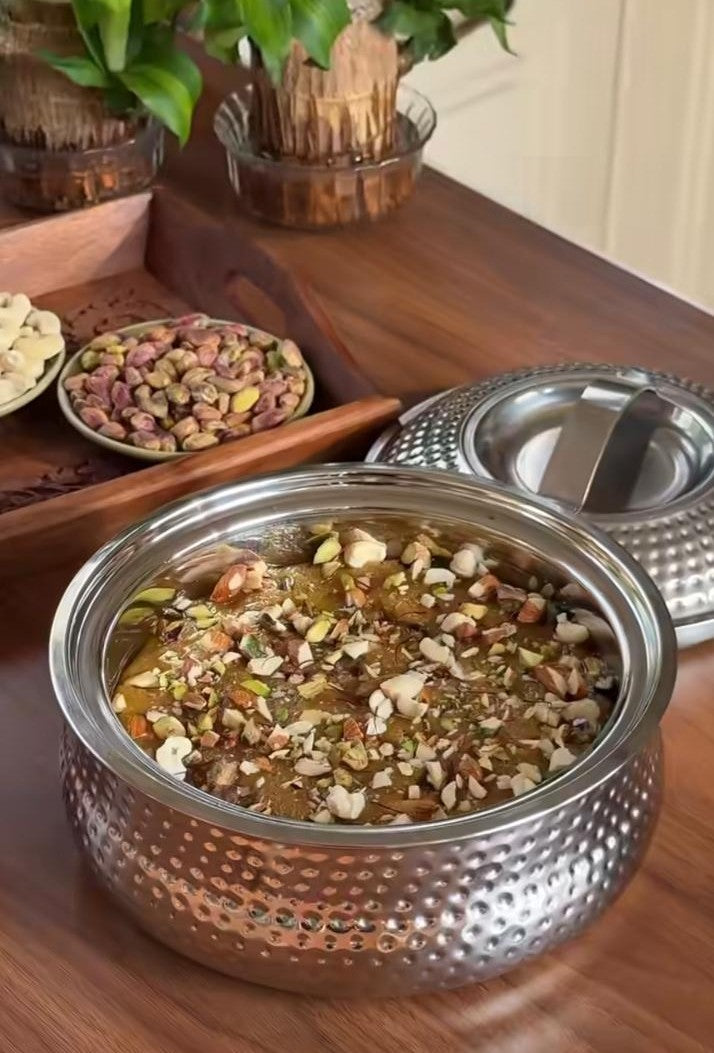
Kada Prasad is a traditional offering prepared with devotion and served at Gurudwaras as a symbol of faith, equality, and gratitude. Made with wheat flour, ghee, sugar, and water, this humble preparation is known for its rich aroma, smooth texture, and comforting taste. With the right ingredients and a little patience, preparing Kada Prasad at home can be a simple and fulfilling experience. SUNCASA brings you an easy recipe using its Impact Pro Luxe cookware to help make this traditional preparation a part of your special moments.
Kada Prasad Ingredients
This recipe serves 4–5 people and uses a few everyday ingredients. Their proportions and cooking method are important for achieving the characteristic soft, glossy texture of traditional Kada Prasad.
- Water: 2.5 cups
- Sugar: 1 cup
- Kesar (saffron): 12–15 strands
- Ghee: 1 cup
- Wheat flour (atta): 1 cup
- Mixed dry fruits: ½ cup of chopped cashews, almonds, and pistachios
For the best results, measure the ingredients before starting. Keep the syrup hot and the roasted flour ready before combining them, as this helps the mixture come together smoothly.
How to Make Kada Prasad at Home
Follow these simple steps to prepare a rich, aromatic offering with a smooth consistency.
Step 1: Prepare the Sugar Syrup
Add water, sugar, and saffron strands to the SUNCASA Impact Pro Luxe Casserole. Place it over a low flame and stir until the sugar dissolves completely. Allow the mixture to reach a gentle boil, then turn off the heat and keep the syrup aside. Using saffron adds a delicate aroma and a warm golden hue.
Step 2: Roast the Dry Fruits
Heat the SUNCASA Impact Pro Luxe Sauté Pan over a low flame and add a small amount of ghee. Add the chopped cashews, almonds, and pistachios. Roast them gently until they turn lightly golden and release their aroma. Transfer the roasted dry fruits to a plate and set them aside for later.
Step 3: Roast the Wheat Flour
Place the SUNCASA Impact Pro Luxe Flat-Bottom Kadai on low heat and add the remaining ghee. Once the ghee is warm, add the wheat flour and begin stirring continuously. Roast the flour slowly until it develops a golden-brown colour and a rich, nutty aroma. Avoid using high heat, as the flour can burn quickly and develop an uneven flavour.
Step 4: Add the Sugar Syrup
Reduce the heat and gradually pour the hot sugar syrup into the roasted flour while stirring continuously. The mixture may bubble as the liquid meets the hot ghee and flour, so add the syrup carefully. Keep mixing to break up lumps and help the ingredients combine into a smooth mixture.
Step 5: Cook Until Thick and Glossy
Continue stirring over low heat as the mixture thickens. The flour will absorb the syrup, creating the soft, rich consistency associated with traditional Kada Prasad. Once the mixture looks glossy and begins to come together, add the roasted dry fruits and mix evenly. Avoid overcooking, as this may make the prasad too dry.
Step 6: Garnish and Serve
Transfer the prepared prasad into a SUNCASA Hammered Casserole or a suitable serving dish. Garnish with a few chopped nuts, if desired, and serve warm. When preparing it as a religious offering, follow the customs and practices of your tradition.
Tips for Making Perfect Kada Prasad
A few simple techniques can make the preparation easier and help achieve a consistent texture.
- Roast the atta patiently: Cook it over low heat and stir continuously. Proper roasting helps develop its characteristic aroma and flavour.
- Maintain the right proportions: Follow the recommended measurements for flour, ghee, sugar, and water to achieve a balanced consistency.
- Add the syrup gradually: Pouring it in slowly while stirring helps minimise lumps and promotes even mixing.
- Use suitable cookware: SUNCASA Impact Pro Luxe cookware supports everyday cooking with practical designs for different preparation steps. Choose the appropriate pan or casserole for each stage.
- Serve it fresh and warm: Kada Prasad is best enjoyed warm, when its texture is soft, and its aroma is at its best.
Make Traditional Recipes with SUNCASA
Preparing traditional food is about more than following a recipe. It is also about taking time with familiar ingredients and preserving the customs that bring people together. With its rich flavour and simple preparation, Kada Prasad is a meaningful addition to religious occasions and family gatherings.
The SUNCASA Impact Pro Luxe range offers cookware options for different stages of this recipe, from heating the sugar syrup to roasting the flour and serving the finished dish. Explore the SUNCASA cookware collection to find practical additions for your kitchen and make room for more traditional recipes in your everyday cooking.
FAQs
What are the main ingredients required to make Kada Prasad?
Kada Prasad uses wheat flour, ghee, sugar, water, and optionally saffron and dry fruits. SUNCASA cookware helps prepare each ingredient with care and consistency.
Which SUNCASA cookware is suitable for preparing Kada Prasad?
The SUNCASA Impact Pro Luxe Casserole, Sauté Pan, and Flat-Bottom Kadai suit different preparation stages, including heating syrup, roasting nuts, and cooking wheat flour.
How can I prevent lumps while preparing Kada Prasad?
Pour hot sugar syrup gradually into roasted flour while stirring continuously. This technique helps create a smoother mixture and reduces lumps during cooking with SUNCASA cookware.
How do I achieve the right texture for Kada Prasad?
Roast wheat flour patiently over low heat, measure ingredients accurately, and stir continuously after adding syrup. These steps help achieve a soft, glossy consistency.
Can I serve Kada Prasad directly in a SUNCASA casserole?
Yes, you can transfer prepared Kada Prasad into a suitable SUNCASA casserole for serving. Choose an appropriate vessel, handle it safely, and serve the prasad warm.


