

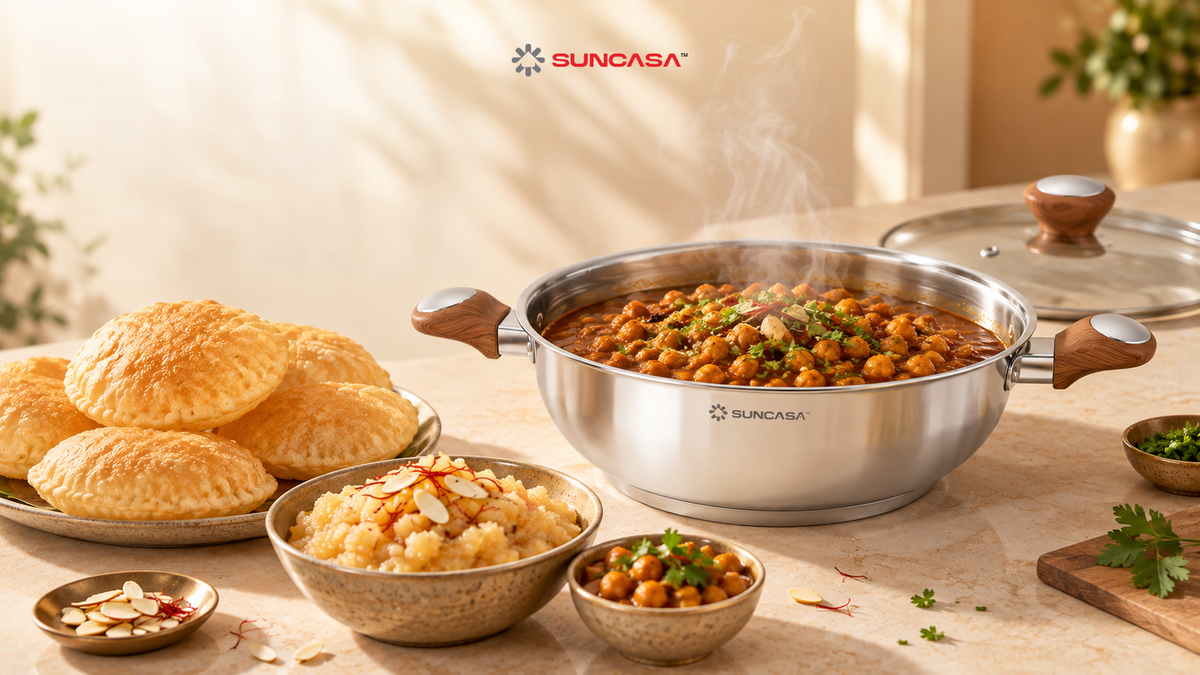
Navratri Ashtami is often marked by a simple yet comforting prasad of sooji halwa, kala chana, and puri. Each dish brings a different flavour and texture to the plate, making the meal both traditional and satisfying. This Halwa Puri Chana recipe is easy to prepare at home with everyday ingredients. Let us look at the ingredients, cooking process, and useful tips for making each dish.
What Goes Into Ashtami Prasad?
Few festive meals feel as comforting as a plate of Ashtami prasad. Soft, fragrant halwa, spiced kala chana, and warm, fluffy puris come together to create a meal that is both traditional and satisfying. Some families also add aloo rasedar to the plate. With this Halwa Puri Channa recipe, you can recreate this much-loved combination at home using simple ingredients and careful cooking, without onion or garlic.
|
Dish |
Main Ingredients |
Cooking Focus |
|
Sooji Halwa |
Sooji, ghee, sugar, milk, water, nuts |
Slow roasting |
|
Sookha Kala Chana |
Black chickpeas, spices, cumin |
Pressure cooking |
|
Puri |
Whole wheat flour, oil, salt, ajwain |
Kneading and frying |
Step by Step Halwa Puri Chana Recipe
Step 1: Make the Sooji Halwa
-
Prepare the liquid
Combine milk, water, sugar, cardamom, and saffron in a small pot. Heat until the sugar dissolves, then turn off the heat. There is no need to boil or thicken it. -
Roast the sooji
Heat a heavy-bottomed pan on medium-low heat. Add sooji and ghee and stir continuously. Roast until it reaches your preferred golden colour. -
Add the nuts
Add half the chopped nuts towards the end of roasting and continue stirring. Once the sooji turns golden, lower the heat. -
Combine carefully
Slowly pour the warm milk and water mixture into the roasted sooji while stirring continuously. Some splattering can happen, so pour carefully. -
Finish the halwa
Continue stirring for about 2–3 minutes until it becomes thick but easily spoonable. Remove from the heat and garnish with the remaining nuts.
For a smoother halwa, use 1½ cups of water. If you prefer a more crumbly sheera-like texture, the source recipe suggests reducing the water to 1 cup.
Step 2: Prepare the Sookha Kala Chana
Kala chana gives the prasad its savoury and hearty element. Since black chickpeas are naturally firm, soaking them for at least six hours helps prepare them for pressure cooking.
-
Soak and cook
Drain the soaked chickpeas and add them to a pressure cooker with salt and water. -
Pressure cook
Cook on high heat until the first whistle. Reduce the heat to medium-low and cook for another 20–22 minutes, or around 6–7 whistles. Let the pressure release naturally before opening. -
Prepare the masala
Mix coriander powder, ground cumin, red chilli powder, and amchur with some of the reserved cooking liquid. -
Temper the cumin
Heat ghee or oil and add cumin seeds. Let them sizzle before adding the cooked chana. -
Bring it together
Add the chana, around ½ cup of reserved cooking water, and the spice mixture. Cook for 5–7 minutes until the liquid is absorbed and the spices coat the chickpeas. -
Garnish
Finish with chopped coriander before serving.
Step 3: Make Soft, Puffy Puris
Fresh puris complete the Ashtami plate, but getting them to puff properly depends on the dough and the oil temperature. The dough should be firm rather than soft, and the rolled puris should neither be too thick nor too thin.
For the dough, combine whole wheat flour, salt, oil, and optional ajwain. Add water gradually while kneading.
-
Knead firmly
Make a tight dough using water gradually. Avoid making it too soft. -
Rest briefly
Cover and rest the dough for five minutes, then knead it once again. -
Divide
Make around 20 equal-sized dough balls and keep them covered so they do not dry out. -
Roll evenly
Flatten each ball and apply a little oil. Roll into a 4–5-inch circle without dusting with flour. -
Heat the oil
Bring the frying oil to about 180°C or 350°F. It should be hot enough for a tiny piece of dough to sizzle and rise, but it should not be smoking. -
Fry one at a time
Carefully place each puri into the hot oil. Gently press it with a slotted spoon to help it puff, then flip and fry until golden on both sides. -
Drain and serve
Remove excess oil and place the puris on a paper towel-lined plate.
Why the Right Pan Makes a Difference
The cookware you use to make a Halwa Puri Channa recipe plays an important role when preparing prasad, especially for halwa. A pan that distributes heat evenly can help the sooji roast consistently, while a sturdy handle makes stirring and pouring easier. For such everyday cooking, SUNCASA TRI-SMART Triply cookware combines practical features with the convenience needed for recipes like this.
|
TRI-SMART Feature |
How It Helps |
|
304-grade stainless steel |
Made with high-grade food-grade stainless steel |
|
Even heat distribution |
Helps ingredients cook more consistently |
|
Stay-cool handle |
Makes handling more comfortable |
|
Easy to clean |
Simplifies post-cooking cleanup |
|
All-cooktop compatible |
Works on gas, ceramic, oven, and induction |
|
Drip-free rim |
Helps with controlled pouring |
|
Stainless steel cap rivets |
Supports sturdy, long-lasting handles |
The combination of even heat distribution and a sturdy construction makes TRI-SMART useful for preparations where controlled cooking matters, from roasting sooji to preparing everyday meals.
Simple Tips for a Better Prasad
Preparing all three dishes becomes easier when you properly plan out the order. The chana can be soaked and pressure-cooked ahead of time, while the halwa and puris can be prepared closer to serving. Some other things to keep in mind while making the prasad set would be:
- Keep the roasted sooji stirring continuously to prevent uneven browning.
- Keep the sweet liquid warm before adding it to the sooji.
- Reserve some chana cooking liquid for adjusting the masala.
- Do not make puri dough too soft.
- Keep rolled puris covered so they do not dry out.
- Maintain the oil temperature while frying instead of overcrowding the pan.
Bringing the Ashtami Plate Together
Once everything is ready, serve the puris hot alongside the sooji halwa and sookha kala chana. The contrast between warm halwa, spiced chickpeas, and freshly fried puris is what makes this traditional combination so comforting. The three dishes can be served together as prasad, keeping the presentation simple and familiar.
Whether you are making the meal for a family gathering or preparing Kanjak prasad at home, a little planning can make the cooking process easier.
Make Festive Cooking Easier
A well-made Ashtami prasad does not need an elaborate menu. Soft puris, fragrant sooji halwa, and flavourful kala chana are enough to create a traditional meal that feels warm and special. With this Halwa Puri Chana recipe, simple preparation and the right cookware can make festive cooking easier.
Explore practical cookware for everyday and festive meals at the SUNCASA online store today.
FAQs
Which SUNCASA cookware is suitable for making Ashtami prasad?
SUNCASA TRI-SMART Triply cookware is useful for preparing prasad. Its even heat distribution helps with roasting sooji for halwa, while its versatile designs work well for everyday festive cooking.
Can I make sooji halwa in SUNCASA TRI-SMART cookware?
Yes. TRI-SMART cookware is suitable for roasting sooji and preparing halwa. Its even heat distribution can help you roast the sooji consistently when cooking over medium-low heat.
Why is even heat distribution useful when making halwa?
Even heat distribution helps the sooji cook more consistently, reducing the chances of uneven browning. This makes a well-constructed pan like SUNCASA TRI-SMART useful for slow-roasting preparations.
Is SUNCASA TRI-SMART suitable for festive and everyday cooking?
Yes. TRI-SMART cookware is designed for more than festive recipes. Its 304-grade stainless steel construction, versatile designs, and compatibility with gas, induction, ceramic cooktops, and ovens make it practical for everyday meals too.
How should I clean SUNCASA TRI-SMART cookware after making prasad?
Allow the cookware to cool slightly before cleaning. For halwa or masala residue, soak the vessel in warm water to loosen stuck food, then wash it normally for easier cleanup.


