

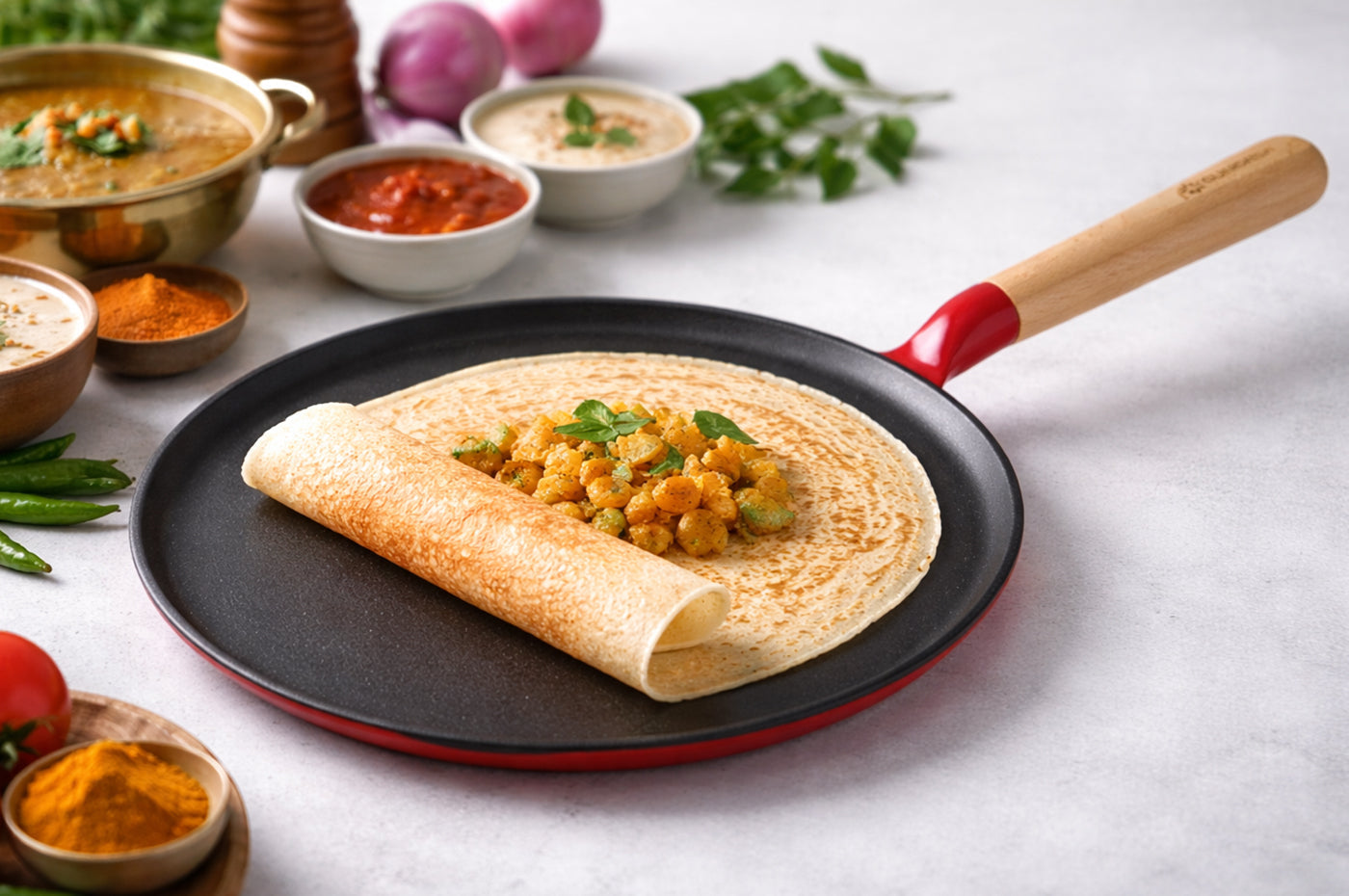
South Indian cuisine is known for its comforting flavours, aromatic spices, and recipes that have been passed down through generations. From crispy dosas and soft idlis to tangy sambhar and warming rasam, these dishes are a regular part of many Indian households.
While fresh ingredients and the right cooking techniques are essential, choosing suitable cookware can also make everyday cooking easier. A well-seasoned cast iron tawa helps prepare crisp dosas, while stainless steel cookware is useful for simmering sambhar, preparing rasam, and tempering spices.
This guide to South Indian Staple Recipes explores five familiar dishes and explains how SUNCASA cookware can support their preparation. Whether you are making a quick breakfast or preparing a traditional South Indian meal, the right cookware can help you achieve consistent results.
Why Choosing the Right Cookware Matters for South Indian Cooking
Many South Indian dishes benefit from cookware that retains heat well, offers a suitable cooking surface, and can withstand regular use.
Cast iron is particularly useful for dosa and uttapam because it retains heat effectively. Stainless steel cookware, especially food-grade 304 stainless steel, is a practical choice for preparing liquid-based dishes such as sambhar and rasam.
The right cookware can help you:
- Maintain a consistent cooking temperature.
- Achieve crisp textures in dosa and uttapam.
- Prepare curries and lentil-based dishes conveniently.
- Temper spices without transferring flavours from reactive cookware surfaces.
- Build a durable cookware collection for everyday use.
SUNCASA offers cast iron and stainless steel cookware options suited to different cooking tasks, making it easier to prepare traditional dishes in a modern home kitchen.
1. Masala Dosa: A Crispy South Indian Favourite
Masala dosa combines a thin, crisp dosa with a spiced potato filling. It is a popular breakfast and meal option that can be served with coconut chutney and sambhar.
A suitable dosa tawa helps distribute batter across the cooking surface and supports even browning. The SUNCASA cast iron dosa tawa is designed for this style of cooking, as cast iron retains heat well when properly preheated and maintained.
Ingredients
For the dosa:
- Dosa batter
- Oil or ghee, as preferred
For the potato filling:
- 2 medium potatoes, boiled and mashed
- 1 small onion, sliced
- 1 green chilli, chopped
- ½ teaspoon mustard seeds
- A few curry leaves
- ¼ teaspoon turmeric powder
- Salt to taste
- 1 teaspoon oil
Method
- Heat oil in a pan and add mustard seeds. Once they begin to splutter, add curry leaves, green chilli, and sliced onion.
- Cook until the onion softens. Add turmeric, mashed potatoes, and salt, then mix well.
- Preheat the SUNCASA cast iron dosa tawa over medium heat.
- Spread a ladleful of dosa batter in a thin circle.
- Drizzle a little oil around the edges and cook until the underside turns golden and crisp.
- Add the potato filling, fold the dosa, and serve hot with chutney and sambhar.
Cookware tip: Allow the tawa to heat gradually rather than placing cold batter on a hot surface immediately after turning on the stove. A properly seasoned and maintained cast iron tawa can help the dosa release more easily.
2. Sambhar: A Comforting Lentil and Vegetable Dish
Sambhar is a staple accompaniment for dosa, idli, and rice. Made with lentils, vegetables, tamarind, and a blend of spices, it brings a balance of tangy and savoury flavours to the meal.
A stainless steel pot or saucepan is useful for cooking sambhar because it allows you to simmer the ingredients and adjust the consistency as needed. SUNCASA cookware made from food-grade 304 stainless steel can be a practical option for this purpose.
Ingredients
- ½ cup toor dal
- 1 small onion or a few shallots
- 1 tomato, chopped
- 1 cup chopped vegetables, such as carrot, pumpkin, or drumstick
- 1–2 teaspoons sambhar powder
- A small piece of tamarind, soaked in warm water
- ½ teaspoon turmeric powder
- ½ teaspoon mustard seeds
- A few curry leaves
- Salt to taste
- Water as required
Method
- Rinse the toor dal and pressure-cook it with turmeric and sufficient water until soft.
- In a separate pot, cook the vegetables with water until they are nearly tender.
- Add the cooked dal, sambhar powder, tamarind extract, and salt.
- Simmer gently until the vegetables are cooked, and the flavours combine.
- In a small pan, heat a little oil and add mustard seeds and curry leaves.
- Pour the tempering into the sambhar, stir, and serve warm.
Cookware tip: Use medium heat and stir occasionally to prevent the lentils from settling at the bottom. A stainless steel cooking vessel is also convenient for preparing larger batches for family meals.
3. Uttapam: Soft, Thick and Full of Flavour
Uttapam is made with dosa batter but is thicker and softer than a traditional dosa. It is usually topped with chopped onions, tomatoes, green chillies and coriander.
A cast iron dosa tawa works well for uttapam because its heat retention supports gradual cooking. This helps the batter cook through while the toppings soften and develop flavour.
Ingredients
- 2 cups dosa batter
- 1 small onion, finely chopped
- 1 small tomato, finely chopped
- 1 green chilli, finely chopped
- 1 tablespoon chopped coriander
- Oil as required
- Salt, if needed
Method
- Mix the chopped onion, tomato, green chilli, and coriander in a bowl.
- Heat the SUNCASA cast iron dosa tawa over medium heat.
- Pour a ladleful of batter onto the tawa and spread it gently into a thick circle.
- Sprinkle the vegetable mixture over the surface and press it lightly into the batter.
- Drizzle a little oil around the edges and cook until the base is golden.
- Flip carefully and cook the other side until the batter is fully cooked.
- Serve hot with coconut chutney or sambhar.
Cookware tip: Avoid making the tawa excessively hot. Moderate heat gives the thicker batter enough time to cook through without browning the base too quickly.
4. Coconut Chutney: A Fresh and Flavourful Accompaniment
Coconut chutney adds a fresh, mildly sweet and savoury element to dosa, idli and uttapam. Its flavour comes from simple ingredients, while a well-prepared tempering adds aroma and depth.
A small stainless steel pan is useful for preparing the tempering. SUNCASA stainless steel cookware can help you heat oil and fry the spices before adding them to the chutney.
Ingredients
For the chutney:
- 1 cup fresh or frozen grated coconut
- 1–2 green chillies
- 1 tablespoon roasted gram
- A small piece of ginger, optional
- Salt to taste
- Water as required
For the tempering:
- 1 teaspoon oil
- ½ teaspoon mustard seeds
- A few curry leaves
- 1 dried red chilli, optional
Method
- Blend the coconut, green chillies, roasted gram, ginger, salt, and enough water to make a smooth or slightly coarse chutney.
- Transfer the chutney to a serving bowl.
- Heat oil in a small stainless steel pan.
- Add mustard seeds and allow them to splutter. Add curry leaves and dried red chilli.
- Pour the tempering over the chutney and mix lightly.
- Serve fresh with dosa, idli, or uttapam.
Cookware tip: Heat the oil over medium heat and add the tempering ingredients carefully. Avoid overheating the oil, as spices and curry leaves can burn quickly.
5. Rasam: A Light, Tangy South Indian Classic
Rasam is a thin, aromatic dish prepared with tomatoes, tamarind, spices, and herbs. It can be served with rice or enjoyed as part of a traditional South Indian meal.
Stainless steel cookware is well suited to preparing rasam because it provides a non-reactive cooking surface for ingredients such as tamarind and tomatoes. SUNCASA 304 stainless steel cookware is a useful option for gently heating the ingredients and bringing the flavours together.
Ingredients
- 2 medium tomatoes, chopped
- 1 small lemon-sized piece of tamarind, or tamarind extract to taste
- ½ teaspoon turmeric powder
- 1 teaspoon rasam powder
- ½ teaspoon mustard seeds
- A few curry leaves
- 1 dried red chilli
- 1–2 tablespoons chopped coriander
- Salt to taste
- 2–3 cups water
Method
- Soak the tamarind in warm water and extract the pulp, removing any seeds or fibres.
- Add the tamarind extract, chopped tomatoes, turmeric, rasam powder, salt, and water to a stainless steel pot.
- Simmer until the tomatoes soften and the raw smell of tamarind reduces.
- Heat a little oil in a small pan. Add mustard seeds, dried red chilli, and curry leaves.
- Pour the tempering into the rasam and stir gently.
- Add chopped coriander and turn off the heat once the rasam is hot and aromatic. Avoid prolonged vigorous boiling.
- Serve with steamed rice or enjoy as a light accompaniment to a meal.
Cookware tip: Gentle simmering helps the ingredients combine without reducing the rasam too much. A stainless steel pot is also easy to clean after preparing tamarind-based dishes.
Why Choose SUNCASA Cookware for South Indian Food?
Traditional South Indian cooking involves different techniques, from spreading dosa batter on a hot tawa to simmering lentils and tempering spices. Using cookware suited to each task can make these steps easier to manage.
SUNCASA's cast iron and stainless steel cookware options support a range of everyday cooking needs.
Cast Iron for Dosa and Uttapam
Cast iron retains heat effectively, making it useful for cooking dishes that need a steady temperature. With gradual preheating and proper seasoning, a cast iron tawa can help create crisp dosas and evenly cooked uttapam.
304 Stainless Steel for Sambhar and Rasam
Food-grade 304 stainless steel is valued for durability and corrosion resistance. It provides a non-reactive cooking surface that is suitable for many everyday dishes, including recipes made with tomatoes, tamarind, and spices.
Designed for Everyday Cooking
Cookware that is durable, comfortable to handle, and straightforward to maintain can be a valuable addition to a home kitchen. Choosing the right piece for each task also helps you get more use from your cookware collection.
How to Maintain Your SUNCASA Cookware
Proper care helps cookware remain useful over time.
- Season cast iron regularly: Follow the manufacturer's instructions to maintain the seasoning and help reduce sticking.
- Preheat gradually: Avoid sudden, extreme temperature changes, particularly with cast iron.
- Clean stainless steel after use: Use a suitable dishwashing liquid and a non-abrasive cleaning tool.
- Dry cookware thoroughly: This helps prevent water spots on stainless steel and moisture-related issues with cast iron.
- Use suitable utensils: Choose utensils that match the cookware surface and follow the product's care guidance.
These simple practices can help preserve the performance and appearance of your cookware.
Final Thoughts
South Indian cuisine brings together familiar ingredients, carefully balanced spices, and cooking techniques that have been refined over generations. The right cookware helps you prepare these dishes with greater convenience, whether you are making a crisp dosa, a soft uttapam or a pot of comforting sambhar.
Exploring South Indian Staple Recipes is also a great way to make everyday meals more varied while keeping traditional flavours at the centre of your kitchen.
With fresh ingredients, suitable cooking techniques, and SUNCASA cookware designed for different tasks, you can bring the flavours of South India to your home kitchen. From a cast iron dosa tawa to stainless steel cookware for simmering and tempering, choosing the right tools can make traditional cooking a more enjoyable part of everyday life.
FAQs
Which SUNCASA cookware is suitable for making dosa?
A cast iron dosa tawa is a useful choice for preparing traditional dosa. Cast iron retains heat effectively, helping the batter cook and brown. Preheating gradually and maintaining the seasoning can help improve cooking results and make dosa easier to release.
Can I prepare sambhar and rasam in SUNCASA stainless steel cookware?
Yes, suitable stainless steel pots can be used for preparing sambhar and rasam. Food-grade 304 stainless steel is valued for durability and its non-reactive surface, making it suitable for many recipes containing tomatoes, tamarind, and spices. Follow the cookware's care instructions.
Is cast iron suitable for everyday South Indian cooking?
Cast iron can be useful for dishes such as dosa and uttapam that benefit from good heat retention. It requires appropriate seasoning and care, including thorough drying after cleaning. Follow the manufacturer's instructions to maintain its cooking surface.
How should I care for SUNCASA cast iron and stainless steel cookware?
Cast iron should be cleaned according to its care instructions, dried thoroughly, and seasoned when required. Stainless steel cookware can generally be washed with dishwashing liquid and a non-abrasive sponge. Avoid sudden temperature changes and harsh cleaning methods that may damage the finish.
What should I consider when choosing cookware for traditional South Indian recipes?
Consider the cooking method, the quantity of food you prepare, and the material best suited to each dish. Cast iron is useful for dosa and uttapam, while stainless steel works well for dishes such as sambhar and rasam. Choose durable cookware that fits your routine.


