

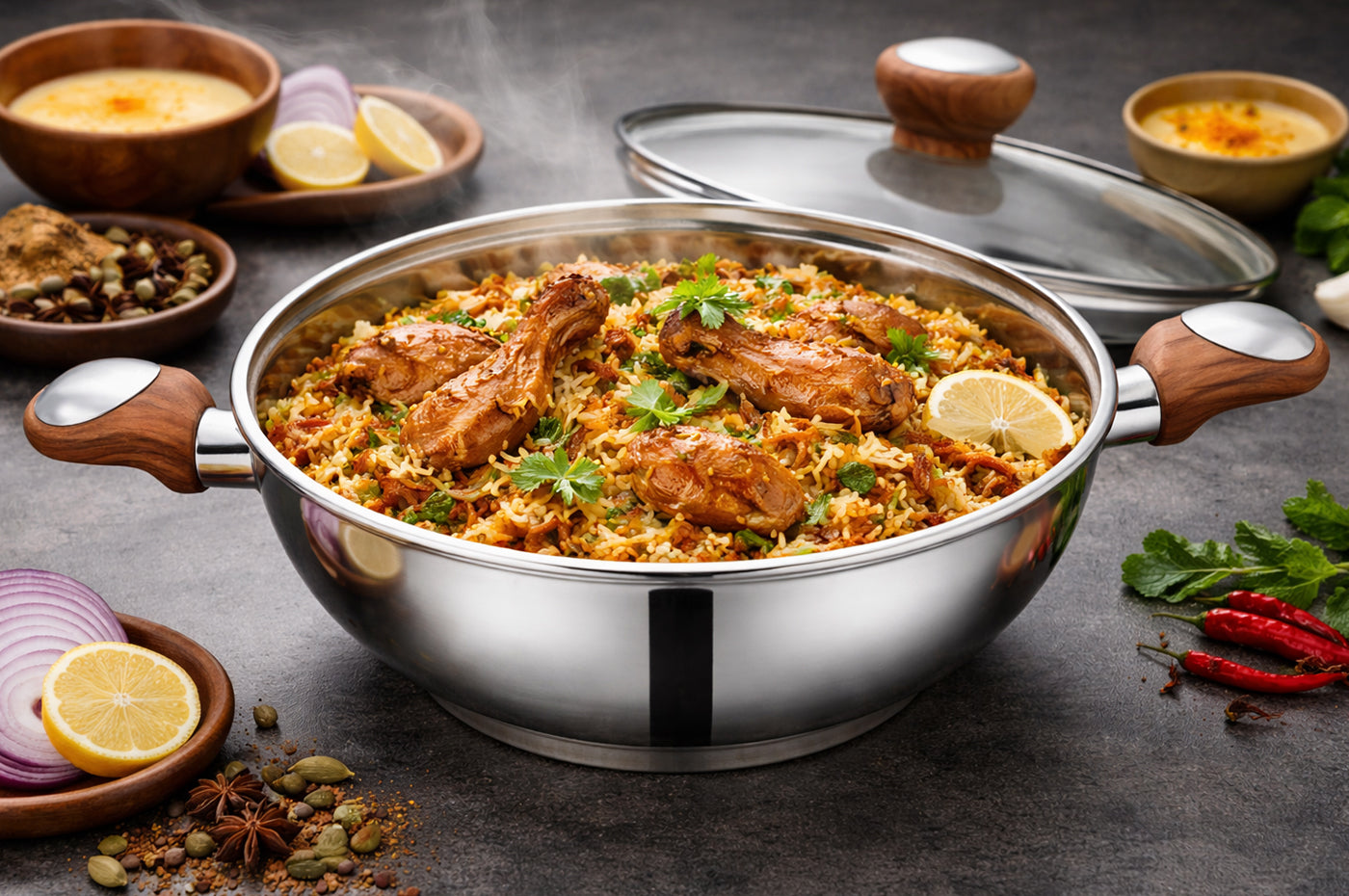
Few Indian dishes are as inviting as a pot of freshly prepared biryani. The aroma of basmati rice, whole spices, caramelised onions, fresh herbs, and saffron creates a meal that feels special even when prepared at home. While the ingredients and cooking technique matter, choosing the right cookware also makes a difference.
A deep kadai offers enough room to layer rice and masala while allowing the ingredients to cook together under a covered lid. SUNCASA deep kadai cookware, made with food-grade 304 stainless steel in selected designs, is a practical option for preparing biryani, curries, and other Indian favourites.
Whether you are trying a traditional dum biryani recipe for the first time or looking for a convenient way to prepare kadai biryani, this guide will walk you through the ingredients, layering process, and dum cooking technique.
Why Use a Deep Kadai for Dum Biryani?
Dum biryani is prepared by layering partially cooked rice over a flavourful masala and allowing the ingredients to finish cooking in a covered vessel over low heat. This helps the spices, herbs, and rice develop a more integrated flavour.
A deep kadai is particularly useful because it provides room for multiple layers without overcrowding the ingredients. When used with appropriate heat control and a well-fitting lid, it can help maintain the cooking environment needed for a good dum biryani kadai preparation.
SUNCASA deep kadai cookware offers several practical benefits:
- 304 food-grade stainless steel: Provides a durable cooking surface for regular kitchen use.
- Deep cooking capacity: Accommodates rice, masala, vegetables, and other ingredients comfortably.
- Multi-layer construction in selected models: Tri-ply designs feature an aluminium core between stainless steel layers to support even heat distribution.
- Sturdy handles: Help with handling the cookware during everyday cooking.
- Versatile use: Suitable for preparing biryani, pulao, curries, and other family meals.
These features make a deep stainless steel kadai a useful addition to an Indian kitchen.
Ingredients for an Easy Dum Biryani Recipe
This recipe serves approximately 3–4 people. You can prepare it with chicken or vegetables, depending on your preference.
For the rice
- 2 cups basmati rice
- 4–5 cups water, or as required
- 2 green cardamom pods
- 1 small cinnamon stick
- 2 cloves
- 1 bay leaf
- Salt to taste
For the masala
- 500 g chicken or approximately 400–500 g mixed vegetables
- 2 large onions, thinly sliced
- 2 tomatoes, chopped
- ½ cup plain yoghurt
- 1 tablespoon ginger-garlic paste
- 2 tablespoons oil or ghee
- 1 teaspoon red chilli powder, or to taste
- ½ teaspoon turmeric powder
- 1–2 teaspoons biryani masala
- Fresh mint and coriander leaves
- A pinch of saffron soaked in 2 tablespoons warm milk
- Fried onions and salt to taste
For a vegetarian version, use vegetables such as carrots, beans, peas, and cauliflower. For chicken, ensure the meat cooks completely during the final cooking stage.
How to Make Dum Biryani at Home
Step 1: Parboil the Basmati Rice
Wash the basmati rice until the water runs relatively clear, then soak it for around 20–30 minutes. Bring water to a boil with the whole spices and salt. Add the drained rice and cook until it is approximately 70% done.
The grains should be elongated but still slightly firm in the centre. Drain the rice and set it aside. Avoid overcooking it, as the grains will continue cooking during the dum stage.
Step 2: Prepare the Biryani Masala
Heat oil or ghee in your SUNCASA deep kadai over medium heat. Add the sliced onions and cook until golden brown. Reserve a small portion for garnishing if desired.
Add the ginger-garlic paste and sauté briefly. Stir in the tomatoes, turmeric, chilli powder, biryani masala, and salt. Cook until the tomatoes soften and the mixture develops a rich, aromatic base.
Step 3: Cook the Chicken or Vegetables
Add the chicken or mixed vegetables to the masala and stir thoroughly. Mix in the yoghurt, chopped mint, and coriander leaves. For chicken biryani, cook the chicken until it is partially cooked before layering, then ensure it reaches a safe internal temperature during the final cooking stage.
For vegetable biryani, cook the vegetables until they are beginning to soften but still hold their shape. This is the stage where the flavours for your chicken biryani recipe begin to develop. Keep the heat moderate to prevent the masala from sticking or burning.
Step 4: Layer the Rice and Masala
Spread the prepared masala evenly across the bottom of the deep kadai. Add a layer of parboiled rice, followed by fried onions, fresh herbs, and a little saffron milk. Repeat the layers if the quantity allows, finishing with rice and your preferred garnishes. Avoid pressing the layers down, as the rice needs room to cook evenly. Using a deep vessel makes this layering process easier and helps keep the ingredients together during the dum cooking stage.
Step 5: Cook on Dum
Cover the kadai with a well-fitting lid. If the lid does not seal tightly, use a suitable dough seal where appropriate to retain steam. Place the kadai over very low heat for approximately 20–25 minutes, adjusting the time according to the quantity, cookware, and ingredients. If your stovetop tends to create concentrated heat, use a heat diffuser to reduce the risk of scorching.
For a reliable dum biryani recipe, check that the rice is tender and the chicken is thoroughly cooked before serving. Allow the biryani to rest for 5–10 minutes, then gently fluff the rice with a fork or serving spoon.
Tips for Better Kadai Biryani at Home
A few simple techniques can make your kadai biryani more flavourful and easier to prepare.
- Choose aged basmati rice when available for long, separate grains.
- Avoid adding too much water during the final cooking stage.
- Use moderate heat when preparing the masala and very low heat for dum cooking.
- Keep the lid closed during the final stage to retain steam.
- Use a wide, deep vessel that accommodates the quantity without compressing the rice.
- Allow the biryani to rest before serving so the flavours settle.
When preparing a dum biryani kadai meal, remember that cookware alone does not determine the result. Rice preparation, ingredient proportions, heat management, and cooking time all contribute to the final texture and flavour.
Why Choose a SUNCASA Deep Kadai?
SUNCASA deep kadai cookware is designed for everyday Indian cooking, from preparing elaborate rice dishes to making everyday curries and gravies. Its stainless steel construction offers durability, while tri-ply models combine stainless steel layers with an aluminium core to help distribute heat more evenly.
This makes the cookware a versatile option for home cooks who want to prepare a chicken biryani recipe, vegetable biryani, pulao, or other family favourites in the same vessel. Before purchasing, check the individual product specifications for capacity, construction, induction compatibility, and oven suitability. Choosing a kadai that matches your cooking needs will help you get the most from your cookware.
Final Thoughts
Preparing biryani at home becomes more manageable when you combine properly parboiled rice, a well-seasoned masala, careful layering, and slow dum cooking. A deep kadai provides the space needed to bring these steps together in one vessel.
With its durable stainless steel construction and practical design, a SUNCASA deep kadai can support a variety of everyday Indian recipes. Try this method at home, experiment with your preferred spices, and enjoy a fragrant biryani prepared fresh in your own kitchen.
FAQs
Can I make dum biryani in a SUNCASA deep kadai?
Yes, a SUNCASA deep kadai can be used to prepare dum biryani by layering partially cooked rice and masala before covering and cooking over low heat. Choose a suitable capacity and ensure the lid fits securely.
Is a SUNCASA stainless steel kadai suitable for chicken biryani?
A suitable SUNCASA stainless steel kadai can be used to prepare chicken biryani, including the masala and final dum stage. Follow appropriate cooking times and ensure the chicken reaches a safe internal temperature before serving.
Why is a deep kadai useful for preparing biryani?
A deep kadai provides enough space to layer rice, masala, herbs, and other ingredients without overcrowding. Its depth also helps keep the ingredients contained during covered cooking, making it convenient for preparing biryani and other Indian dishes.
What makes SUNCASA tri-ply kadai cookware useful for Indian cooking?
Selected SUNCASA tri-ply kadai models feature an aluminium core between stainless steel layers. This construction supports even heat distribution, helping home cooks manage temperatures while preparing biryani, curries, gravies, and other everyday meals.
How do I clean my SUNCASA stainless steel kadai after making biryani?
Allow the kadai to cool before washing it with warm water, dishwashing liquid, and a soft sponge. Soak stubborn rice or masala residue before cleaning. Dry the cookware thoroughly after rinsing to minimise water spots and maintain its finish.


