

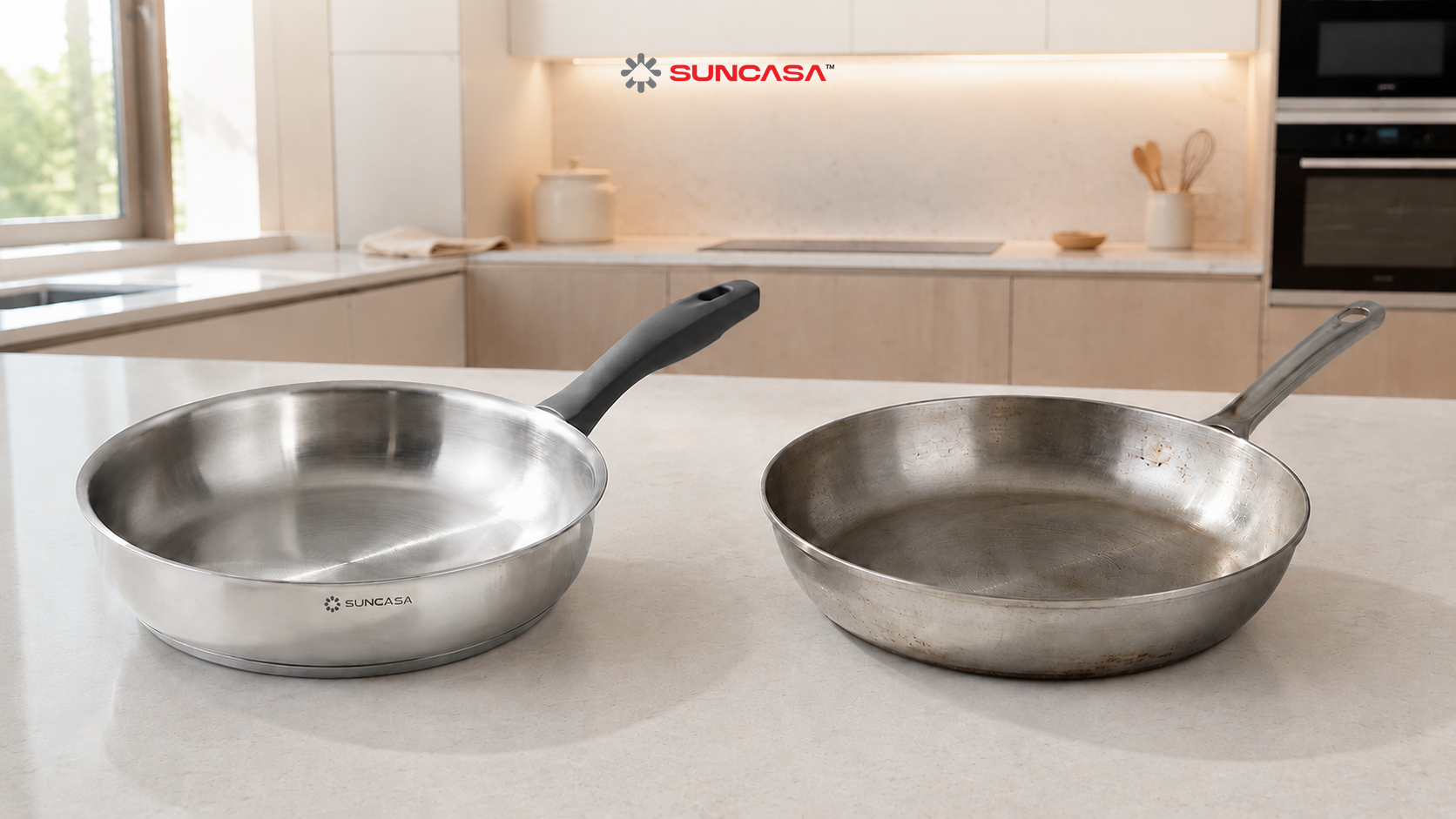
Choosing the right cookware material matters for safety, durability, and everyday cooking. Most stainless steel products may look similar, but their grades affect corrosion resistance, longevity, and performance. Understanding food-grade stainless steel cookware and the difference between grade 304 and 201 stainless steel helps Indian households make confident purchases. Here is how to identify the better option before you buy.
Why Stainless Steel Grade Matters
Stainless steel is not one material. Grades contain different amounts of chromium, nickel, manganese, and other elements that determine its ability to resist moisture, acids, and repeated washing.
Grade 304 is widely preferred for cookware because it offers strong corrosion resistance and durability. On the other hand, Grade 201 contains less nickel and more manganese, making it less expensive but with reduced corrosion resistance.
Grade 304 vs 201 Stainless Steel: What Sets Them Apart?
Compare composition and practical performance to understand the difference.
|
Feature |
Grade 304 Stainless Steel |
Grade 201 Stainless Steel |
|
Nickel content |
Higher, typically around 8% or more |
Lower, commonly around 3.5–5.5% |
|
Corrosion resistance |
Excellent |
Moderate |
|
Acidic and salty foods |
Better resistance |
Comparatively lower resistance |
|
Durability |
Excellent |
Good for budget applications |
|
Cost |
Higher |
Lower |
|
Best suited for |
Premium, long-lasting cookware |
Cost-conscious products |
Another useful comparison is 18/8 stainless steel vs 201. “18/8” generally refers to about 18% chromium and 8% nickel, which is found in 304-grade cookware. Higher nickel improves resistance to rust and staining.
How to Check 304 Stainless Steel Before Buying
Start with product features rather than appearance. Both grades can have a bright, polished surface, so visual inspection cannot reliably identify the grade.
Look for:
- Grade declaration: Packaging or product descriptions should clearly state 304 stainless steel.
- Material specifications: Reputable manufacturers should provide information about the steel grade.
- Food-contact suitability: Check whether the cookware is intended for regular food preparation.
- Manufacturer transparency: Prefer brands that clearly disclose materials and construction.
- Construction quality: Examine handles, joints, rims, bases, and the overall finish.
Can 201 Stainless Steel Be Used for Cooking?
A common question is: Is 201 stainless steel safe for food? It can be suitable for certain food-storage and cooking applications when it is properly manufactured and meets food-contact standards. However, the steel grade alone does not guarantee safety.
If you often cook with acidic or salty ingredients such as tomatoes, tamarind, lemon, or pickles, 304 stainless steel is usually a better choice. Its higher corrosion resistance helps keep the cookware looking good and performing well for longer.
Signs That Your Cookware May Be Lower Grade
Without material testing, appearance cannot confirm steel grade. However, some signs warrant closer attention.
|
What you notice |
What it may indicate |
|
Rust spots appearing quickly |
Lower corrosion resistance or poor surface quality |
|
Persistent staining |
Surface or material may be less resistant |
|
Unclear grade information |
Limited material transparency |
|
Very low price with premium claims |
Specifications need closer checking |
|
Poorly finished edges or joints |
Manufacturing quality concerns |
Which Grade Is Better for Indian Cooking?
Indian cooking often uses acidic and salty ingredients like tomatoes, tamarind, lemon, curd, and spices. Since cookware is something that is washed every day, 304 stainless steel is a reliable choice for long-term use. Understanding grade 304 vs 201 stainless steel makes the difference easier to see.
Also, if you're looking for the best metal for cooking in India, then stainless steel is your answer, which offers durability, versatility, and ease in everyday use.
How to Choose Genuine 304 Cookware
Before buying a pan, kadai, saucepan, or stockpot, check:
- Check the grade: Look for a clear 304 specification.
- Read product details: Do not rely only on terms such as “premium” or “food grade.”
- Assess construction: Look at the base, handles, joints, and finish.
- Consider cooking habits: Frequent acidic or salty cooking makes corrosion resistance especially important.
- Buy from a transparent brand: Clear material information makes comparison easier.
Why Grade 304 Is a Better Long-Term Choice
Price is important, but cookware is a long-term investment. A cheaper option may cost more over time if it stains, corrodes, or wears out quickly. Consider how often you cook, what foods you prepare, and how you maintain your cookware. For everyday Indian cooking, 304 food-grade stainless steel cookware offers durability, corrosion resistance, and lasting value.
Bring Happiness Har Roz with Genuine Cookware
Understanding the difference between grade 304 and 201 stainless steel can help you make a smarter choice for everyday cooking. For Indian kitchens, 304 offers better corrosion resistance and lasting durability. Choose food-grade stainless steel cookware from a trusted brand that clearly explains its materials and construction, so you can buy with confidence.
Visit the SUNCASA online store to explore cookware designed for confident, everyday cooking.
FAQs
Why does SUNCASA use 304 stainless steel for cookware?
SUNCASA uses quality stainless steel to offer durable, corrosion-resistant cookware suited to everyday Indian cooking, including acidic, salty, and moisture-rich ingredients, while supporting long-term performance.
How can I identify 304 stainless steel cookware?
Check SUNCASA product specifications for clearly stated material information rather than relying on appearance. Genuine grade details, construction information, and transparent product descriptions make comparison easier.
Is 304 stainless steel suitable for Indian cooking?
Yes, 304 stainless steel is well suited to Indian cooking because it offers strong corrosion resistance and durability when preparing acidic, salty, and everyday dishes regularly.
Is SUNCASA stainless steel cookware suitable for everyday use?
SUNCASA stainless steel cookware is designed for everyday kitchens, offering durable construction and versatile performance for preparing meals ranging from quick breakfasts to curries, gravies, and rice.
Why should I choose 304 over cheaper 201 cookware?
304 generally offers better corrosion resistance and durability than 201, making it a worthwhile choice for households seeking reliable cookware that can withstand frequent cooking and cleaning.


