

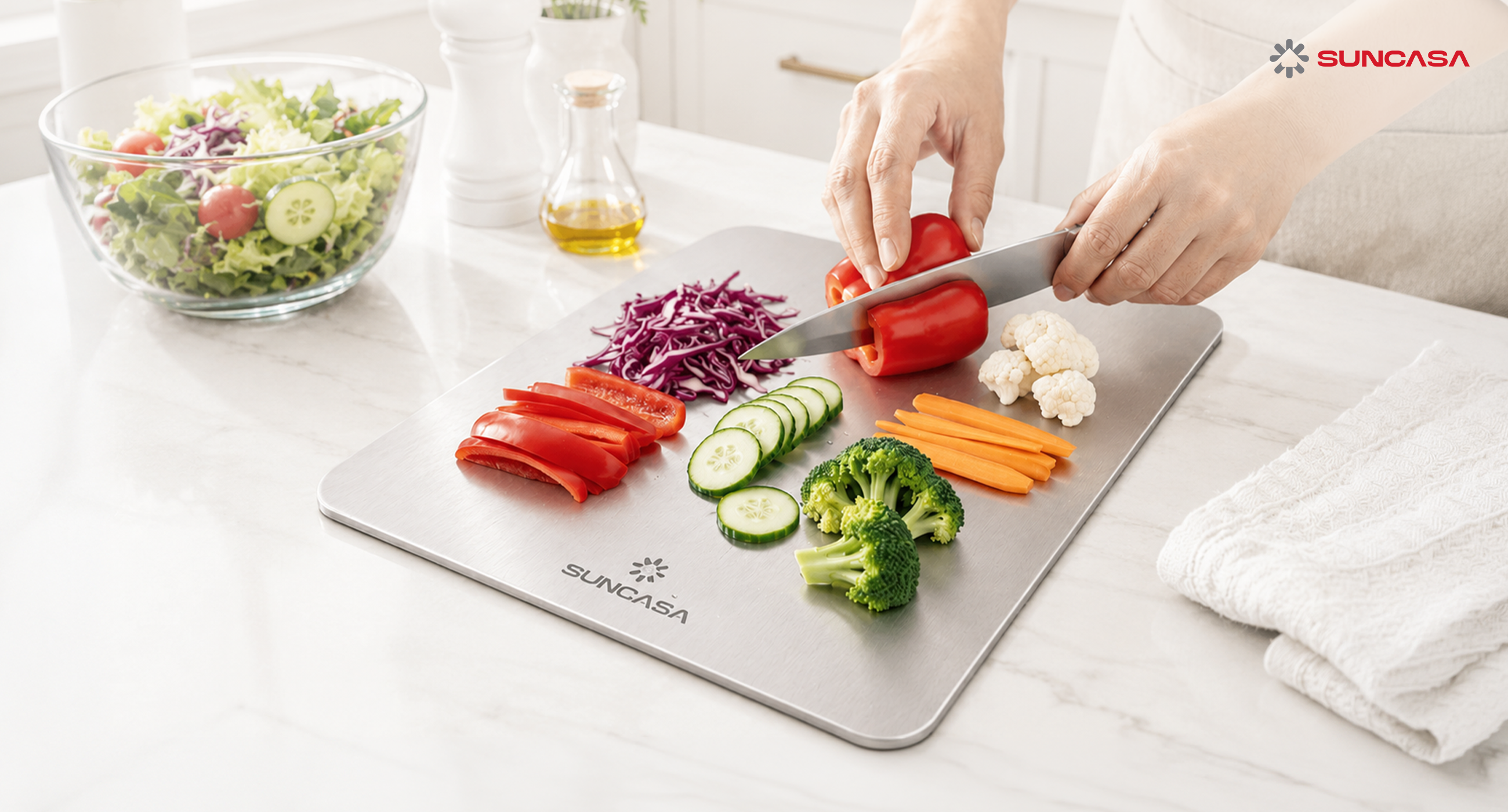
Every kitchen needs a reliable chopping board for everyday food preparation. From chopping vegetables and fruits to preparing herbs, meat, and even dough, it is one of the most frequently used kitchen essentials. But despite its importance, this particular cookware often goes overlooked and makes do with whatever is available at a mart.
When comparing a steel vs wooden chopping board or a plastic chopping board, factors such as hygiene, durability, ease of maintenance, and long-term performance become essential. Stainless steel chopping boards are increasingly becoming a go-to choice for modern kitchens, giving a cleaner and more durable alternative to traditional wooden or plastic boards while matching the modern kitchen aesthetics.
Why Your Chopping Board Matters More Than You Think
Most people focus on cookware while overlooking the surface where food preparation actually takes place. Chopping boards come into direct contact with vegetables, fruits, meat, seafood, herbs, and spices every day, making them one of the most important tools for maintaining kitchen hygiene.
Over time, traditional wooden chopping boards can develop:
- Deep knife grooves
- Stains
- Moisture absorption
- Lingering odours
- Hidden bacterial buildup
These tiny cuts and cracks can trap food particles and germs, making thorough cleaning difficult even after washing. So, for home cooks contemplating a steel vs plastic chopping board or a wooden alternative, stainless steel stands out because of its smooth, non-porous surface that resists moisture, stains, odours, and bacteria far better than porous materials.
4 Reasons to Choose a Stainless Steel Chopping Board
Superior Hygiene for Safer Food Preparation
One of the biggest reasons homeowners are switching to stainless steel cutting boards is improved hygiene. In Indian kitchens, where a variety of ingredients are prepared throughout the day, maintaining a clean food preparation surface is essential.
Unlike a wooden or plastic board that naturally absorbs moisture and sediments, stainless steel remains non-porous, making it less likely to retain food residue or encourage bacterial growth.
A stainless steel chopping board helps:
- Reduce bacterial buildup
- Minimise cross-contamination
- Resist food stains
- Prevent odour absorption
- Maintain a cleaner food preparation surface
The SUNCASA Essentra Stainless Steel Chopping Board is crafted from premium 304 food-grade stainless steel. Its BPA-free, non-porous construction is designed to support safe and hygienic everyday cooking.
Built for Long-Term Durability
Traditional chopping boards often require replacement after years of regular use. A plastic or a wooden chopping board may crack, warp, or split when repeatedly exposed to water, while knife marks can make them harder to maintain over time. Stainless steel, however, is designed for long-lasting performance.
A premium stainless steel chopping board is:
- Rust-resistant
- Warp-resistant
- Heat-resistant
- Scratch-resistant under normal kitchen use
- Strong enough for daily food preparation
Durability is one of the biggest advantages of stainless steel. It maintains its shape and functionality even after years of frequent use. The SUNCASA Essentra Chopping Board is engineered to withstand everyday chopping, slicing, and meal preparation without compromising performance.
Easy Cleaning for Everyday Convenience
Cleaning traditional chopping boards can often become time-consuming. Wooden boards need careful maintenance and should never remain wet for long periods, as moisture may gradually affect their condition. Stainless steel makes cleaning remarkably simple. A stainless steel chopping board can be cleaned using:
- Warm water and dish soap
- A soft sponge or cloth
- Mild kitchen disinfectants
- A dishwasher
Because its surface does not absorb liquids or food particles, cleaning becomes quicker and more hygienic. The SUNCASA Essentra Stainless Steel Chopping Board is dishwasher safe and resistant to lingering odours from onions, garlic, seafood, and raw meat, making it particularly suitable for Indian cooking.
A Modern Addition to Every Kitchen
Kitchen accessories today are expected to combine functionality with style. A stainless steel cutting board offers a clean, premium appearance that complements:
- Modular kitchens
- Contemporary interiors
- Stainless steel appliances
- Minimalist kitchen designs
Its sleek finish makes it suitable not only for food preparation but also for serving snacks, appetisers, or cheese platters.
More Than Just a Chopping Board
A stainless steel chopping board is far more versatile than a plastic or wooden alternative. You can use it for:
- Chopping vegetables and fruits
- Cutting meat and seafood
- Kneading and rolling dough
- Preparing sandwiches and salads
- Serving appetisers
- Temporarily resting hot cookware
Its naturally cool surface also makes dough preparation easier by reducing sticking, making it a practical addition to compact kitchens where multi-functional tools are especially valuable.
Steel vs Wooden vs Plastic Chopping Board: Which One Should You Choose?
Choosing between a steel, wooden, or plastic chopping board depends on your cooking habits and priorities.
|
Feature |
Stainless Steel |
Wooden |
Plastic |
|
Hygiene |
Excellent |
Good |
Good |
|
Moisture Resistance |
Excellent |
Moderate |
Excellent |
|
Odour Resistance |
Excellent |
Moderate |
Moderate |
|
Maintenance |
Very Easy |
Moderate |
Easy |
|
Durability |
Excellent |
Good |
Moderate |
|
Stain Resistance |
Excellent |
Moderate |
Good |
|
Knife-Friendly Surface |
Good |
Excellent |
Good |
|
Scratch Resistance |
Excellent |
Moderate |
Moderate |
|
Modern Appearance |
Excellent |
Traditional |
Contemporary |
|
Eco-Friendliness |
High (Long-lasting & Recyclable) |
High (Natural Material) |
Moderate (Depends on Material & Recyclability) |
While wooden cutting boards continue to appeal to those who prefer a classic kitchen aesthetic, stainless steel offers significant advantages in hygiene, durability, and ease of maintenance.
For busy households looking for long-lasting kitchen tools, the steel vs wooden chopping board comparison often favours stainless steel due to its practical everyday benefits.
Should You Buy a Stainless Steel Chopping Board?
If you're looking for a chopping board that combines hygiene, durability, and low maintenance, a stainless steel chopping board is a worthwhile investment.
The SUNCASA Essentra Stainless Steel Chopping Board is thoughtfully designed for modern kitchens, featuring premium food-grade stainless steel construction, superior hygiene, odour resistance, and long-lasting durability. Whether you're preparing vegetables, meats, or dough, it helps make daily food preparation cleaner, safer, and more efficient.
FAQs
Is a steel chopping board more hygienic than a wooden chopping board?
Yes. Stainless steel has a non-porous surface that resists moisture, stains, and bacteria, making it easier to clean and maintain compared to traditional wooden chopping boards.
Can a stainless steel chopping board be used for cutting meat and vegetables?
Absolutely. The SUNCASA Essentra Stainless Steel Chopping Board is suitable for vegetables, fruits, meat, seafood, herbs, and dough, making it a versatile kitchen essential.
Is a stainless steel chopping board dishwasher safe?
Yes. Stainless steel chopping boards are easy to clean and dishwasher safe, allowing for convenient maintenance while helping maintain better kitchen hygiene after every use.
Does a stainless steel chopping board absorb food odours?
No. Its non-porous surface resists odours from ingredients like onions, garlic, seafood, and meat, helping keep the chopping board fresh after repeated use.
Which is better: a steel vs wooden chopping board?
If hygiene, durability, and easy maintenance are priorities, stainless steel is an excellent choice. Wooden boards offer a traditional appearance but require more care and maintenance over time.


