

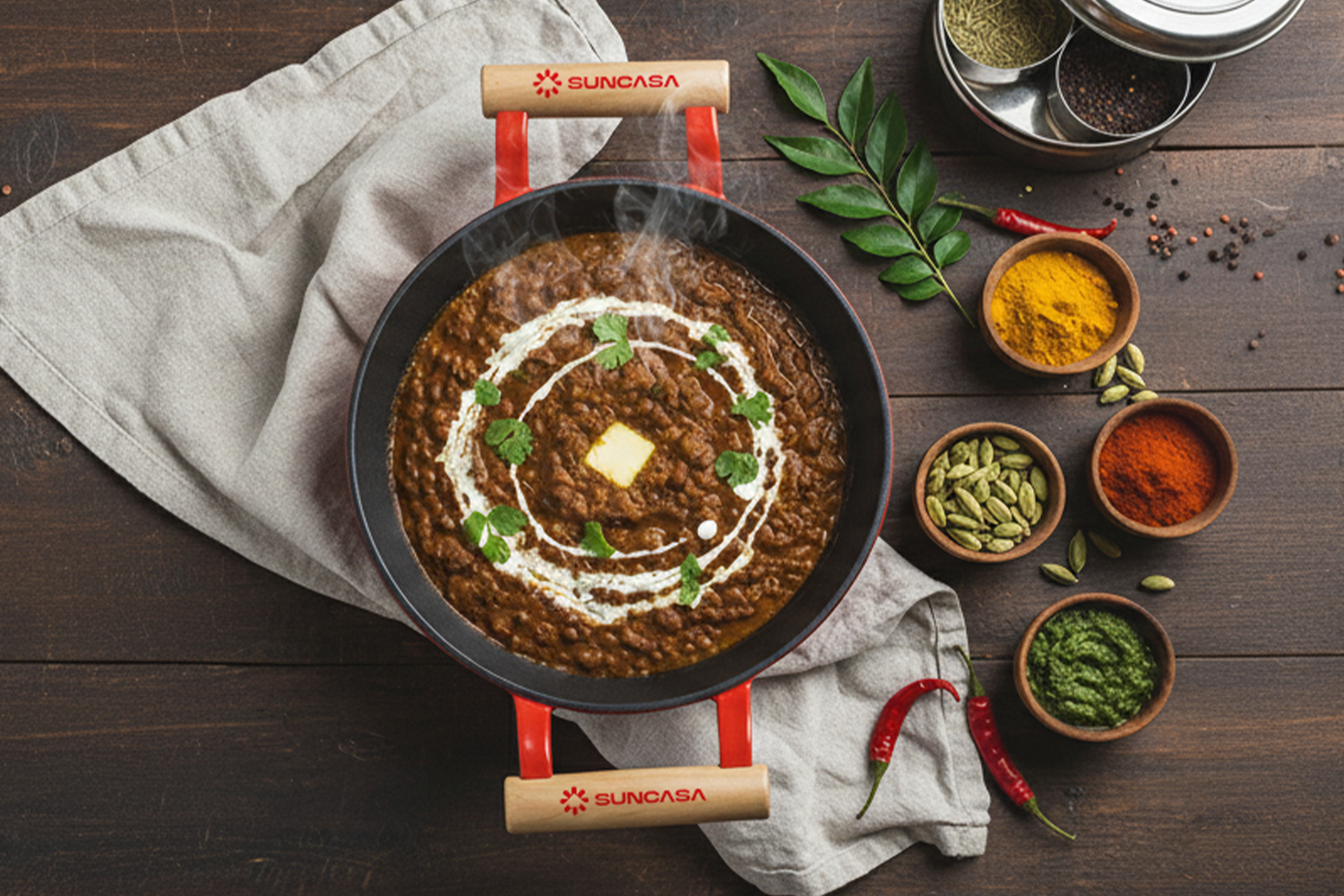
Cast iron cookware is a favourite in many Indian kitchens for its excellent heat retention, durability, and naturally improving non-stick surface. Yet, one question often concerns home cooks: Is cooking tomatoes in cast-iron cookware safe?
The answer is yes, but with the right care and a well-seasoned pan. Understanding how acidic ingredients interact with cast iron will help you enjoy flavourful meals while preserving your cookware for years to come.
Why Do Acidic Foods React with Cast Iron?
Unlike conventional non-stick cookware, cast iron does not have a synthetic coating. Instead, it develops a protective seasoning layer made from polymerised cooking oil. This layer acts as a barrier between the food and the iron surface while offering several benefits:
- Creates a naturally non-stick cooking surface
- Helps prevent rust
- Improves cooking performance
- Enhances durability over time
Acidic ingredients commonly used in Indian cooking, such as tomatoes, tamarind, curd, kokum, and vinegar, can react with exposed iron if the seasoning is weak or underdeveloped.
If the seasoning layer is thin, acidic foods may:
- Weaken the seasoning
- Causes a slight metallic taste
- Lighten the dark patina
- Make food stick more easily
- Leave dull grey patches
However, this doesn't mean you should avoid cooking tomatoes in cast iron altogether. The condition of your cookware and the cooking duration make all the difference.
When Is It Safe to Cook Tomato Gravy in Cast Iron?
A properly seasoned cast-iron pan can comfortably handle many tomato-based dishes without affecting the cookware or the food.
Signs Your Cast Iron Is Ready
Your cookware is generally well-seasoned if it has:
- A deep black or dark brown finish
- A smooth, slightly glossy surface
- Minimal sticking during cooking
- Even oil distribution across the pan
If you've regularly used your cast iron cookware for sautéing, frying, or roasting over several cooking sessions, the seasoning becomes stronger and more resistant to acidic ingredients. Premium pre-seasoned cast iron cookware, such as SUNCASA's cast-iron range, provides a strong starting seasoning that continues improving with regular use.
Short Cooking Times Are Usually Safe
Quick recipes containing tomatoes generally pose little risk to a well-seasoned pan. Examples include:
- Tomato-onion masala
- Paneer bhurji
- Egg bhurji
- Quick vegetable curries
- Tomato stir-fries
Cooking these dishes for around 10–20 minutes typically does not affect a properly seasoned cast-iron surface.
Avoid Storing Acidic Foods in Cast Iron
One of the biggest mistakes is leaving tomato gravy or tamarind-based curries inside the cast-iron after cooking. Acid continues reacting with the seasoning while the food sits in the pan, which may lead to:
- Metallic flavours
- Weakened seasoning
- Surface discolouration
Always transfer cooked food into a separate serving or storage container once the cooking is complete.
When Should You Avoid Acidic Cooking?
Although cast iron is extremely versatile, there are situations where acidic cooking should be limited. Avoid prolonged acidic cooking if:
- The cookware is brand new.
- The seasoning is patchy or uneven.
- The pan has recently been stripped or heavily scrubbed.
- The recipe requires simmering for 45–60 minutes or longer.
Recipes that involve long cooking times include:
- Butter chicken gravy
- Paneer makhani
- Sambar
- Rasam
- Vindaloo
- Tamarind-based curries
For these dishes, stainless steel cookware may be more suitable for extended simmering.
Cast Iron and Acidic Foods at a Glance
|
Situation |
Recommended? |
|
Quick tomato sauté |
Yes |
|
Tomato gravy (10–20 minutes) |
Yes, if well-seasoned |
|
Long-simmering tomato curry |
Better avoided in new pans |
|
Overnight food storage |
No |
|
Tamarind-heavy recipes (long cooking) |
Use with caution |
What Happens If You Cook Acidic Foods Too Early?
Using acidic ingredients in newly seasoned cast iron may cause temporary changes, such as:
- Slight metallic taste
- Sticky cooking surface
- Grey patches
- Reduced smoothness
Fortunately, these are not permanent problems.
The seasoning can easily be rebuilt by:
- Cooking non-acidic foods
- Applying a thin layer of oil after cleaning
- Heating the cookware gently to strengthen the seasoning
Unlike synthetic coatings, cast iron continues to improve with proper maintenance.
How to Safely Cook Tomato Gravy in Cast Iron
If you enjoy making tomato-based Indian recipes, following a few simple practices will protect your cookware.
Step 1: Build Strong Seasoning
Before regularly cooking tomatoes in cast iron, prepare several non-acidic dishes such as:
- Aloo fry
- Bhindi
- Parathas
- Paneer
- Stir-fried vegetables
These meals help strengthen the seasoning naturally.
Step 2: Cook on Medium Heat
Medium heat is ideal for cast iron. Excessively high temperatures may gradually weaken the seasoning layer, especially during prolonged cooking.
Step 3: Avoid Long Simmering Initially
If preparing rich tomato gravies, consider sautéing the masala in cast iron before transferring it to another cookware for extended simmering.
Step 4: Clean Properly
After preparing acidic dishes:
- Wash using warm water.
- Use a soft sponge if needed.
- Dry the cookware immediately.
- Apply a thin layer of cooking oil before storing.
These simple habits help preserve the seasoning for years.
Does Cast Iron React with Tomatoes?
Technically, yes. Tomatoes are naturally acidic, and they can react with bare iron. However, a properly seasoned pan prevents direct contact between the food and the iron surface.
While cooking tomatoes in cast iron, a small amount of iron may transfer into the food. For most people, this is harmless and often considered beneficial. However, if you notice a strong metallic flavour, it usually indicates that your cookware needs additional seasoning.
Cast Iron or Stainless Steel for Tomato-Based Cooking?
Both cookware materials have their strengths.
|
Cooking Style |
Cast Iron |
Stainless Steel |
|
High-heat searing |
Excellent |
Good |
|
Dosas & parathas |
Excellent |
Moderate |
|
Stir-frying |
Excellent |
Good |
|
Long tomato gravies |
Good (well-seasoned only) |
Excellent |
|
Tamarind-based curries |
Moderate |
Excellent |
Many experienced cooks combine both materials by preparing the initial masala in cast iron and completing long simmering in stainless steel.
Why Choose SUNCASA Cast Iron Cookware?
SUNCASA's pre-seasoned cast iron cookware is designed to deliver authentic cooking performance while making maintenance simple.
Key advantages include:
- Premium cast iron construction
- Naturally pre-seasoned surface
- Superior heat retention
- Even heat distribution
- Durable craftsmanship
- Gas and induction compatibility
With regular cooking and proper care, the seasoning becomes stronger over time, allowing you to confidently prepare a wide variety of Indian recipes—including occasional cooking of tomatoes in cast iron cookware.
Master Acidic Cooking in Cast Iron
Tomato gravy and tamarind-based dishes can absolutely be prepared in cast-iron cookware when the seasoning is well developed and the cooking time is moderate. By avoiding prolonged simmering in new pans, storing food separately, and maintaining proper cleaning habits, you can enjoy the benefits of cast iron without compromising its performance.
Explore the premium SUNCASA cast iron cookware collection by visiting the SUNCASA online store and find cookware built for generations of delicious home cooking.
FAQs
Can tomato gravy be cooked safely in cast-iron cookware?
Yes. Tomato gravy can be cooked safely in well-seasoned cast-iron cookware for moderate durations. Proper seasoning protects the surface while maintaining excellent cooking performance and durability.
Why do acidic foods affect cast-iron cookware?
Acidic ingredients like tomatoes and tamarind can weaken underdeveloped seasoning layers. A properly seasoned cast-iron surface prevents direct contact between acidic foods and the iron underneath.
Should tomato gravy be stored in cast-iron cookware?
No. Acidic food should be transferred to another container after cooking. Prolonged storage may weaken the seasoning layer and sometimes result in a slight metallic taste.
How can you strengthen cast iron seasoning?
Cook non-acidic foods regularly, clean gently, dry immediately after washing, and apply a thin layer of cooking oil. These practices gradually build a stronger seasoning layer over time.
Why choose SUNCASA pre-seasoned cast iron cookware?
SUNCASA pre-seasoned cast iron cookware offers excellent heat retention, durable construction, naturally improving seasoning, compatibility with gas and induction cooktops, and reliable performance for everyday Indian cooking.


2 comments
👏 Excellent and very informative blog! Thank you for sharing such practical tips on cleaning and maintaining pre-seasoned cast iron cookware. The step-by-step guidance, common mistakes to avoid, and long-term care advice make this an incredibly valuable resource for every home cook. Proper maintenance truly extends the life and performance of cast iron. Really appreciate the effort—keep sharing more helpful and educational blogs like this. Looking forward to reading your next post! 🌟🍳
🍅🍳 Excellent and highly informative article! Thank you for clearing up the common doubts about cooking tomato and tamarind-based dishes in cast iron cookware. The practical tips on seasoning, maintenance, and safe cooking methods make this a valuable guide for every home cook. Keep up the fantastic work, and please continue sharing more useful and educational blogs like this! 👏😊